
 By admin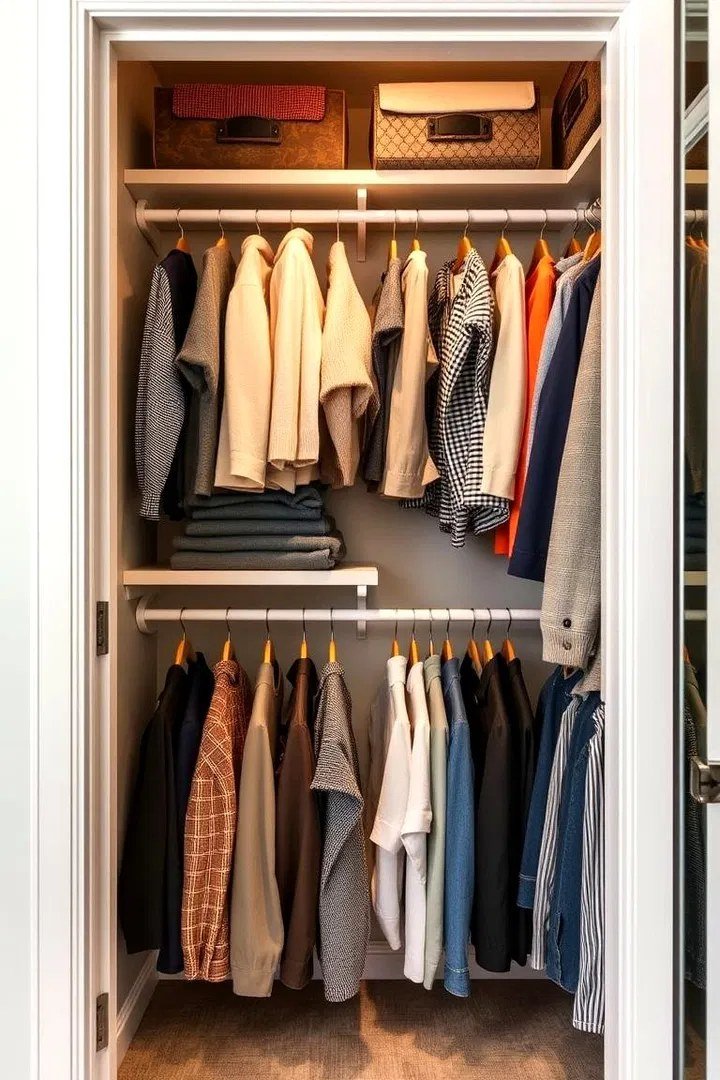
Small closets aren’t a storage problem — they’re an organization problem. The same 4-foot closet that currently holds a jumbled 30 items can comfortably hold 60+ with the right system. It takes one dedicated afternoon and about $30–50 of supplies. Here’s the method professional organizers actually use.
Step 1: Empty and Edit (The Hard Part)
Take everything out. Everything. Then sort ruthlessly: keep only what fits, flatters, and gets worn. The average person wears 20% of their closet — the rest is dead weight stealing space from clothes you love. Donate the maybes (Goodwill takes them year-round); a smaller wardrobe of keepers is the entire secret to small-closet success. Be honest about the “someday” clothes.
How Can I Organize a Small Closet to Fit More Clothes? The System
- Slim velvet hangers. Replace bulky plastic and wire hangers — slim hangers save ~50% of rod space and grip clothes so nothing slides off. One hanger type, uniform, looks instantly organized.
- Double the hanging rod. A $15 tension rod or hanging extender below the main rod doubles hanging space for shirts, pants, and skirts. This single change has the biggest capacity impact.
- Go vertical. Closet space is 3D: shelf dividers on the top shelf, hanging shoe organizers on the door, hooks on side walls for bags and robes. The door back alone holds shoes, accessories, or tomorrow’s outfit.
- Contain the shelves. Open shelves become chaos; bins and baskets (labeled: tees, workout, seasonal) keep categories together and stackable.
- File-fold drawers and bins. Fold tees, jeans, and knits vertically (KonMari-style) so you see everything at a glance — no more forgotten bottom layers.
- One in, one out. The maintenance rule that prevents re-cluttering. New item arrives, something leaves.
Zone it like a store
Arrange by category then color: all shirts together (light to dark), pants together, dresses together. It looks beautiful and — more importantly — you can find things and see gaps. Keep daily items at eye level, occasion wear higher, off-season in top bins or under-bed storage. The Container Store’s closet section has visual inspiration for each of these zones if you want to see the system in action.
What to Store Elsewhere
Not everything belongs in the closet: off-season clothes in under-bed bins or top shelves, bulky coats on a separate hook or rack, shoes you wear weekly only (the rest in boxes), bags stuffed with tissue to hold shape on a shelf. Every item relocated frees prime closet real estate for daily wear. Vacuum bags are great for off-season bulk — just don’t store leather or structured items compressed.
Small Closet Ideas for Renters
Renters can’t install built-in systems — but these no-drill solutions work anywhere:
- Tension rods — instant second hanging rod, zero holes. Also great for scarves and accessories.
- Over-door organizers — shoes, accessories, or rolled tees; uses entirely wasted space.
- Freestanding garment rack — for the overflow or the “this week’s outfits” — doubles as decor if styled well.
- Under-bed storage — off-season clothes, shoes, bags. The renter’s extra closet.
- Command hooks inside closet walls — bags, robes, tomorrow’s outfit; removable and damage-free.
- Stackable shelf inserts — turn one tall shelf into two or three usable levels without installation.
- Rolling cart — accessories, folded knits, or shoes; tucks into closet corners and pulls out for access.
The seasonal swap system
Small closets can’t hold everything at once — and shouldn’t try. The system: keep only the current season in the closet (plus year-round basics), store off-season in labeled bins (under bed, top of closet, storage unit), swap at season change with a try-on audit (bodies change; don’t store things that no longer fit), and use the swap as a donation moment (if you didn’t reach for it all season, you won’t next year). This keeps the active closet at its functional size year-round instead of bursting in October and April. Label bins clearly (“Winter — sweaters/coats”) and keep an inventory note on top — future you won’t remember what’s where. The seasonal swap takes an hour twice a year and is the maintenance that keeps the whole small-closet system working.
Closet Organization Products: What Works, What Is Hype
- Slim velvet hangers: worth it — the space savings are real and they prevent slipping. Buy in bulk; uniformity matters.
- Drawer dividers: worth it — spring-loaded or bamboo; they make file-folding actually sustainable.
- Over-door organizers: worth it for shoes and accessories — the highest-ROI vertical space.
- Vacuum storage bags: worth it for off-season bulk — dramatic space savings. Do not use for leather or structured items.
- Matching bins: worth it aesthetically and functionally — but measure first; wrong-sized bins waste the space they are meant to save.
- Motorized tie racks / rotating carousels: hype — fun for a week, then just another thing. Skip.
- Expensive built-in systems: often hype for renters — the $30 tension-rod solution beats the $300 system you cannot install.
The maintenance routine (5 minutes weekly)
Organization decays without maintenance — the weekly reset: Sunday 5 minutes: rehang the chair pile (we all have one — the goal is processing it weekly, not eliminating it), refold the drawer chaos, return strays to their zones. Monthly 15 minutes: check for the creeping “maybe” pile, wipe shelves, reassess one zone. Seasonally 1 hour: the full swap-and-audit. The one-in-one-out rule: enforced at purchase, not “later” — the new item’s predecessor leaves the same day. Household agreement: everyone maintains their own zone. The organized closet is not a project; it is a practice. Five minutes weekly beats five hours yearly — the math of maintenance always favors the small and consistent over the grand and occasional.
Labeling: the step everyone skips
Labels are what separate “organized for a week” from “organized for good.” Label every bin, basket, and zone — the label removes all decision-making about where things go. A label maker is nice; masking tape and a marker work identically. Label the inside logic too: “tees — light to dark” reminds future you of the system. When someone else puts laundry away, labels let them do it right without asking. It feels excessive until the first time the system survives a month untouched — then it feels like genius.
The Practical Takeaway
Edit ruthlessly, switch to slim hangers, add a second rod, use vertical space and door backs, file-fold everything, and enforce one-in-one-out. A small organized closet beats a big chaotic one every time. Related reading: How to Make a Simple Outfit Look More Put Together and How to Layer for Cold Weather Without Looking Bulky.
[…] knits. The dryer is the enemy — make peace with the drying rack. For more on this topic, see How to Organize a Small Closet to Fit More and How to Layer for Cold Weather Without Looking […]