
 By admin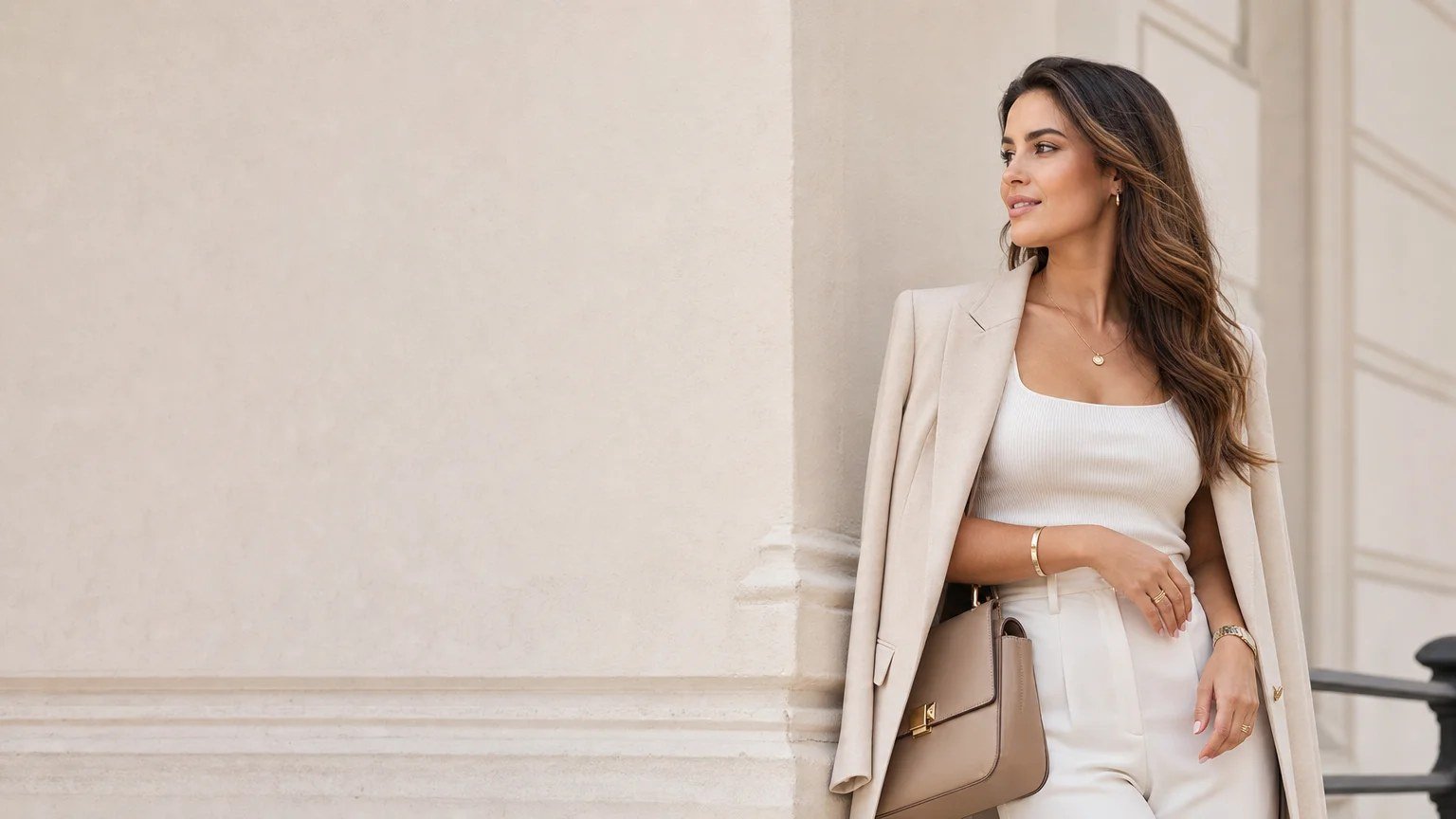
The difference between “just threw this on” and “effortlessly polished” is rarely the clothes themselves — it’s a handful of finishing details that take two minutes. A plain tee and jeans can look sloppy or look intentional depending entirely on what you do around them. Here are the upgrades that matter.
The 10 Details That Do the Work
- Tuck or half-tuck. A full or French tuck defines the waist and instantly structures any top-and-bottom combo. Untucked everything reads unfinished.
- Steam out the wrinkles. Wrinkles are the fastest polish-killer. Two minutes with a steamer does more for any outfit than any accessory.
- Add a third piece. Blazer, cardigan, denim jacket, structured overshirt — a top + bottom + layer always looks more considered than top + bottom alone.
- Roll or cuff deliberately. A clean sleeve roll or jean cuff shows intention. Sloppy unrolled sleeves show the opposite.
- One piece of jewelry. A watch, simple necklace, or earrings — one polished detail signals effort. (More is fine too, but one is the minimum.)
- Clean your shoes. Scuffed shoes drag down everything above them; 60 seconds of wiping transforms the whole outfit’s impression.
- Belt it. A belt finishes the waistline and adds a considered detail, even with a simple tuck.
- Fix your hair intentionally. Doesn’t mean elaborate — just deliberate. A neat ponytail beats “just woke up” every time.
- Match your metals and leathers. Brown belt + brown shoes, consistent jewelry tones — coordination reads as polish.
- Carry a structured bag. A bag that holds its shape looks pulled-together; a saggy tote does the reverse, regardless of outfit.
How Can I Make a Simple Outfit Look More Put Together? Think in Formulas
Keep three go-to “polished basic” formulas on standby: tee + jeans + blazer + loafers; sweater + trousers + ankle boots + watch; button-down (tucked) + dark jeans + clean sneakers + belt. When mornings are rushed, a formula beats decisions. The base pieces are simple; the polish comes from the tuck, the layer, the shoes, the grooming — the details above.
GQ and Nordstrom’s style guides both emphasize this principle constantly: fit and finish outperform expensive pieces. A $40 outfit with all ten details done looks better than a $400 outfit with none.
The 2-minute pre-leaving checklist
Mirror check: tucked? wrinkles? shoes clean? hair deliberate? one accessory? lint-rolled (dark clothes especially)? It takes 120 seconds and catches the small things that separate “dressed” from “put together.”
Put-Together on a Time Budget: The 5-Minute Polish
Running late but want to look intentional? Do these five things (one minute each):
- Minute 1: the tuck. French-tuck the front of your top. Instant structure.
- Minute 2: steam the visible parts. Collar, front of shirt, trouser fronts — nobody sees the back.
- Minute 3: shoes. Quick wipe with a damp cloth. The fastest visible upgrade.
- Minute 4: hair. Smoothing, neat ponytail, or a quick brush — deliberate, not elaborate.
- Minute 5: one accessory + lips. Earrings or a watch, and lip color or balm. Done.
Five minutes, and you look like you tried for thirty. The secret is that polish is mostly removing negatives (wrinkles, scuffs, frizz) rather than adding positives — subtraction is faster than addition.
The mindset shift: “done” beats “perfect”
The most put-together people aren’t the most meticulous — they’re the most consistent. They have systems (the formula outfits, the 2-minute checklist, the steamer by the door) that make polish automatic rather than effortful. Perfectionism is actually the enemy: the person who spends 45 minutes achieving a flawless look twice a week looks less polished overall than the person who spends 5 minutes looking good every day. Lower the bar to “good enough, every day” and raise the consistency. Keep a “polish kit” by the door — lint roller, steamer, shoe wipes, earrings, lip balm — so the system has no friction. Put-together isn’t a talent; it’s infrastructure. Build the infrastructure once, and looking polished becomes the path of least resistance rather than a daily project.
The Science of First Impressions
Why polish matters — the research:
- 7-second judgments: people form lasting impressions in seconds — and appearance is a major input, fairly or not.
- The halo effect: well-put-together people are assumed more competent, trustworthy, and intelligent. It’s bias, but it’s real bias that affects outcomes.
- Enclothed cognition: dressing well changes your performance too — attention, confidence, and abstract thinking all improve.
- It’s not about expense: studies show grooming and fit drive these effects, not price tags. The $40 polished outfit gets the halo; the $400 sloppy one doesn’t.
- Consistency compounds: the daily halo beats the occasional one — reputation is built in the aggregate.
Polish for different contexts
The details shift by situation: job interviews: conservative polish — fit, grooming, minimal accessories. The goal is “takes this seriously.” Dates: personality polish — one interesting detail, grooming that shows effort without trying too hard. Client meetings: trustworthy polish — structured, neat, professional. Boring is fine; sloppy is not. Social events: fun polish — this is where the statement piece lives. Everyday: baseline polish — the 5-minute routine, every day. The through-line: polish is respect — for the occasion, the people, and yourself. It’s never about vanity; it’s about showing up intentionally. And the beautiful thing is how cheap it is — the entire polish toolkit (steamer, lint roller, shoe wipes, tuck technique) costs less than one trendy top and works every single day.
The capsule approach to polish
Polish gets easier with a curated wardrobe. When every piece fits, coordinates, and is in good condition, the “put together” look happens almost automatically. The capsule wardrobe and the polish checklist are natural partners: fewer, better pieces that all work together, maintained well, styled with the finishing details. You do not need more clothes to look more polished — you need the right clothes, in the right condition, with the two-minute finishing routine. Simplicity plus polish is the most sophisticated combination there is.
The Practical Takeaway
Polish lives in the details: tuck, steam, third piece, clean shoes, one accessory, deliberate hair. Master the checklist and simple outfits will never look simple again. Related reading: How to Make Old Clothes Look New Again and How to Organize a Small Closet to Fit More.
[…] one-in-one-out. A small organized closet beats a big chaotic one every time. Related reading: How to Make a Simple Outfit Look More Put Together and How to Layer for Cold Weather Without Looking […]
[…] Keep the reliable foundation — just give it a 20% personality transplant. Related reading: How to Make a Simple Outfit Look More Put Together and How to Make Old Clothes Look New […]