
 By admin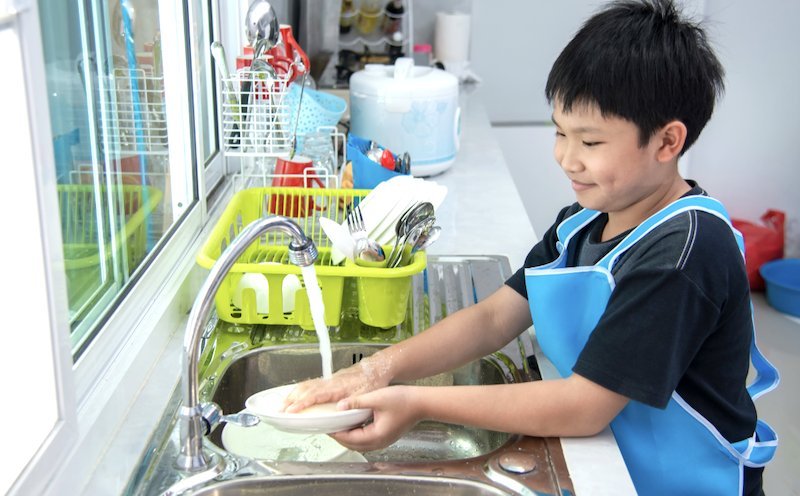
If getting your kids to help with chores feels like negotiating with tiny union reps, you’re not doing it wrong — you’re just missing the system. Kids don’t resist chores because they’re lazy; they resist because chores feel arbitrary, endless, and imposed. Change those three things and most of the battle disappears. Here’s how can I get my kids to help with chores without daily warfare.
Why Kids Resist (It’s Not Laziness)
Think about it from their side: an adult interrupts their fun, assigns a vague task (“clean your room” — what does that even mean?), with no clear endpoint, while the adult does something else. Of course they stall. The fix addresses each piece: make chores specific, time-bound, shared, and routine. “Put all the Legos in the blue bin” beats “clean your room” every single time.
Age-Appropriate Chores That Actually Help
- Ages 2-4: put toys in bins, wipe low tables, put clothes in hamper, water plants with a small can. They’ll be slow and sloppy — that’s fine. You’re building the habit, not the result.
- Ages 5-7: make bed, set/clear table, sort laundry by color, feed pets, dust low surfaces. They can handle multi-step tasks now.
- Ages 8-10: load/unload dishwasher, vacuum one room, take out trash, fold laundry, help with meal prep. Real contributions start here.
- Ages 11-13: clean bathrooms, mow lawn, do their own laundry start-to-finish, cook simple meals. They’re capable of nearly everything with training.
- Teens: full household citizenship — bathrooms, kitchen deep-clean, yard work, grocery help, younger sibling supervision. If they can hold a part-time job, they can run a dishwasher.
How Can I Get My Kids to Help With Chores? Make It Routine, Not Negotiation
The number one rule: chores happen at the same time, every day, no discussion. “After dinner we all do 15 minutes” works; “can you please help me later?” invites a no. Routines bypass the negotiation entirely because the schedule — not you — is the authority. This pairs perfectly with a family cleaning schedule that assigns everyone a zone.
Two more structural wins: work alongside them (nobody should be scrubbing while someone else watches TV — family tidy time means everybody), and play music. A 15-minute playlist turns chore time into something borderline fun and gives a built-in endpoint.
Systems That End the Arguing
- The chore chart (done right): pictures for little kids, rotating assignments weekly so nobody’s stuck with bathrooms forever. Post it visibly.
- Timer challenges: “Can we get this room done before the timer rings?” Gamification works shockingly well under age 10.
- Natural consequences: no clean uniform, no soccer — because they didn’t do laundry, not because you’re punishing them. Connect the dots once, then let reality teach.
- The “when-then” rule: when chores are done, then screens/friends/play. Non-negotiable order of operations.
The Praise vs. Rewards Debate
Should you pay kids for chores? Here’s the nuanced answer: pay for extra jobs, not for basic citizenship. Everyone contributes to the household they live in — that’s not employment, it’s family. But offer paid “bonus jobs” (wash the car, organize the garage, deep-clean the fridge) for kids who want earning opportunities. This teaches both responsibility and work ethic, and it segues naturally into teaching kids good money habits.
As for praise: be specific. “You folded those towels really neatly” beats “good job” because it shows you actually noticed. And notice the unprompted moments most of all — catching them helping without being asked and naming it cements the identity: “you’re someone who helps.”
Troubleshooting the Holdouts
- The perfectionist delayer: “I’ll do it later” means never. Attach chores to a fixed time, not a vague later.
- The sloppy rusher: inspect once, kindly: “This needs another pass on the mirror.” Then stop inspecting — done beats perfect.
- The teenager: pick your battles. Non-negotiables: their room/laundry, one shared zone, dinner cleanup rotation. Let the small stuff go.
- The “it’s not fair”: rotate the hated tasks weekly and post the rotation. Fairness is about the system, not any single day.
And mornings: if getting out the door is the war zone, our guide to less-rushed mornings with kids moves half the battle to the night before.
Chores Are Life Skills in Disguise
It’s easy to frame chores as help for you, but the real beneficiary is your kid. Every chore teaches something school doesn’t: laundry teaches planning and sequencing, cooking teaches math and patience, cleaning a bathroom teaches that unpleasant tasks still get done, yard work teaches sustained effort. Child development experts consistently find that kids who contribute meaningfully at home develop stronger executive function and self-efficacy — the quiet confidence of “I can handle things.”
This reframe also changes how you talk about it. Instead of “help me clean,” try “it’s time to take care of our home.” The first makes them your assistant; the second makes them a stakeholder. Stakeholders don’t need to be nagged — they have ownership. And ownership is the real goal here, far beyond tonight’s dishes. You’re not raising a kid who loads dishwashers; you’re raising an adult who notices what needs doing and does it. That starts with one specific, routine, non-negotiable task — tonight, after dinner, all together, fifteen minutes. The American Academy of Pediatrics notes that age-appropriate responsibilities build exactly this kind of competence, so you’re on solid ground holding the line.
Start This Week
When to Loosen Up
Systems need release valves. Skip chores on birthdays, during illness, and on genuinely overwhelming days — rigidity without mercy breeds resentment of the whole system. Vacation weeks can go chore-free too. The routine survives breaks just fine; what kills it is never restarting. So build the restart into the rule: “we pick back up Monday.” Kids learn an important meta-lesson here — that disciplined people also rest, and that rest is scheduled, not stolen.
Pick one routine (“15-minute family tidy after dinner”), assign everyone one specific task, and start tonight. Expect grumbling for about a week — that’s the old pattern protesting, not a verdict. By week three, it’ll just be what your family does. And years from now, your kids won’t remember the chore chart. They’ll remember that everyone pitched in — and they’ll do the same in their own homes.
[…] The single highest-impact change: stop sorting laundry day-of. Use a 3-section hamper (or three cheap hampers) in each bedroom or bathroom: lights, darks, and towels/sheets. Clothes get pre-sorted the moment they come off. Laundry day becomes “grab a full section and go” — no sorting pile, no decisions, no dread. For kids, picture labels on each section make it foolproof, and it’s a perfect starter responsibility in your kids’ chore system. […]