
 By admin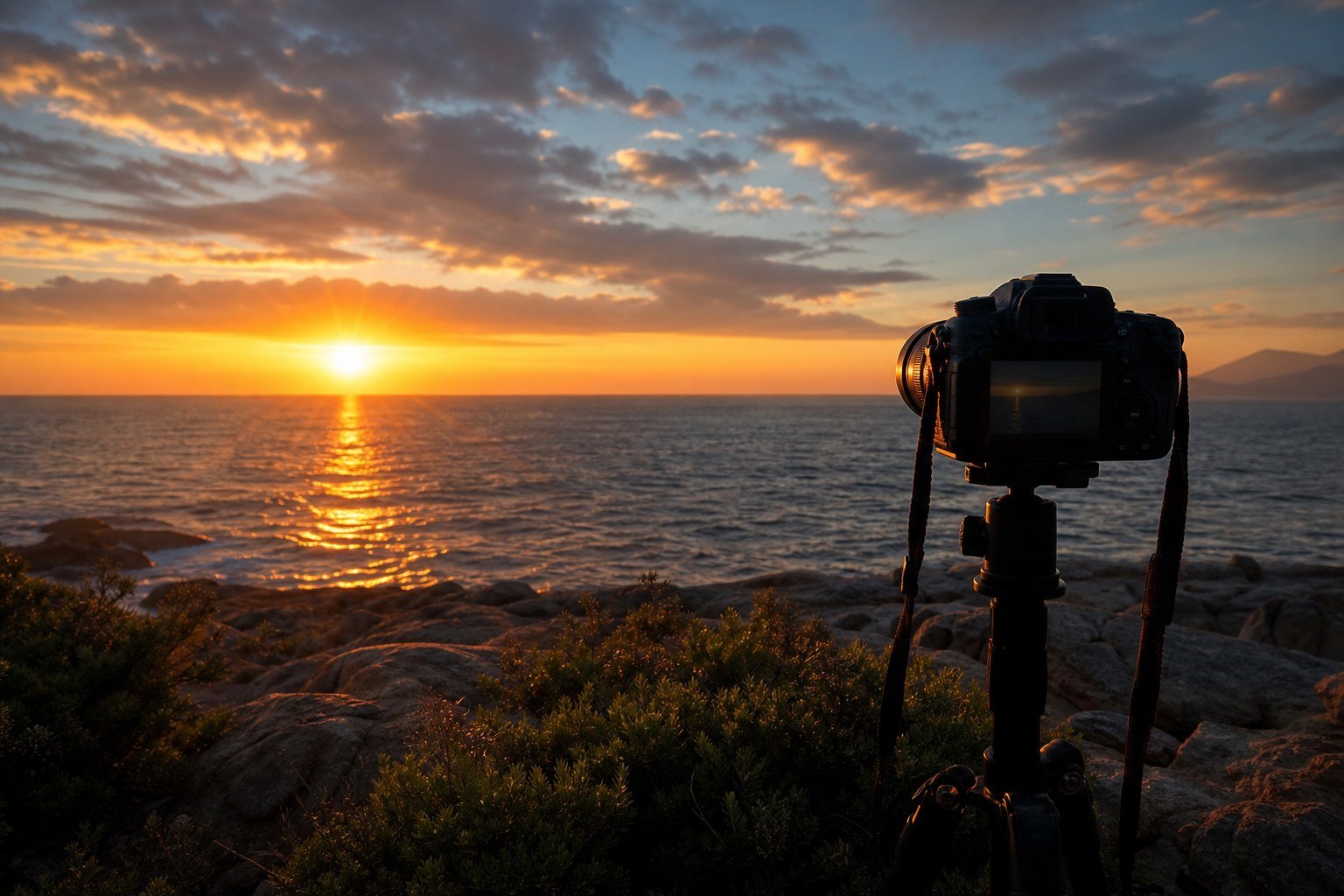
Photography is the rare hobby where the tool in your pocket is already good enough to start. You don’t need a $2,000 camera — you need to learn to see. I’ve watched people with phones take breathtaking photos and people with professional gear take boring ones. The difference is never the equipment. It’s understanding light, composition, and moment. Here’s how to get genuinely better, whether you’re shooting on a phone or a dedicated camera.
Master Light First (It’s 90% of Photography)
Beginners obsess over cameras; photographers obsess over light. The same scene looks dramatically different at different times of day:
- Golden hour is real. The hour after sunrise and before sunset produces warm, soft, directional light that flatters everything. It’s the single easiest way to make photos look professional. Plan shoots around it.
- Overcast is a gift. Cloudy days act like a giant softbox — even, flattering light with no harsh shadows. Perfect for portraits and flowers. Stop waiting for sunny days.
- Harsh midday sun is the enemy. If you must shoot at noon, find open shade (under a tree, beside a building). The shade is evenly lit; the sunlit background creates pleasant contrast.
- Backlight deliberately. Put the light source behind your subject for dramatic rim light and silhouettes. Tap to expose for the subject (phone) or expose for the highlights (camera) and embrace the mood.
- Windows are free studio lights. For indoor portraits, position your subject facing a large window. Side-window light sculpts faces beautifully — it’s the oldest portrait trick in the book.
Composition: The Rules (and When to Break Them)
- Rule of thirds. Imagine a 3×3 grid; place key elements on the lines or intersections, not dead center. Turn on your phone’s grid overlay and use it until it’s instinctive. Then break it deliberately for impact.
- Leading lines. Roads, fences, rivers, shadows — lines that draw the eye into the frame create depth and movement. Look for them everywhere.
- Foreground interest. A photo with only a distant subject feels flat. Add something in the foreground (flowers, a rock, a window frame) to create layers.
- Fill the frame. Beginners stand too far away. Get closer — then closer again. The most common composition mistake is too much empty space around the subject.
- Change your perspective. Shoot from low, from high, from the side. The “stand at eye level and click” photo is the boring default. Kneel down, climb up, lie on the ground — new angles reveal new photos.
- Negative space. Sometimes the subject is small and the emptiness around it is the point. A lone tree in fog, a person on an empty beach — minimalism is powerful when intentional.
Phone Photography: You’re Better Equipped Than You Think
- Clean your lens. Seriously. A quick wipe on your shirt removes the haze ruining half your photos. Do it before every important shot.
- Tap to focus, then adjust exposure. Tap your subject, then slide the exposure up or down. This one gesture fixes most bad phone photos.
- Use portrait mode for people, not everything. The fake blur looks great on faces, weird on landscapes. Know when to turn it off.
- Shoot in the best light, edit later. No filter fixes bad light. But good light + basic editing (the free Lightroom mobile app is excellent) = stunning results.
- Burst mode for action. Kids, pets, sports — hold the shutter for burst mode and pick the perfect frame later. The decisive moment is easier to catch in 20 frames than one.
If You Buy a Camera: What Actually Matters
When you’re ready to upgrade (after months of phone shooting, not before):
- Any modern mirrorless or DSLR is enough. A used Sony, Canon, or Nikon from the last 5 years outperforms what professionals used a decade ago. Buy used — cameras depreciate fast and last long.
- Lenses matter more than bodies. A $300 camera with a great $500 lens beats a $1,500 camera with a kit lens. The “nifty fifty” (50mm f/1.8, ~$125) is the best value in photography.
- Learn manual mode gradually. Start with aperture priority (you set the aperture, camera handles the rest). Understanding the exposure triangle (aperture, shutter speed, ISO) is the technical foundation — but don’t let it delay actually shooting.
- Shoot RAW. RAW files contain vastly more data than JPEGs, giving you enormous editing flexibility. Storage is cheap; lost highlight detail is forever.
Get Better at Photography: Practice Projects That Work
- One lens, one month. Restrict yourself to one focal length (or just your phone’s main camera) for a month. Constraints force creativity — you’ll start seeing compositions you’d have walked past.
- The 365 (or 52) project. One photo a day (or a week) for a year. The discipline of shooting regularly improves you faster than any tutorial.
- Copy the masters. Recreate famous photos or paintings with your camera. Studying composition by imitation teaches faster than theory.
- Shoot the same subject 20 ways. Pick one boring subject (a chair, a tree) and photograph it 20 different ways. It breaks the “there’s nothing to shoot” block permanently.
- Learn basic editing. Free: Snapseed, Lightroom Mobile. Paid: Lightroom Classic. Editing is half of digital photography — a well-edited good photo beats an unedited great one.
Finding Your Style
Shoot a lot, then look at your favorites — patterns emerge. You might discover you love street photography, or landscapes, or intimate portraits. Follow the pattern. Study photographers you admire (not to copy, but to understand what draws you). Your style isn’t chosen; it’s revealed through volume. The photographers with the most distinctive styles simply shot the most frames.
Share your work — an Instagram account, a photo book at year’s end, prints on your wall. Photography kept private stagnates; photography shared gets feedback, encouragement, and purpose. And consider pairing it with outdoor adventures — the best camera is the one you bring on the hike.
Bring your camera on your next outing — plan the perfect picnic and shoot it.
Study composition from the masters in the Library of Congress Prints and Photographs collection.
Practical Takeaway
Get better at photography by: chasing good light (golden hour, overcast, window light), learning basic composition (rule of thirds, leading lines, fill the frame), cleaning your phone lens and tapping to expose, and shooting regularly with constraints. Upgrade to a real camera only after months of phone shooting — and spend on lenses first. The camera records; the photographer sees. Train your seeing and the gear becomes secondary.