
 By admin
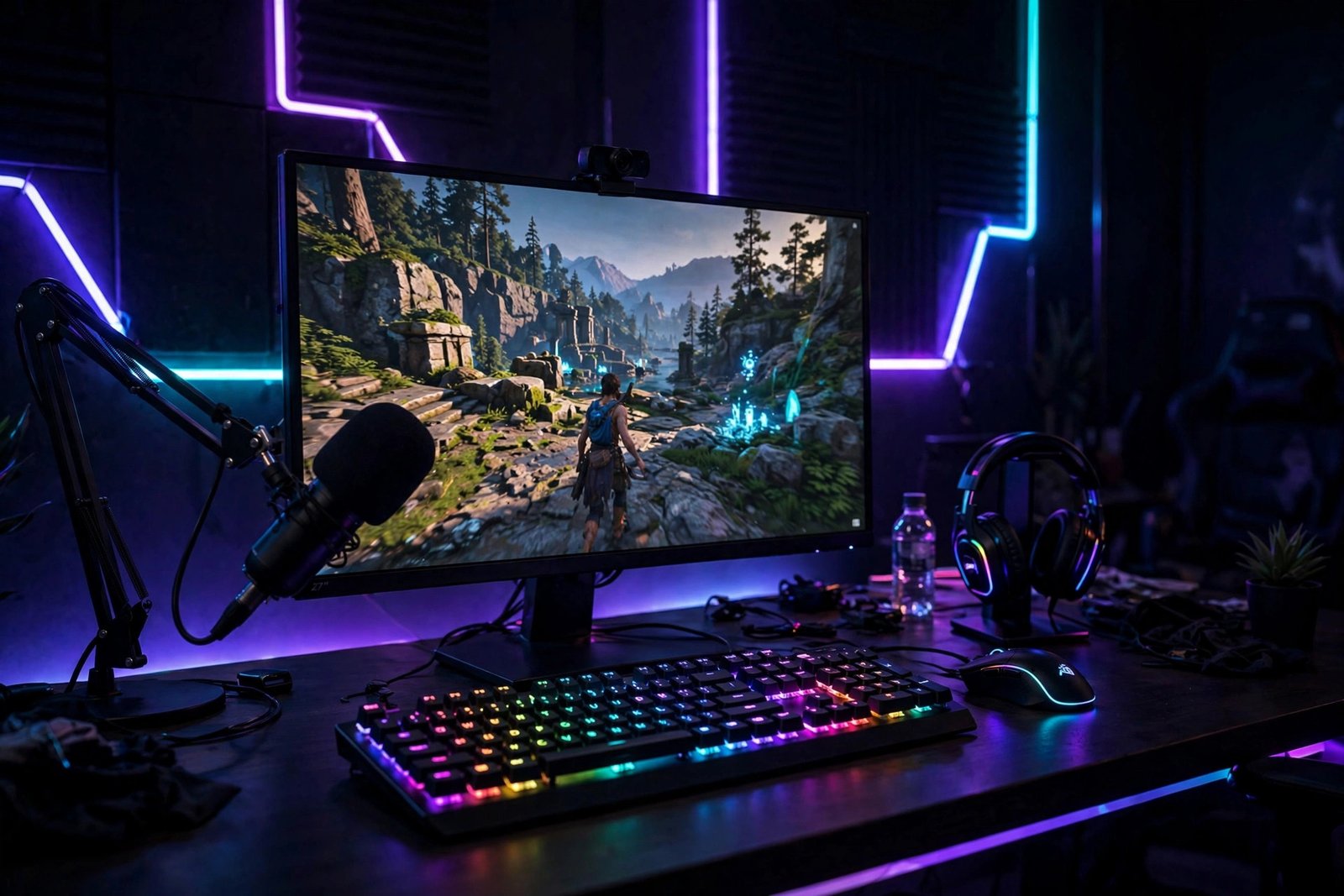
Game streaming looks like the dream job: play games, be yourself, get paid. YouTube’s streaming scene in 2026 is mature enough that the fantasy has a paper trail — and the paper trail says most streamers earn little, a few earn life-changing money, and the difference isn’t luck. It’s strategy, consistency, and a clear-eyed understanding of how streaming money actually works.
This beginner’s guide answers the real question — is game streaming on YouTube still profitable for newcomers in 2026? — with honest numbers, the revenue streams that matter, and what it actually takes to build a channel that pays.
The Honest Math of Streaming Income
Let’s start with the numbers nobody posts. A small streamer averaging 50 concurrent viewers might earn $100–$400/month from all sources combined. At 200 concurrent viewers — a milestone that takes most streamers 1–2 years — income often reaches $800–$2,500/month. Full-time-viable streaming ($4,000+/month) typically requires 500+ concurrent viewers or exceptional monetization through sponsorships and products.
The uncomfortable truth: for your first year, streaming pays below minimum wage per hour invested. Everyone profitable went through this phase. The question isn’t whether streaming can pay — it demonstrably can — but whether you can sustain 12–18 months of building before it pays you.
Where the Money Actually Comes From
Ads and YouTube revenue share
Once monetized, live streams earn ad revenue like regular videos — typically $2–$6 per thousand views for gaming content. It’s the most passive stream but rarely the largest for small channels. Super Chats and Super Stickers (viewer tips during streams) often out-earn ads for engaging streamers with loyal audiences.
Memberships and recurring support
Channel memberships ($5–$25/month tiers) are streaming’s most valuable revenue: predictable, recurring, and tied to community rather than algorithms. A streamer with 100 members at $5/month has a $500 baseline before a single ad plays. Building membership value — exclusive streams, Discord access, member games — is a core profitability skill.
Sponsorships and affiliates
Even small streamers (1,000–5,000 subscribers) land sponsorships from game-adjacent brands — peripheral companies, energy drinks, game key marketplaces — often $100–$500 per integration. As you grow, these eclipse ad revenue. The FTC’s endorsement guidelines require clear disclosure of paid promotions; compliance isn’t optional and audiences respect transparency.
Your own products
The streamers making real money usually sell something: merch, coaching, guides, or digital products. A streamer with 10,000 subscribers selling a $30 guide to 2 percent of them makes $6,000 — more than months of ad revenue. Build the audience, then build the product.
What Separates Profitable Streamers From Hobbyists
It’s not skill at games — many top earners are average players. The differentiators: consistency (a fixed schedule viewers can build around, 3–5 streams weekly minimum), personality as product (viewers return for you, not the game — the game is the backdrop), community cultivation (remembering regulars, running viewer games, building Discord), and discoverability strategy (streaming alone doesn’t grow channels; Shorts, clips, and edited highlights bring new viewers to the live stream).
Niche selection matters enormously. Streaming the same mega-title as 10,000 others buries you; streaming a mid-size game with a devoted community, speedrun categories, or challenge formats gives you a visible lane. Your technical setup underpins all of it — stable internet is non-negotiable, so fix weak Wi-Fi before your first stream, and invest in decent audio — see headphone options that work for streaming.
The Realistic 18-Month Path
Months 1–3: stream on a fixed schedule to tiny audiences while making Shorts and highlight clips — expect 0–20 viewers and near-zero income. Months 4–9: find your format (the series, the community rituals, the thing that’s yours), engage daily in your game’s community, collaborate with similar-size streamers — income trickles in via Super Chats and affiliates. Months 10–18: if consistency held, growth compounds — memberships activate, sponsors appear, and the channel approaches part-time income. Most who quit do so in months 3–6, right before compounding starts.
Protect the asset that makes it all possible — you. Streaming burnout is epidemic: the always-on schedule, the performative energy, the chat that never sleeps. Set hours, take days off, and remember adjacent content formats like podcasting can diversify both income and creative energy.
Choosing What to Stream (The Niche Decision)
What you stream matters more than how well you play. The strategic options: trending new releases (huge initial audience, brutal competition, short window), evergreen community games (Minecraft, GTA roleplay, retro titles — smaller but loyal audiences that stick around for years), challenge and variety content (your personality is the product; the game is interchangeable), or niche expertise (speedrunning, high-level competitive play, educational content — smaller audiences, but they convert to supporters at high rates).
Consider the business factors too: some games’ publishers are streamer-friendly (encouraging content, providing creator programs), while others issue takedowns or restrict monetization — check a game’s streaming policy before building your channel on it. And be mindful of content ratings: family-friendly streams access broader sponsorship categories and avoid the advertiser-unfriendly pitfalls that demonetize edgier content. The ESRB’s game ratings help you understand exactly what each title contains, which matters both for your audience expectations and your monetization options. Pick a lane you can sustain for a year — consistency in one niche beats dabbling across ten.
Conclusion
Is game streaming on YouTube still profitable for beginners in 2026? Yes — but “profitable” means a 12–18 month build to meaningful income, not a shortcut to quitting your job. The streamers who make it treat streaming as a small business from day one: consistent schedule, community-first content, diversified revenue, and discoverability beyond the live stream itself. If that sounds like work you’re excited to do for a year before it pays — welcome. The barrier to entry is low; the barrier to success is showing up.
Key Takeaways
Streaming is a business, not a lottery. Consistent schedule, community cultivation, and diversified revenue separate earners from hobbyists.
Shorts feed the stream. Discoverability comes from clips and short-form content; the live stream itself retains and monetizes.
Memberships beat ads early. A small loyal community paying monthly outperforms ad revenue until view counts get large.
Plan for 18 months. Meaningful income takes a year-plus of building — budget your life accordingly before starting.
Your niche is your moat. A specific lane with a loyal community beats competing head-on with giant channels.
Frequently Asked Questions
How many viewers do I need to make money streaming?
You can earn from day one via affiliate links, but meaningful income ($1,000+/month) typically starts around 100–200 concurrent viewers with good monetization. Memberships and sponsorships matter more than raw viewer counts.
Should I stream on YouTube or Twitch as a beginner?
YouTube offers better discoverability (search + Shorts feed viewers into streams) and simpler monetization; Twitch has a more established live-viewing culture. Many beginners find YouTube’s algorithmic discovery gives faster initial growth.
What equipment do I need to start streaming?
A PC that can game and encode simultaneously, a decent USB mic ($70–$120), stable internet (wired connection strongly preferred), and free OBS software. A webcam helps but isn’t required initially — audio quality matters more.
Can I stream part-time and still grow?
Yes, if the schedule is consistent — three fixed evenings weekly beats random marathon sessions. Growth correlates with reliability more than raw hours; viewers build habits around predictable streamers.