
 By admin
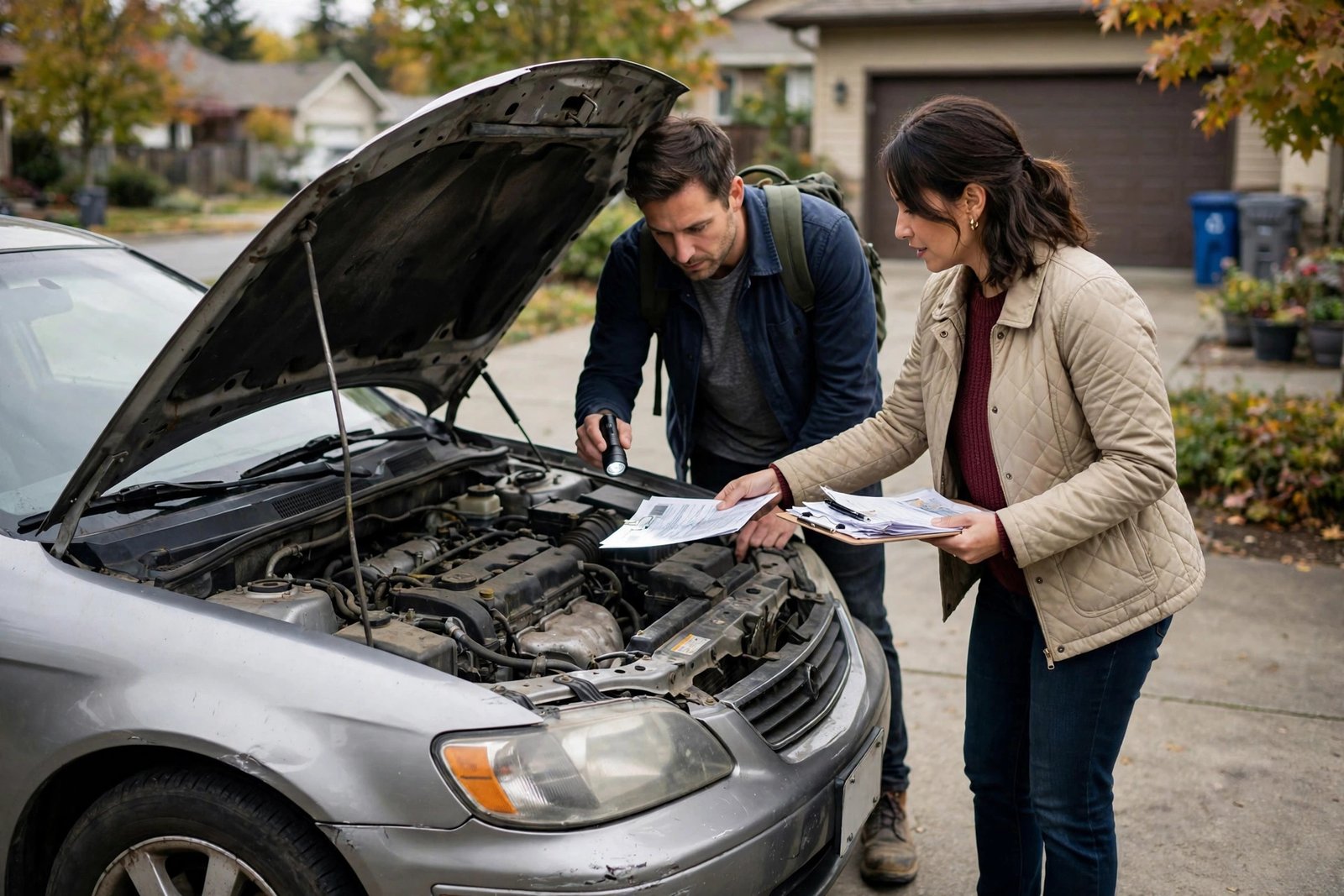
The Craigslist ad shows a clean 2019 sedan, 68,000 miles, priced $2,500 below dealer retail. The seller seems nice, the car looks great in photos, and private-party prices average 10–15% less than dealerships for good reason — no overhead, no reconditioning costs, no profit margin stacked on top. But that discount exists because you’re also giving up the dealership’s implied accountability, and private sales are strictly as-is in most states. Once money changes hands, the seller’s problems become your problems.
Buying a car from a private seller safely means replacing the dealership’s institutional protections with your own diligence: verifying ownership and title, inspecting the car’s true condition, checking its history, and structuring the transaction so neither party gets burned. Here’s the complete checklist.
Before You Meet: Research the Car Remotely
Run the history reports
Get the VIN from the seller and run both a vehicle history report (Carfax or AutoCheck, $25–$100) and the free NICB VIN check for theft and salvage records. Look for: accident history (especially structural/frame damage), salvage or rebuilt titles, flood damage, odometer discrepancies, service history gaps, number of previous owners, and open recalls (check NHTSA’s recall database by VIN — unrepaired safety recalls are the seller’s responsibility to address, but many never do).
A clean report isn’t a guarantee — accidents repaired without insurance claims never appear — but a dirty report is disqualifying information. Walk away from salvage titles unless you’re an expert buying at salvage prices; from odometer rollbacks always; and from flood vehicles unconditionally (electrical gremlins surface for years).
Verify market value
Check Kelley Blue Book, Edmunds, and comparable listings for the private-party value of the exact year, trim, mileage, and condition. The “great deal” priced 25% below market is usually a scam or a problem car — legitimate sellers know their car’s value. Price anomalies are information.
Screen the seller
Talk by phone before meeting. Ask why they’re selling, how long they’ve owned it, and whether the title is in their name (curbstoners — unlicensed dealers flipping cars — often sell vehicles titled to others). Be wary of: sellers who won’t share the VIN, prices far below market, pressure to decide immediately, requests for deposits before seeing the car, and meetings in odd locations. Trust your instincts; scammers rely on buyers overriding theirs.
The Meeting: Inspection Checklist
Meet in a public place during daylight, bring a friend, and tell someone where you’ll be. Then inspect systematically:
Documents first
Ask to see the title before touching the car. Verify: the seller’s name matches their ID, no lienholder is listed (or the lien release is documented), the title isn’t branded (salvage, rebuilt, flood, lemon law), and the VIN on the title matches the VIN on the dashboard and door jamb. Title washing (moving a branded title through lax states) is real — the history report cross-checks this.
Exterior and interior
Walk around slowly: paint mismatch between panels (accident repair), uneven panel gaps, rust (especially wheel wells, rocker panels, undercarriage), tire wear patterns (uneven wear indicates alignment or suspension issues), and all lights and signals. Inside: every button, switch, and feature — windows, locks, AC/heat, infotainment, sunroof. Test everything; private sellers won’t warranty what you didn’t check.
Under the hood and underneath
Check oil level and condition (milky = head gasket failure; gritty = neglected), coolant level and color, transmission fluid if accessible, belt and hose condition, and battery terminals. Look underneath for fluid leaks (note color and location — red is transmission, green/orange is coolant, black is oil), rust on the frame, and fresh undercoating (sometimes sprayed to hide rust).
The test drive: 20 minutes minimum
Drive varied conditions: city streets, highway speeds, hills if available. Test: cold start behavior (arrive early or ask the seller not to warm it up — cold starts reveal engine problems), acceleration smoothness, transmission shifting (delays, slips, harsh shifts), braking (pulling, pulsing, grinding), steering (wandering, vibration), and unusual noises with the radio off. Turn everything off and listen — the car tells you its secrets in silence.
The Non-Negotiable: Pre-Purchase Inspection
For any car over $5,000, a $150–$250 independent pre-purchase inspection is mandatory — not optional, not “if you feel like it.” A mechanic on a lift sees what you can’t: frame damage, hidden rust, leaking seals, worn suspension, impending failures. This single step catches the problems that turn “great deals” into money pits. If the seller refuses an inspection, walk away immediately — no exceptions. Honest sellers welcome inspections; only problem cars fear lifts.
Vetting a used purchase is a transferable skill — what to look for when buying a refurbished phone covers the same check-everything discipline for secondhand tech, and our take on whether buying designer bags secondhand is worth it shows how authentication works in another resale market. For the car itself, always pay for an independent pre-purchase inspection — ideally at a shop familiar with the specific make.
Structuring the Transaction Safely
Negotiation
Use the inspection findings and history report as leverage — every defect has a repair cost, and the price should reflect them. Private sellers typically have 10–15% negotiation room. Be fair but firm; insulting lowballs kill deals, but paying asking price without negotiating leaves money on the table.
Payment
Never pay cash for amounts over a few thousand — you need a paper trail. Best practice: meet at the buyer’s bank and get a cashier’s check, or use an escrow service for higher amounts. Never wire money before seeing the car and title. If the seller still owes on a loan, conduct the transaction at their lender: your payment satisfies their loan, the lender releases the title, and everyone is protected.
Paperwork
Complete a bill of sale (both parties sign, including VIN, mileage, price, date, and “as-is” language where applicable), transfer the title properly per your state’s DMV requirements (both sign, odometer disclosure for vehicles under 20 years old per federal law), and handle plates/registration per state rules (some states transfer plates, others don’t). Get a signed statement of the odometer reading — federal odometer fraud law protects you, but documentation makes it enforceable.
The CFPB’s auto buying resources cover financing and paperwork pitfalls that trap private-party buyers.
After the Purchase: Immediate Steps
Insure the car before driving it home (call your insurer with the VIN — coverage can often start same-day). Register and title it within your state’s deadline (typically 10–30 days; late penalties add up). Budget for immediate maintenance: unless the seller provides records, assume all fluids, filters, and wear items need attention — fresh oil, transmission service if due, and new wipers are cheap peace of mind. Address any open recalls (free at dealers). And keep every document — bill of sale, title transfer, inspection report — in a dedicated file.
Conclusion
Private-party car buying rewards diligence with real savings — 10–15% below dealer prices for the same vehicle. The formula: research the VIN and market value remotely, screen the seller, inspect documents before metal, test-drive thoroughly, get an independent pre-purchase inspection (non-negotiable), and structure payment and paperwork to protect both sides. The buyers who get burned skip steps to save $200 or move faster; the buyers who get deals follow every step and drive away confident. In private sales, your diligence is the warranty — make it comprehensive.
Frequently Asked Questions
Is it safe to buy a car from a private seller?
Yes, with proper diligence — VIN history check, in-person inspection, independent pre-purchase inspection, and secure payment/paperwork. The 10–15% price discount compensates for the as-is nature when you’ve verified the car’s condition professionally.
What paperwork do I need when buying from a private seller?
Signed title transfer, bill of sale (with VIN, mileage, price, date), odometer disclosure statement, and your state’s specific forms. If the seller has a loan, complete the transaction at their lender to ensure lien release.
Should I pay cash for a private party car?
For small amounts, cash is fine with a signed receipt. For larger purchases, use a cashier’s check from your bank (obtained together at the bank) or an escrow service — you need a paper trail for a transaction this size.
What if the private seller won’t allow an inspection?
Walk away, no exceptions. Refusal of an independent inspection is the single brightest red flag in private-party sales — honest sellers welcome verification, and the $200 inspection protects a $15,000 decision.
Can I return a car bought from a private seller?
Generally no — private sales are as-is with no cooling-off period (the FTC’s 3-day rule doesn’t apply to private auto sales). Exceptions exist for proven fraud (odometer rollback, title washing, concealed salvage history), which is why documentation and history checks before purchase are essential.