
 By admin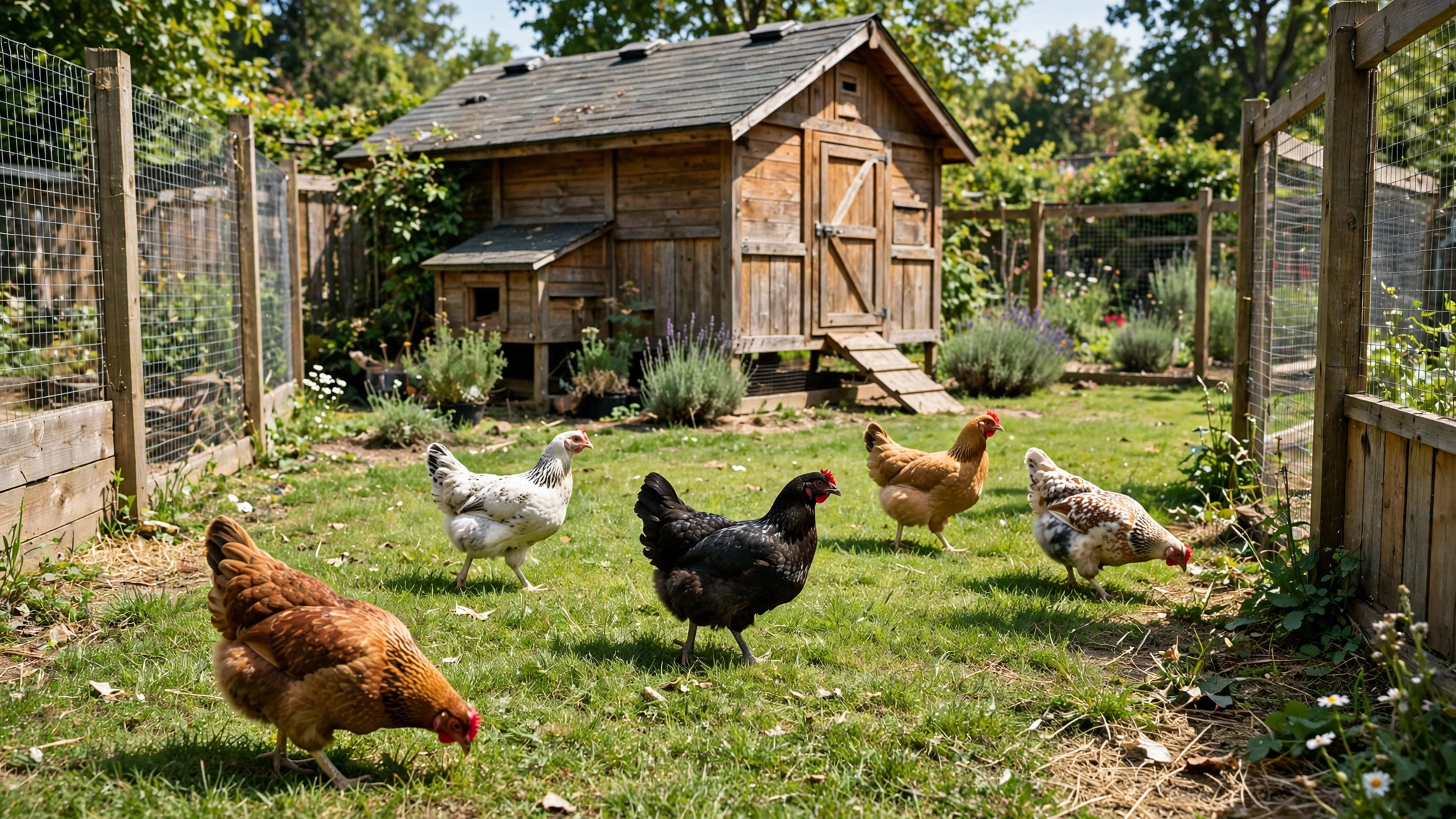
Quick Answer: Each standard-size chicken needs 2–3 square feet inside the coop and 8–10 square feet in an outdoor run. Bantams need about half that; large breeds like Jersey Giants need more. When in doubt, give them extra room — crowded chickens are stressed, sickly chickens.
Space is the most commonly underestimated part of raising backyard chickens. The cute coop kit rated for “6 chickens” at the farm store is often realistically comfortable for three. Under-spaced flocks develop pecking, bullying, disease, and laying problems that no amount of treats will fix. Here are the real numbers — coop, run, roosts, and nest boxes — so you can plan a flock that thrives.
Coop Space: The Indoor Minimum
The widely accepted minimum is 2–3 square feet per bird inside the coop, measured as floor space (nest boxes do not count). Adjust by size:
- Bantams: 1–2 sq ft per bird
- Standard layers (Rhode Island Reds, Leghorns, Australorps): 2–3 sq ft per bird
- Heavy breeds (Jersey Giants, Brahmas, Cochins): 3–4 sq ft per bird
If your chickens are confined to the coop for long stretches (harsh winters, predator lockdown), aim for 4+ square feet per bird. The 2–3 sq ft guideline assumes they spend their days outside.
Run Space: The Outdoor Minimum
Plan 8–10 square feet per bird in the run as a minimum, with 10+ being noticeably better. A run for six standard hens should be at least 60 square feet — for example, 6×10 feet. More space means less mud, less manure concentration, fewer parasites, and calmer birds.
Free-ranging changes the math: birds that roam a yard all day tolerate smaller coops happily. But “free range” still needs a secure run for times you cannot supervise — hawks, dogs, and raccoons do not take days off.
Roost Space
Chickens sleep on roosts, not the floor. Provide 8–10 inches of roost bar per bird (12 inches for heavy breeds), mounted 18–36 inches off the ground. Use 2×4 boards with the wide side up — this lets birds cover their feet with their bodies in winter, preventing frostbitten toes. Round dowels look natural but are worse for foot health.
Nest Boxes
You need one nest box per 4–5 hens — not one per hen. Hens happily share (and will all queue for the same favorite box regardless). Each box should be about 12×12×12 inches, filled with clean straw or shavings, and positioned lower than the roosts so birds sleep on roosts, not in nests.
What Happens When Chickens Are Overcrowded
- Feather pecking and cannibalism: The #1 behavioral fallout of crowding. Once blood is drawn, the flock can turn on the victim.
- Disease: Coccidiosis, respiratory infections, and mites all spread faster in tight quarters with concentrated droppings.
- Bullying: Low-ranking birds get blocked from feeders and waterers, leading to weight loss and stress.
- Egg eating and reduced laying: Stressed hens lay fewer eggs and may develop the hard-to-break habit of eating them.
- Ammonia buildup: More birds per square foot means more droppings, more ammonia, and damaged respiratory tracts.
Planning Examples
4 hens (typical starter flock): 4×4 ft coop (16 sq ft) + 4×10 ft run (40 sq ft), one 4-foot roost bar, 1–2 nest boxes.
8 hens: 4×6 ft coop (24 sq ft) + 8×10 ft run (80 sq ft), 6–7 feet of roost, 2 nest boxes.
12 hens: 6×6 ft coop (36 sq ft) + 10×12 ft run (120 sq ft), 10 feet of roost, 3 nest boxes.
Space Needs by Popular Backyard Breed
- Rhode Island Red: Standard 2–3 sq ft coop / 8–10 sq ft run. Hardy, active foragers that appreciate extra run space.
- Leghorn: Same standard footprint, but flighty — taller fencing (6 ft) or a covered run is wise.
- Orpington: Large, mellow birds; lean toward 3–4 sq ft in the coop. Poor flyers, so 4-foot fencing suffices.
- Silkie (bantam): 1–2 sq ft coop / 5–6 sq ft run. Cannot fly and hate rain — covered runs are almost mandatory.
- Jersey Giant: The heavyweight — 4 sq ft coop / 12 sq ft run minimum. Everything about them is bigger, including the feed bill.
- Easter Egger: Standard spacing works; active and curious, so boredom busters (hanging cabbage, perches) stretch smaller runs further.
Planning for Flock Growth (Chicken Math Is Real)
Ask any keeper: you will end up with more chickens than planned. “Chicken math” — where three hens somehow become eleven — is a running joke because it is universally true. Build your first coop 50% bigger than your planned flock and you will thank yourself within two years. Also plan a small isolation area from day one: new birds need 2–4 weeks of quarantine, and sick or injured birds need separation. A large dog crate inside the coop or a partitioned corner handles most situations. Future-you, integrating six new pullets into an established flock, will be grateful for every spare square foot.
Ventilation: The Forgotten Space Requirement
Floor space gets all the attention, but air space matters just as much. A well-ventilated coop exchanges moist, ammonia-laden air for fresh air without drafting directly on roosting birds. Plan at least 1 square foot of vent area per 10 square feet of floor space, positioned high (above roost level) so warm moist air escapes while birds stay out of the draft. In winter, resist the urge to seal the coop tight — moisture causes more frostbite than cold does. If you can smell ammonia when you open the coop door, ventilation is inadequate regardless of how much floor space you have. Good airflow plus generous square footage is the complete formula for healthy birds.
Mobile Coops and Chicken Tractors
A mobile coop (chicken tractor) moved every few days effectively multiplies your space: birds get fresh ground constantly, manure fertilizes the yard instead of concentrating, and parasite cycles break. A 4×8 ft tractor comfortably houses 4–6 hens during the day when moved daily. Tractors work best as daytime housing paired with a secure fixed coop at night, since most tractors are not predator-proof enough for unsupervised darkness. For small yards, this system delivers more usable space per square foot than any stationary setup.
Further Reading
- How to Keep Chickens Warm in Winter: Step-by-Step Guide (2026)
- How Cold Is Too Cold for Chickens? (2026) Winter Guide
- How to Tell How Old a Kitten Is: Step-by-Step Guide (2026)
- Humane Society of the United States
- ASPCA’s pet care resources
Frequently Asked Questions
Can I keep chickens in a small backyard?
Yes — 3–4 hens fit comfortably in most suburban yards with a compact coop and run. Check local ordinances first: many cities allow hens but not roosters, and some cap flock size.
Do chickens need more space in winter?
Effectively, yes. When snow or extreme cold keeps birds inside for days, the coop becomes their whole world. Extra indoor square footage (4+ sq ft per bird) prevents winter behavioral problems.
How much space do chicks need in a brooder?
Start with 0.5 sq ft per chick, expanding to 1 sq ft by 4 weeks and 2 sq ft by 8 weeks. Overcrowded brooders cause trampling and pasty butt.
Is free-ranging enough without a run?
Free-ranging is wonderful but not a substitute for a secure run. You need a predator-proof space for unsupervised hours, vacations, and quarantine of new or sick birds.
Do bantams and standards mix in the same space math?
They can share a coop, but calculate space for the standards and let the bantams enjoy the bonus room. Bantams are often bullied at feeders, so provide multiple feeding stations.
The Bottom Line
Give each chicken 2–3 square feet in the coop and 8–10 in the run, plus 8–10 inches of roost and shared nest boxes — then add more whenever you can. Space is the cheapest health insurance in poultry keeping, and a roomy flock is a peaceful, productive one.