
 By admin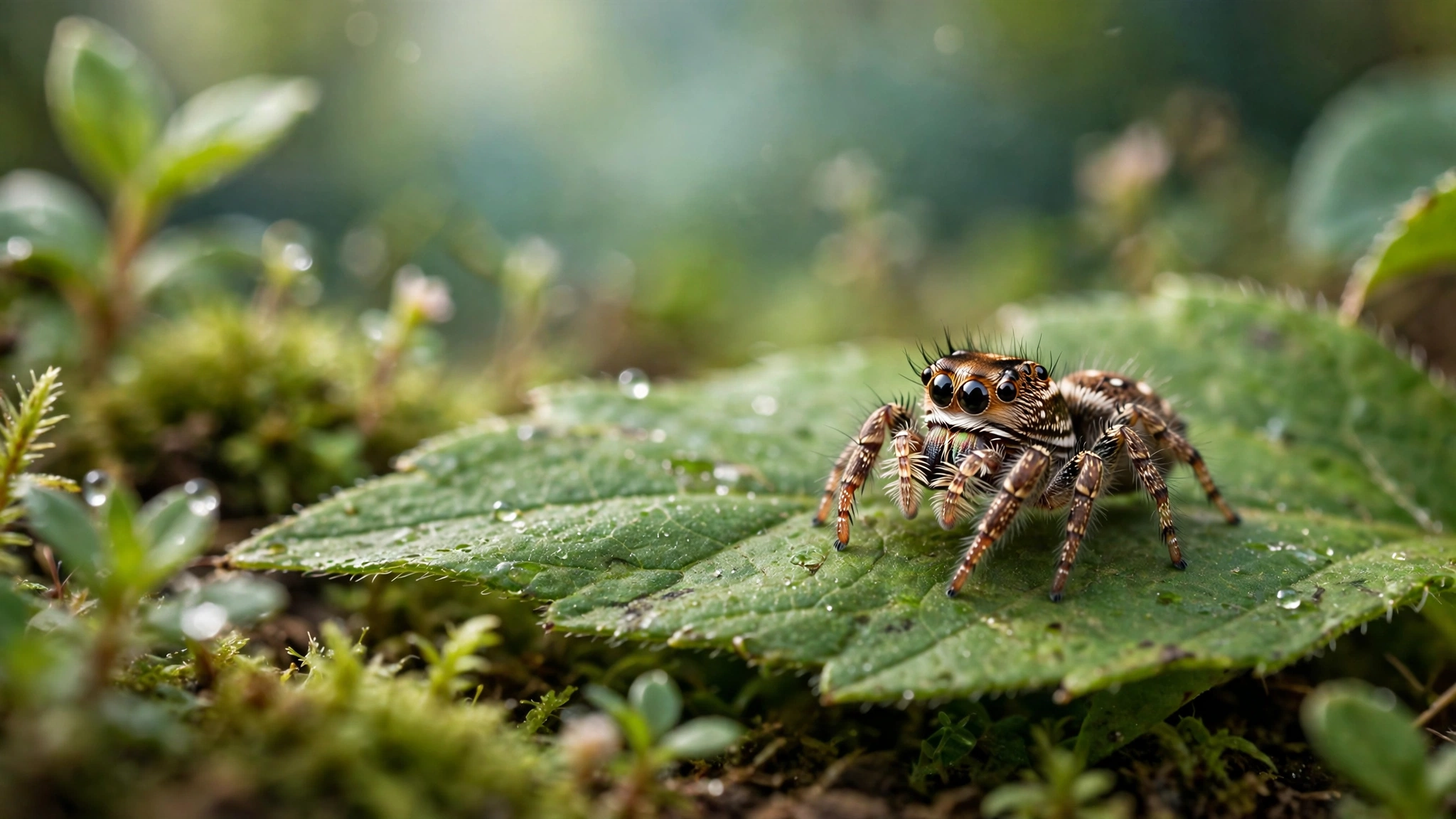
Quick Answer: Most jumping spiders live about one year, though some species — and well-cared-for pet females — can reach two or even three years. Females typically outlive males, and spiders kept as pets with steady food and proper humidity often live longer than their wild counterparts.
Average Lifespan of a Jumping Spider
Jumping spiders (family Salticidae) are the charismatic little hunters of the spider world, famous for their excellent vision and cat-like pouncing. Despite their big personalities, their lives are short. The typical jumping spider lives around 12 months from hatching to natural death, with the exact span depending on species, sex, climate, and living conditions.
The most commonly kept pet species, Phidippus audax (the bold jumping spider) and Phidippus regius (the regal jumping spider), generally live 1 to 2 years in captivity. Regal jumping spiders are among the longest-lived, with females sometimes reaching 2.5 to 3 years under ideal care. Smaller species like Salticus scenicus (the zebra jumping spider) usually live closer to a single year.
Males vs. Females: Who Lives Longer?
Female jumping spiders consistently outlive males, often by several months. There are a few reasons. Males mature faster and spend their adult lives roaming in search of mates — a risky lifestyle that exposes them to predators, dehydration, and exhaustion. Males also typically stop eating as much once mature, pouring their remaining energy into courtship. Females, by contrast, stay closer to a home territory, keep feeding, and can produce multiple egg sacs over their adult lives. In many species, a male’s adult life lasts only a few months after his final molt.
The Jumping Spider Life Cycle
Eggs
A female lays 30 to 200 eggs in a silken sac, often tucked under bark, in a curled leaf, or in a corner of an enclosure. She guards the sac aggressively. Eggs hatch in 2 to 4 weeks depending on temperature.
Spiderlings
Newly hatched spiderlings stay in the nest for their first molt or two, then disperse. They are tiny — just a couple of millimeters — and extremely vulnerable to drying out, starvation, and predation. Most spiderlings in the wild do not survive to adulthood.
Juveniles and Molting
Growing spiders must molt — shed their exoskeleton — typically 5 to 9 times before reaching adulthood. Each molt is a dangerous moment; the spider is soft and helpless for hours. Juveniles that survive to their final molt emerge as sexually mature adults, often with dramatically different coloring (adult male Phidippus spiders develop striking iridescent markings).
Adulthood and Old Age
Adult jumping spiders spend their remaining months hunting, mating, and (for females) laying eggs. Signs of old age include a shrinking abdomen, reluctance to hunt, difficulty climbing smooth surfaces, and a generally lethargic demeanor. A spider near the end of its life may accept only pre-killed prey or sugar water.
Wild vs. Captive Lifespan
Wild jumping spiders face predators (wasps, birds, other spiders), parasites, harsh weather, and feast-or-famine food supplies — most die well before their biological potential. Captive spiders skip nearly all of that. With consistent meals, stable temperatures, and proper humidity, pet jumping spiders routinely outlive wild ones by months. The trade-off is that captivity demands attentive care: a neglected enclosure kills faster than any predator.
How to Help a Pet Jumping Spider Live Longer
- Feed appropriately sized prey: Flightless fruit flies for spiderlings, then small crickets, mealworms, or house flies. Prey should be no larger than the spider’s body. Remove uneaten live prey within a day — crickets can injure a molting spider.
- Mist for humidity: Lightly mist one side of the enclosure every day or two so the spider can drink droplets. Avoid soaking the enclosure.
- Keep temperatures moderate: Room temperature (70–78°F) suits most species. Avoid direct sunlight, which can cook a small enclosure in minutes.
- Provide climbing and hiding spots: Cork bark, fake plants, and textured walls reduce stress. Front-opening enclosures are less stressful than top-opening ones.
- Don’t overhandle: Jumping spiders are curious and many tolerate gentle handling, but every handling session is a fall risk. Let the spider come to you.
- Respect molting: If your spider seals itself in a silk retreat and refuses food, leave it completely alone until it emerges — this can take a week or more.
Signs Your Jumping Spider Is Dying of Old Age
It can be hard to distinguish old age from illness, but the classic signs of a senior spider include a shriveled abdomen despite feeding, loss of grip on smooth surfaces, uncoordinated movements, and spending all its time on the enclosure floor. At this stage, offer easy meals (pre-killed prey, a dab of honey water on a cotton swab) and keep handling to zero. There is no cure for old age — only comfort.
Best Jumping Spider Species for Beginners
If the lifespan discussion has you considering a pet jumper, some species are better starter choices than others. The regal jumping spider (Phidippus regius) is the gold standard for beginners: large (females reach nearly an inch), docile, visually stunning, and among the longest-lived at up to 2–3 years for females. The bold jumping spider (Phidippus audax) is the most common North American species — hardy, curious, and easy to find from breeders, living 1–2 years. The tan jumping spider (Platycryptus undatus), often found on houses and fences, is a hardy native option for those who prefer observing wild-caught spiders. Avoid tiny species under a quarter inch for your first spider; they are harder to feed and more fragile. Whatever species you choose, buy captive-bred from a reputable breeder rather than collecting from the wild — captive-bred spiders are healthier, less stressed, and you aren’t depleting local populations.
Setting Up the Perfect Jumping Spider Enclosure
A good enclosure directly affects lifespan. For an adult Phidippus, a 4x4x8-inch or 6x6x9-inch enclosure is ideal — tall rather than wide, since jumpers are climbers. Front-opening or side-opening designs are essential because top-opening lids destroy the silk retreats spiders build at the ceiling. Furnish with cork bark flats, artificial plants, and textured backgrounds for climbing; add a small piece of damp sphagnum moss in one corner to hold humidity. Substrate can be simple — coconut fiber or paper towel both work. Keep the enclosure at room temperature away from windows, mist lightly every day or two, and feed prey no bigger than the spider. A well-set-up enclosure is the difference between a spider that survives and one that thrives for its full potential lifespan.
Further Reading
- How Long Do Raccoons Live? Complete Answer (2026)
- How Long Do Great Danes Live? Complete Answer (2026)
- How Long Do Boston Terriers Live? Complete Answer
- PetMD’s veterinary-reviewed articles
- Humane Society of the United States
Frequently Asked Questions
Do jumping spiders recognize their owners?
They don’t recognize people the way a dog does, but jumping spiders have excellent vision and many keepers report their spiders reacting to them — turning to watch, approaching the enclosure front. Whether that’s recognition or food anticipation is an open question.
Why did my jumping spider die after laying eggs?
Egg-laying is enormously taxing. Females often decline rapidly after producing several sacs, especially if they were already mature when they mated. This is normal, not a care failure.
Can jumping spiders survive winter?
In temperate regions, most jumping spiders overwinter as juveniles or subadults in sheltered retreats, entering a dormant state. Adults that hatched in spring usually die before winter.
How often should I feed my jumping spider?
Spiderlings: daily. Juveniles: every 2–3 days. Adults: every 3–5 days, or when the abdomen looks slim. A plump, rounded abdomen means a well-fed spider.
Do jumping spiders bite humans?
Bites are extremely rare and medically insignificant — comparable to a mild mosquito bite. Jumping spiders would much rather flee than bite.
Conclusion
A jumping spider’s year-long life is brief, but it is packed with hunting, problem-solving, and personality. Whether you are observing zebra spiders on a garden fence or keeping a regal jumper in a bioactive enclosure, understanding their life cycle helps you appreciate every molt and every pounce — and give a pet spider the care it needs to stretch that single year as far as nature allows.