
 By admin
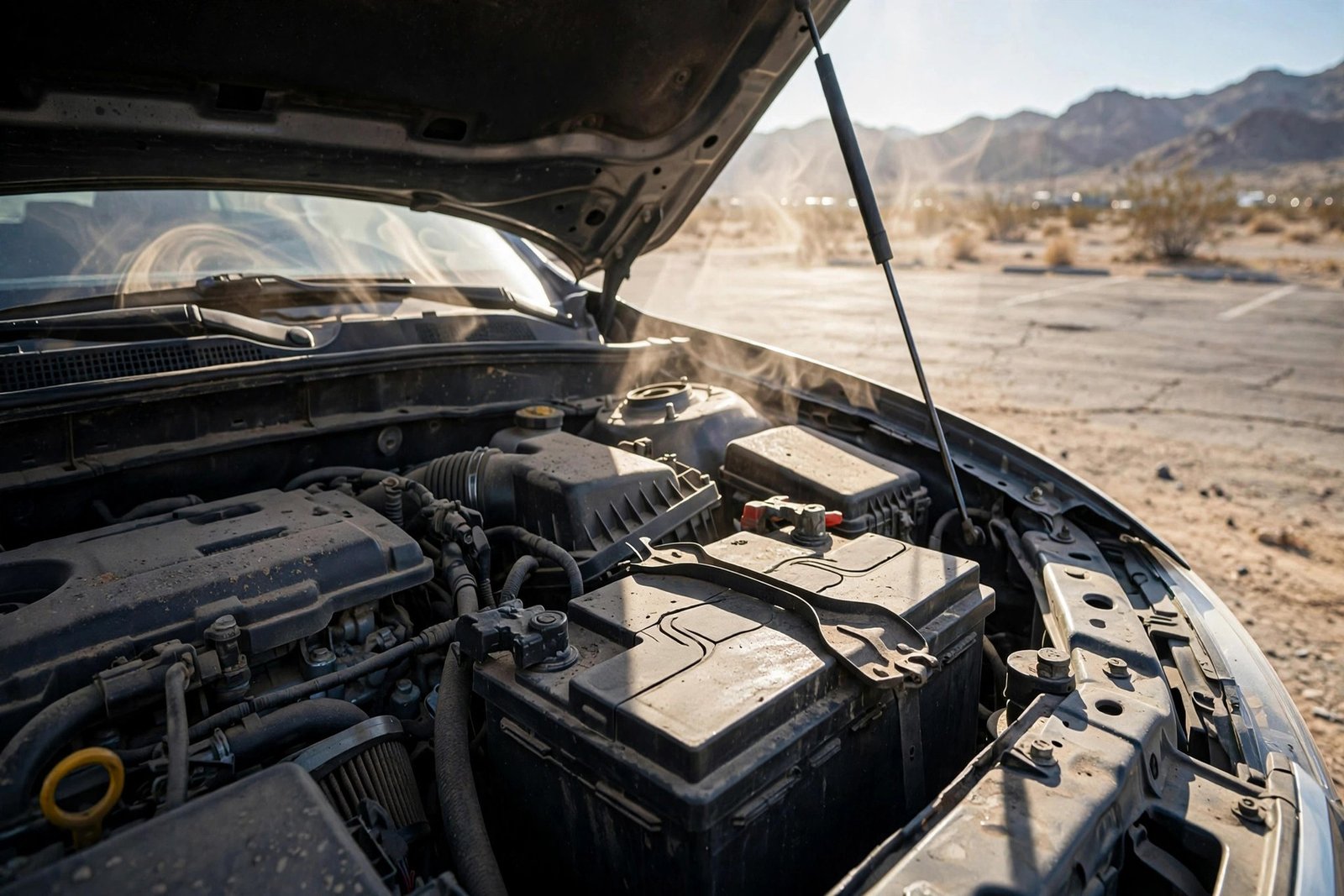
Ask most drivers what kills car batteries and they’ll say brutal winter cold. It feels true — batteries love to die on the coldest morning of the year. But battery engineers will tell you the real killer is heat. Sustained high temperatures quietly cook a battery from the inside out, and in places like Phoenix, Las Vegas, and southern Texas, the average car battery gives up far sooner than the “three to five years” printed on the warranty card.
If you live somewhere the summer thermometer regularly parks above 100°F, this guide is for you. We’ll cover how long car batteries actually last in hot climates, the chemistry of why heat destroys them, the warning signs of a dying battery, and the practical steps — from parking choices to battery type — that can squeeze extra months or even years out of your next one.
Why Heat Is Worse Than Cold for Batteries
A car battery is a chemical reactor: lead plates submerged in sulfuric acid, converting chemical energy to electrical energy. Heat accelerates every chemical reaction inside that case — including the parasitic ones you don’t want. High temperatures speed up the corrosion of the positive grid, accelerate water evaporation from the electrolyte, and hasten the sulfation that coats plates in lead sulfate crystals. Each of these permanently reduces capacity.
The cruel irony is that heat damage is silent while cold failure is dramatic. A heat-weakened battery still starts your car fine all summer because warm engines turn over easily and chemical reactions run briskly. The damage only reveals itself on the first genuinely cold morning, when the weakened battery can’t deliver enough cranking amps — which is why everyone blames winter. The battery didn’t die in January; it died in August and nobody noticed. It’s the same reason phone batteries degrade faster when they’re constantly hot — heat is the universal enemy of rechargeable chemistry.
How Long Car Batteries Actually Last in Hot Climates
Forget the national average. In the desert Southwest — Phoenix, Tucson, Las Vegas, Palm Springs — the realistic lifespan of a conventional flooded lead-acid battery is about two to three years, with many failing just past the two-year mark. AAA’s battery service data has consistently shown that extreme-heat regions replace batteries far more often than the national average, and technicians in Phoenix routinely tell customers to start testing annually after year two.
In hot-but-not-desert climates — think Houston, Miami, Atlanta, or Southern California — expect roughly three to four years. The difference is the number of days above 95°F and, critically, nighttime temperatures. Batteries cool overnight; in places where nights stay above 85°F for months, the battery never gets a thermal break and degradation compounds. By contrast, the same battery in Minneapolis might last five or six years. Geography is the single biggest variable in battery life, bigger than brand for most drivers.
Warning Signs Your Battery Is Dying in the Heat
Heat failures often announce themselves subtly before the no-start morning. Watch for: the engine cranking slightly slower than usual, especially on the first start of the day; headlights dimming noticeably at idle; the battery case looking swollen or bloated (heat causes internal pressure — a bulging case means replace immediately); a rotten-egg sulfur smell near the battery (venting hydrogen sulfide); and corroded, crusty buildup on the terminals accelerating in summer.
Dashboard warnings deserve respect too. A battery or charging-system warning light that flickers on during hot afternoons can indicate the alternator struggling against a failing battery’s internal resistance. And here’s a heat-specific tell: if your car starts fine in the morning but cranks weakly after sitting in a sun-baked parking lot all afternoon, heat soak is exposing a battery that’s already marginal. Don’t wait for it to strand you — test it.
How to Make Your Battery Last Longer in the Heat
You can’t change the climate, but you can change the battery’s microclimate. Park in shade or a garage whenever possible — under-hood temperatures in direct sun can exceed 170°F, and every bit of shade helps. If a garage isn’t an option, even parking with the nose facing away from the afternoon sun reduces heat soak over the engine bay.
Keep terminals clean. Corrosion increases resistance, making the alternator work harder and the battery run hotter. A wire brush and a paste of baking soda and water, followed by a thin coat of dielectric grease or petroleum jelly, takes ten minutes twice a year. Check the electrolyte if you have a serviceable battery — heat evaporates water, and low fluid exposes plates to air, which kills them fast. Top up with distilled water only, never tap water. Minimize short trips: starting the engine is the hardest thing a battery does; five two-minute trips in 105°F heat drain far more than one long drive that lets the alternator fully recharge.
Finally, test annually after year two. Most auto parts stores test batteries free with a conductance tester that measures actual capacity, not just voltage. A battery reading below about 12.4 volts at rest (engine off, sitting an hour) is telling you its days are numbered — start shopping before it decides for you, ideally before your next summer road trip across the desert Southwest puts maximum stress on it.
Choosing the Right Battery for a Hot Climate
Not all batteries handle heat equally. In hot climates, an AGM (absorbent glass mat) battery is worth the premium — typically $50–$100 more than a conventional flooded battery. AGM designs are sealed (no water loss), resist vibration, and handle heat cycling better; in Phoenix they commonly outlast flooded batteries by a year or more, which more than pays for the price difference.
Ignore the temptation to chase the highest cold-cranking amps (CCA) number — CCA measures cold performance, which you barely need. In heat, reserve capacity matters more: it’s how long the battery can run essentials if the alternator fails. Also check the manufacture date sticker (a code like “5/26” means May 2026) and buy the freshest battery on the shelf — a battery that sat in a hot warehouse for eight months has already aged. The Battery Council International’s buying guidance is a solid reference for decoding date codes and specs.
When to Test, and When to Just Replace
The practical rule for hot climates: test every six months starting at the two-year mark, and replace proactively at the first failed test rather than waiting for a no-start. A battery that tests “marginal” in October will not survive to spring in the desert — heat damage doesn’t heal in cooler months.
Replace immediately if you see a swollen case, leaking acid, or a battery more than four years old in a desert climate regardless of how it tests — you’re driving on borrowed time. And when you replace, have the charging system tested too: a failing alternator or a parasitic drain will kill a brand-new battery in weeks, and in heat country that misdiagnosis is an expensive lesson. AAA’s battery testing and replacement service will check the whole charging system, not just the battery, which is exactly the thoroughness hot climates demand.
Conclusion
In hot climates, two to three years is the honest answer for battery life — not the five years on the warranty paperwork. Heat silently corrodes, evaporates, and sulfates your battery all summer, then lets winter take the blame. Park in the shade, keep terminals clean, test annually after year two, and spend the extra money on an AGM battery with a fresh date code. A $200 proactive replacement in your driveway beats a $200 battery plus a tow truck and a ruined afternoon every single time.
Frequently Asked Questions
Does heat or cold kill car batteries faster?
Heat kills faster — it accelerates grid corrosion, water evaporation, and sulfation, permanent damage that accumulates silently all summer. Cold mostly exposes weakness that’s already there.
How long do car batteries last in Phoenix or Las Vegas?
Two to three years for conventional flooded batteries; three to four for AGM. Start testing every six months once a desert battery approaches its second birthday.
Can I check my car battery’s health myself?
A $15 multimeter reads resting voltage (12.6V+ healthy, under 12.4V weak), but voltage doesn’t measure capacity — get a free conductance test at an auto parts store for a real answer.
Does parking in the shade really extend battery life?
Yes — under-hood temperatures in direct desert sun can top 170°F; shade or a garage cuts that dramatically, and heat-driven degradation compounds with temperature.
Should I buy an AGM battery for a hot climate?
For most drivers in extreme-heat regions, yes — sealed (no water loss), better heat resistance, typically a year or more longer in the desert. The $50–$100 premium pays for itself.