
 By admin
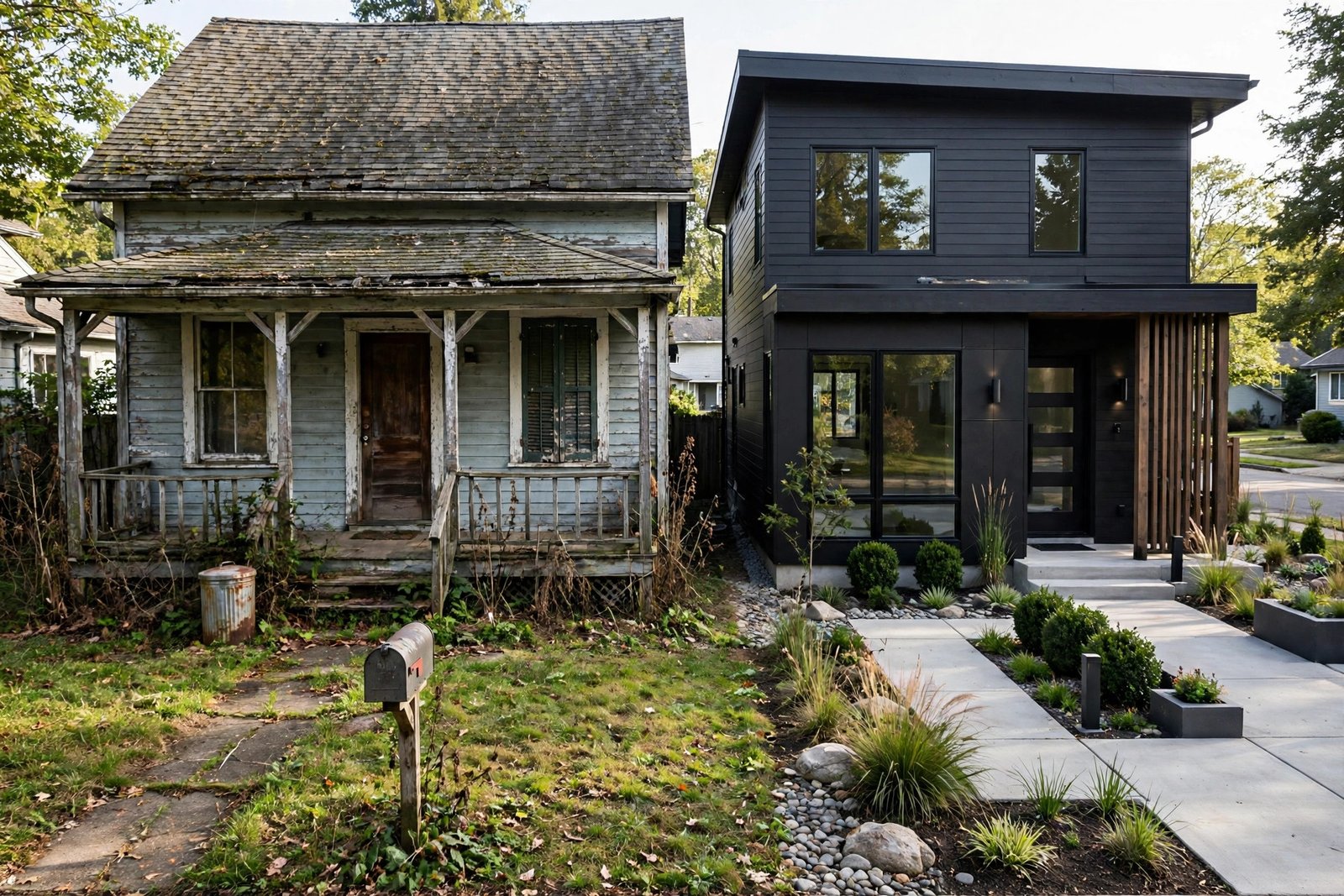
Every house hunter eventually stands in a dated kitchen with peeling linoleum, looks past the avocado-green appliances, and does the mental math: what if we bought the ugly one and made it beautiful? The fixer-upper fantasy is powerful — buy low, renovate smart, build instant equity, end up with a custom home for less than the turnkey equivalent. HGTV has built an empire on exactly this dream.
But the gap between the fantasy and the financial reality is where budgets go to die. Some fixer-uppers are genuine wealth-builders; others are money pits wearing a “potential” costume. Meanwhile, move-in ready homes charge a premium that sometimes — not always — is worth every penny. Here’s how to decide which path fits your money, your timeline, and your tolerance for chaos.
The Real Math of a Fixer-Upper
Start with the fundamental equation: purchase price + renovation costs + carrying costs + contingency = your true all-in cost. Compare that against the price of a comparable renovated home in the same neighborhood. The rule of thumb investors use is the 70% rule — don’t pay more than 70% of the after-repair value minus renovation costs — but owner-occupants can be a bit more flexible since they’re buying a home, not flipping for profit.
Where buyers go wrong is underestimating renovation costs, typically by 20–40%. A “cosmetic” kitchen update ($15,000 in your head) becomes $35,000 once you open walls and find 1970s wiring. Bathrooms run $10,000–$30,000 each. A roof is $10,000–$25,000. Foundation work can hit $40,000. And carrying costs — the mortgage, taxes, insurance, and possibly rent on your current place while the house is uninhabitable — bleed you monthly. A six-month renovation on a $400,000 purchase at 7% interest costs roughly $14,000 in mortgage payments alone before you spend a dollar on contractors. The FHA 203(k) program exists precisely for this scenario, rolling purchase and renovation into one loan — worth understanding before you dismiss fixer-uppers as cash-only territory.
What You’re Really Buying: Problems You Can See vs. Problems You Can’t
Not all fixer-uppers are created equal. Cosmetic fixers — dated finishes, ugly paint, worn carpet, overgrown landscaping — are the sweet spot: cheap to fix, no structural risk, and the transformation is dramatic. Mechanical fixers need new HVAC, plumbing, electrical, or roofing — expensive but predictable, with quotes you can get before closing. Structural fixers involve foundations, load-bearing walls, major water damage, or mold — the danger zone where costs spiral and timelines double.
The inspection is your X-ray. Never skip it on a fixer-upper — the answer on waiving is almost always no, but doubly so here. Bring a contractor to the inspection if possible; inspectors identify problems, contractors price solutions. Get renovation bids before your inspection contingency expires, not after. And budget a 20% contingency on top of every bid — on older homes, make it 25%. Once the keys are yours, the essential tools every homeowner needs will cover the small jobs between contractor visits.
The Case for Move-In Ready
The premium for turnkey homes — often 10–20% over comparable fixers — buys things with real economic value. First, certainty: your total cost is the purchase price, period. No contractor roulette, no six-month kitchen exile, no discovering asbestos behind the drywall. Second, time: you move in immediately instead of managing a renovation while working full-time, which has a stress cost that never appears in spreadsheets but absolutely appears in marriages.
Third, financing simplicity: conventional mortgages, no renovation loan complexity, no drawing funds in phases. Fourth, in appreciating markets, the “premium” often evaporates — if the neighborhood rises 5% while you’d have spent eight months renovating, the turnkey buyer captured appreciation from day one while the fixer buyer captured dust. Run the numbers honestly: a $450,000 move-in ready home vs. a $380,000 fixer needing $60,000 in work plus $15,000 in carrying costs and six months of your life. The “deal” is $5,000 cheaper and infinitely more stressful.
The Hidden Variables Nobody Puts in the Spreadsheet
Several factors tilt the decision in ways pure math misses. Your DIY skills matter enormously — buyers who can genuinely handle demo, paint, flooring, and landscaping can shave 30–40% off renovation costs, while buyers hiring everything out pay full retail for every nail. Your timeline matters: renovating with small children or while working 60-hour weeks is a different proposition than a flexible schedule.
Local contractor availability is a huge hidden variable. In many West Coast markets, reputable contractors book 3–6 months out and charge premium rates; your “eight-week kitchen” becomes a five-month saga. Permit timelines add more delay — structural, electrical, and plumbing work typically requires permits and inspections that add weeks. And consider the total cost comparisons from NerdWallet’s housing analysts, who consistently find that buyers underestimate fixer-upper costs while overestimating the turnkey premium.
If you go the fixer route, line up your renovation team before closing. Our guide on finding a reliable contractor for home repairs covers vetting, bids, and the contract terms that protect you when projects go sideways.
A Decision Framework That Actually Works
Choose the fixer-upper if: the discount vs. renovated comps exceeds 20% after honest renovation estimates; problems are cosmetic or mechanical (not structural); you have 20–25% contingency funds beyond the bids; you can tolerate 3–6 months of disruption; and you have access to reliable contractors or real DIY skills. The equity you build is genuine wealth — forced appreciation that no savings account matches.
Choose move-in ready if: the price gap vs. fixers is under 10–15%; you need to move on a deadline (job relocation, school year, lease ending); you have limited cash reserves beyond the down payment; the local contractor market is backed up or overpriced; or you simply value your evenings and weekends more than the potential savings. There’s no shame in buying certainty — it’s a legitimate financial product.
Either way, protect the asset from day one. Whether it’s a freshly renovated kitchen or a brand-new build, budgeting for a home security system is one of those first-year costs buyers forget until after move-in.
Conclusion
The fixer-upper vs. move-in ready decision comes down to honest math and honest self-assessment. Price the renovation with contractor bids (not guesses), add 20–25% contingency and full carrying costs, then compare against turnkey comps — if the fixer still wins by a comfortable margin and you can handle the disruption, it’s a wealth-building move. If the gap is thin, your timeline is tight, or your reserves are limited, the move-in ready premium is buying something valuable: certainty. The worst outcome isn’t picking the “wrong” type — it’s picking a fixer-upper with fantasy numbers and discovering the real ones mid-renovation.
Frequently Asked Questions
How much cheaper should a fixer-upper be?
As a rule of thumb, the purchase discount plus your renovation budget should come in at least 15–20% below the price of a comparable renovated home. Anything less and you’re taking renovation risk without meaningful compensation.
Can I get a regular mortgage on a fixer-upper?
Yes, if the home is habitable and meets the lender’s minimum property standards. For major renovations, FHA 203(k) or Fannie Mae HomeStyle loans roll purchase and renovation costs into one mortgage with a single closing.
What renovations add the most value?
Kitchens and bathrooms return the most at resale, followed by curb appeal and additional living space. But the highest ROI comes from buying below market — no renovation beats a good purchase price.
Should I live in the house during renovation?
For cosmetic work, usually yes — it saves rent. For kitchens, bathrooms, or anything involving dust, noise, and missing plumbing, budget for temporary housing. Living through a major renovation is the number one regret cited by fixer-upper buyers.
How do I estimate renovation costs accurately?
Get at least three contractor bids before your inspection contingency expires, price materials separately at current retail, and add 20–25% contingency. And don’t neglect the outside — improving your home’s curb appeal on a budget delivers some of the highest ROI of any fixer-upper project.