
 By admin
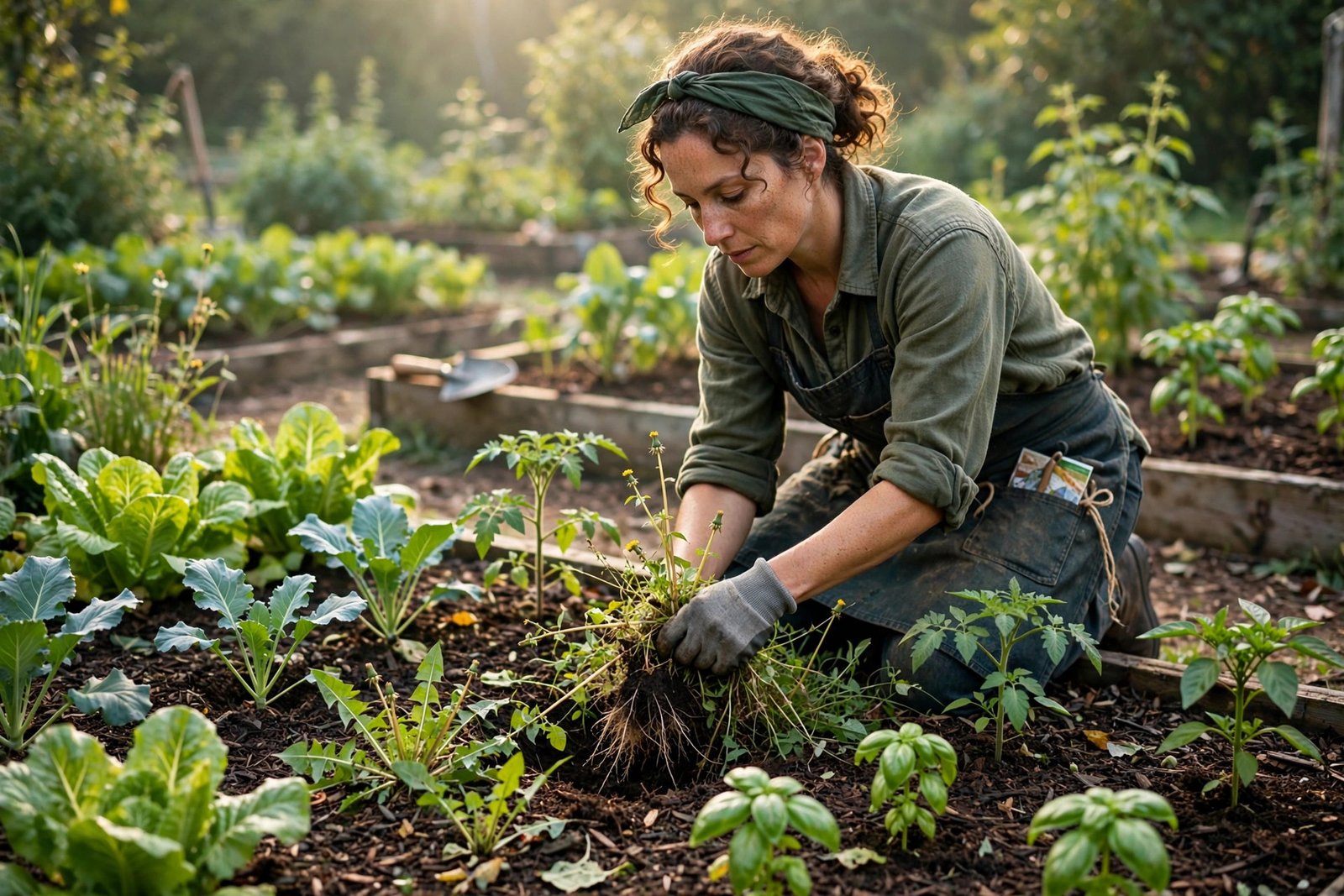
Weeds are gardening’s eternal adversary — and the standard weapons (glyphosate and other herbicides) come with health concerns, environmental costs, and the risk of damaging the plants you’re trying to protect. But here’s what the chemical companies don’t advertise: the most effective long-term weed control isn’t chemical at all. It’s ecological — making your garden a place where weeds can’t thrive in the first place, plus a few targeted manual techniques for the ones that persist.
This guide covers the prevention-first strategy, the manual and organic methods that actually work, how to handle the toughest perennial weeds, and the long game that makes weeding a 10-minute task instead of a weekend ordeal.
Prevention: Win Before Weeds Appear
The #1 weed-control strategy is never letting weed seeds germinate. Mulch deeply: 3–4 inches of wood chips, straw, or shredded leaves blocks the light weed seeds need to sprout — this single practice eliminates 80–90% of annual weeds. Keep mulch topped up; thin spots are weed doorways. Plant densely: bare soil grows weeds; covered soil doesn’t. Fill gaps with groundcovers, dense plantings, or cover crops — every square inch claimed by your plants is one denied to weeds.
Don’t till unnecessarily: tilling brings buried weed seeds to the surface where light triggers germination — one tilling can “plant” thousands of weeds. No-dig gardening (layering compost and mulch over cardboard) smothers existing weeds while preserving soil structure. Edge your beds: a clean 4–6 inch trench or barrier edge stops grass rhizomes from invading — most lawn-to-bed weed pressure comes through unedged borders. Never let weeds seed: one pigweed produces 100,000+ seeds; pulling weeds before they flower breaks the cycle permanently. The EPA’s guidance on reducing pesticide use supports prevention-first approaches as the most effective strategy.
Manual Methods That Actually Work
Hand-pulling: most effective when soil is moist (after rain or watering) — grasp low at the base and pull slowly to get the roots. For tap-rooted weeds (dandelions), a stand-up weeder or hori-hori knife gets the full root; snapped roots regrow. Hoeing: a sharp stirrup (hula) hoe, used on a dry sunny day, severs young weeds at the soil line in seconds — 10 minutes of hoeing weekly beats 3 hours of pulling monthly. The key: hoe weeds when they’re tiny, before they establish.
Smothering: for weedy areas you’re converting, lay cardboard (overlapping, no gaps) topped with 4–6 inches of mulch — in 2–3 months the weeds underneath die and the cardboard decomposes. Solarization: in hot climates, clear plastic over moist soil for 4–6 summer weeks cooks weed seeds in the top inches — effective for severe infestations before planting. Flame weeding: a propane torch passed quickly over young weeds (you’re bursting cell walls, not incinerating) works brilliantly for paths and driveways — keep a hose handy and check local fire regulations. For household chemical-free philosophy, see unclogging drains without harsh chemicals.
Organic Sprays and Treatments (Use Targeted)
Horticultural vinegar (20% acetic acid): burns top growth of young annual weeds on contact — effective, but it’s a non-selective contact killer (damages any plant it touches) and can irritate skin/eyes; handle with gloves and eye protection. It doesn’t kill roots, so perennial weeds resprout — best for young weeds in paths. Boiling water: the simplest weed killer in existence — devastatingly effective on weeds in pavement cracks and paths, free, and zero residue. (Obviously, keep it away from desired plants.)
Corn gluten meal: a pre-emergent that inhibits seed germination — apply in early spring before weed seeds sprout; it won’t kill existing weeds but prevents new ones (bonus: it’s also a mild nitrogen fertilizer). Iron-based herbicides (FeHEDTA): selectively kill broadleaf weeds in lawns without harming grass — one of the few organic options with real efficacy data. What to skip: salt (sterilizes soil long-term — never use it in garden beds), and homemade “vinegar + salt + dish soap” recipes that damage soil biology. The National Gardening Association evaluates organic weed-control products with practical guidance.
Defeating the Tough Perennials
Annual weeds are easy; perennial weeds (bindweed, quackgrass, Canada thistle, Bermuda grass) are the boss level — they spread by rhizomes and root fragments, so pulling often multiplies them. Strategy: exhaust the roots. Repeatedly remove top growth (weekly) so the plant burns root reserves without replenishing them — most perennials surrender within one growing season of relentless defoliation. Smother aggressively: double-layer cardboard plus 8+ inches of mulch for a full season starves even bindweed.
Targeted digging: for isolated patches, dig out the entire root system (sift soil for fragments — a 1-inch bindweed piece regrows). Never rototill perennial weeds — chopping rhizomes into pieces creates hundreds of new plants. Accept partial victory: in lawns, a dense healthy lawn outcompetes most weeds — overseed, mow high (3.5–4 inches shades weed seedlings), and leave clippings. Eradication is sometimes a multi-year campaign; management plus prevention wins the war. Broader eco-friendly yard care is covered in easy eco-friendly home practices.
The Long Game: Making Weeding Obsolete
Here’s the payoff nobody mentions: gardens managed with deep mulch, dense planting, and no-till methods need dramatically less weeding each year. Year 1 might demand real effort (especially converting weedy ground). Year 2: noticeably easier. Year 3+: weeding becomes a pleasant 10-minute weekly stroll — pull the few escapees while you admire your garden. The weed seed bank in soil depletes when seeds aren’t replenished, and each prevented seeding compounds.
This is the fundamental advantage over herbicides: chemicals kill this year’s weeds and leave the seed bank intact for next year — an endless treadmill. Ecological methods shrink the seed bank itself, making each year easier than the last. Invest the effort upfront in mulch, edges, and dense planting, and you’ll spend your future garden time harvesting and relaxing instead of battling weeds.
Conclusion
Stopping weeds without harsh chemicals means playing the long game: prevent germination with deep mulch and dense planting, kill young weeds fast with hoeing and smothering, use targeted organic treatments for paths and tough spots, and exhaust perennials through persistent defoliation. It’s more effective than herbicides over time — because you’re eliminating future weeds, not just this week’s. Your soil, your pollinators, and your future self will thank you.
Frequently Asked Questions
What’s the fastest chemical-free way to clear a very weedy area?
Sheet mulching: mow weeds flat, lay overlapping cardboard, top with 4–6 inches of wood chips or straw, and wait 2–3 months. The weeds die underneath, the cardboard decomposes, and you’re left with plantable, weed-suppressed ground. For paths and patios, boiling water or flame weeding works in minutes.
Does vinegar really kill weeds?
Horticultural vinegar (20% acetic acid) kills young annual weeds’ top growth on contact, but not roots — perennials resprout. Household vinegar (5%) is weak and mostly ineffective. Use it as a targeted tool for paths and cracks, not as a garden-wide solution, and protect your skin and eyes.
How do I keep grass out of my garden beds?
Install a physical edge: a 4–6 inch deep trench or metal/plastic edging between lawn and beds stops rhizome invasion (most grass enters beds laterally, not by seed). Maintain it yearly — edges degrade. Mulch beds deeply so any grass that does arrive pulls out easily.
Are “natural” weed killers safe for pets and kids?
Generally safer than synthetics once dry, but “natural” ≠ harmless — 20% vinegar burns skin and eyes, and even corn gluten meal should be kept from ingestion in quantity. Boiling water and hand-pulling are the only truly zero-risk methods. Always read labels and keep kids and pets away until treatments dry.