
 By admin
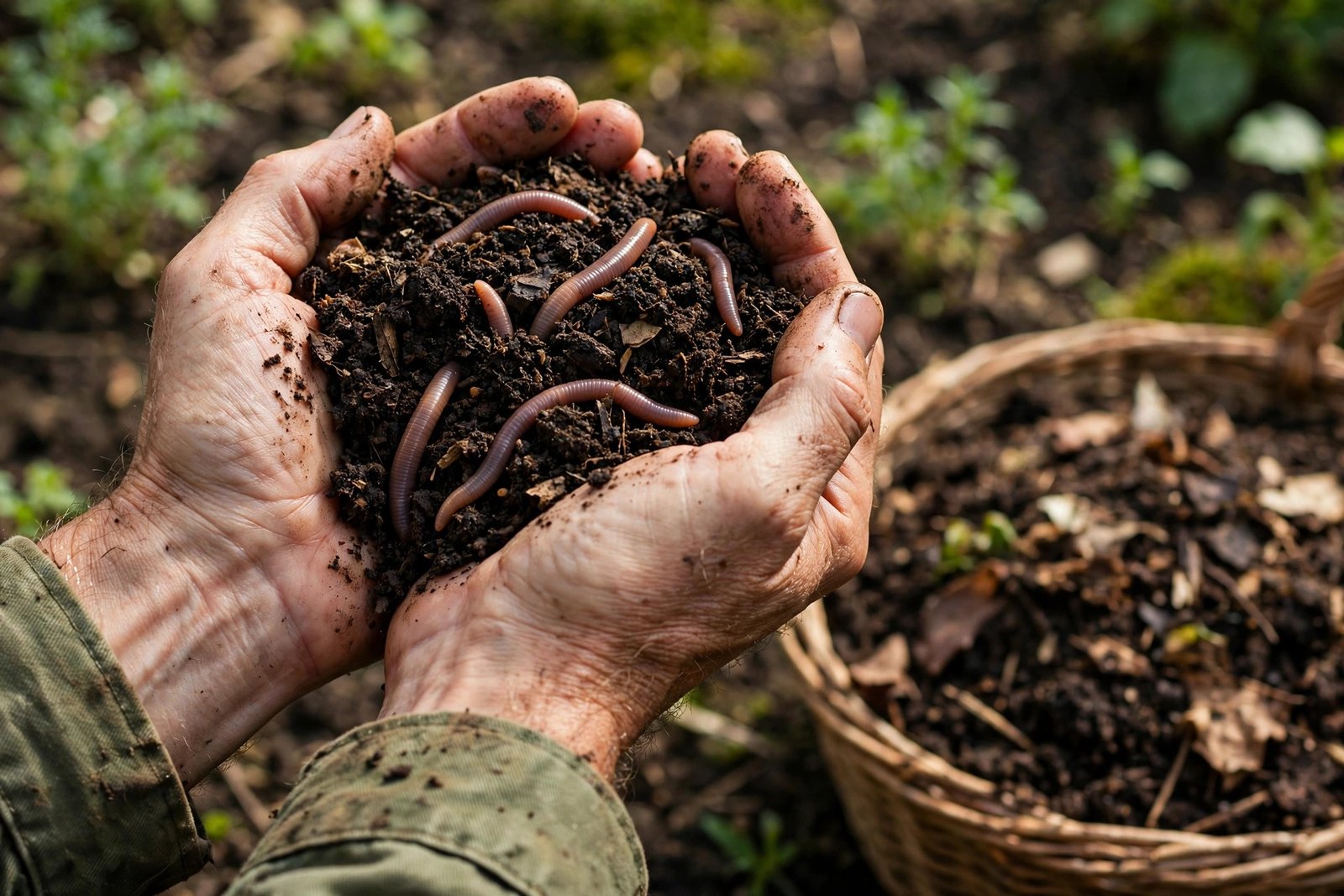
Poor soil is the invisible reason gardens underperform — stunted plants, yellow leaves, water that pools or vanishes. The conventional fix is chemical fertilizers, which feed plants while doing nothing for (or actively harming) the soil itself. But soil is a living ecosystem, and the chemical-free approach doesn’t just avoid synthetics — it builds genuinely better soil that outperforms fertilized dirt year after year.
This guide covers diagnosing your soil, the organic amendments that transform it, the no-dig methods that build structure, and the timeline for real improvement.
Diagnose First: What Kind of “Poor” Is Your Soil?
Poor soil comes in flavors, and the fix depends on the diagnosis. Clay soil: dense, sticky when wet, rock-hard when dry, drains slowly. Sandy soil: drains instantly, won’t hold nutrients or water, feels gritty. Compacted soil: hard as concrete from foot traffic or construction — roots can’t penetrate. Depleted soil: looks okay but grows poorly — nutrients exhausted by years of growing without replenishment.
Do the jar test: fill a jar 1/3 with soil, add water, shake, and let settle — sand sinks first, then silt, then clay, with organic matter floating. The layers reveal your soil’s composition. For $15–$30, your state cooperative extension offers lab soil testing that reports pH, nutrients, and organic matter precisely — the best money in gardening. The USDA’s Natural Resources Conservation Service provides excellent soil health assessment guidance for home gardeners.
Compost: The Universal Fix
If you do one thing, add compost. Finished compost improves every soil type simultaneously: it loosens clay (creating pore space), helps sand retain water and nutrients, feeds the microbial life that makes nutrients available to plants, and adds slow-release nutrition. No single amendment does more. Apply 2–3 inches over beds each spring and let earthworms work it in — or gently fork it into the top few inches.
Make your own (free, and the best quality) or buy in bulk from municipal composting programs — many cities sell tested, high-quality compost for $25–$40 per cubic yard, vastly cheaper than bagged. Avoid “mystery” compost of unknown origin (persistent herbicides in some manures and municipal composts can damage gardens — ask about sourcing). One caution: compost is a soil conditioner first and a fertilizer second — it’s gentle, which is the point. Composting is also one of the easiest ways to be more eco-friendly at home while feeding your soil for free.
Cover Crops and Mulch: Soil Building on Autopilot
Cover crops (“green manures”) are the organic gardener’s secret weapon: plant clover, winter rye, or buckwheat in empty beds, let them grow, then cut and leave them as mulch or turn them under. Their roots break up compaction, fix nitrogen (legumes like clover), suppress weeds, and feed soil biology — all while you’re doing nothing. Fall-planted cover crops transform beds over winter for spring planting.
Mulch is cover cropping’s lazy cousin: 3–4 inches of wood chips, straw, or shredded leaves over beds feeds soil life as it decomposes, retains moisture, suppresses weeds, and moderates temperature. The Back to Eden / deep-mulch method has devotees for good reason — thick wood-chip mulch over cardboard (sheet mulching) converts even weedy lawn into plantable beds within a season, no digging required. Both methods work with nature’s pace rather than against it. Starting fresh beds? Beginner garden setup covers bed preparation from scratch.
Targeted Fixes for Specific Problems
Clay: compost + coarse organic matter (never add sand to clay — it makes concrete-like soil); gypsum helps sodic clays specifically. Raised beds are the pragmatic shortcut for severe clay. Sand: massive amounts of compost and biochar (biochar’s porous structure holds water and nutrients in sand beautifully — a one-time amendment lasting decades). Compaction: broadfork to fracture without inverting soil layers (preserves soil structure); daikon radishes as bio-drills; then mulch heavily and stay off the beds (permanent pathways prevent re-compaction).
Low pH (acidic): wood ash or lime raises pH gradually — test first, amend based on results, retest yearly. High pH (alkaline): elemental sulfur or acidic mulches (pine needles) lower it slowly. Depleted nutrients: compost plus specific organic amendments — bone meal for phosphorus, kelp meal for potassium and micronutrients, blood meal for nitrogen (use judiciously). Always amend based on soil test results, not guesses — the National Gardening Association offers amendment guidance by test result.
The Timeline: Patience Pays Compound Interest
Set expectations honestly: chemical fertilizers show results in days; biological soil building shows results in seasons. Year 1: modest improvement, mainly from compost’s direct nutrition. Year 2: noticeable structure improvement, better water retention, fewer pest issues. Year 3+: the transformation — dark, crumbly, earthworm-rich soil that grows vigorous plants with minimal input. Each year’s organic matter compounds.
This is the fundamental tradeoff, and it’s worth it: you’re not feeding plants, you’re building an ecosystem that feeds plants indefinitely. Gardeners who commit to the biological approach consistently report that by year three, their gardens outperform their chemically-fertilized neighbors’ — with less work, less water, and fewer pest problems. Soil is the original compound-interest investment. For a chemical-free household overall, unclogging drains without harsh chemicals extends the philosophy indoors.
Reading Your Plants: What Deficiencies Look Like
Your plants are already telling you what’s wrong — learn their language. Yellow older leaves, stunted growth: nitrogen deficiency — add compost and blood meal. Purple-tinged leaves, poor flowering: phosphorus shortage — bone meal helps. Brown leaf edges, weak stems: potassium deficiency — kelp meal or wood ash. Yellow between leaf veins (veins stay green): iron or magnesium issue, often pH-related — test pH before amending. These visual cues guide targeted organic fixes between formal soil tests, turning every growing season into a diagnostic opportunity. Photograph symptoms for your records; patterns across seasons reveal chronic issues worth addressing structurally.
Conclusion
Improving poor soil without chemicals means feeding the soil food web, not just the plants: diagnose with a jar test or lab test, add compost generously, grow cover crops, mulch deeply, and fix specific issues with targeted organic amendments. Give it three seasons of consistent organic matter, and you’ll have soil that makes gardening feel easy — because when the soil is right, everything else follows.
Frequently Asked Questions
How long does it take to fix poor soil organically?
Expect noticeable improvement within one growing season from compost and mulch, significant transformation in 2–3 years of consistent organic matter additions. Severely depleted or compacted soils take longer. The improvement compounds — each year builds on the last, unlike chemical fertilizers which must be reapplied constantly.
Can I really garden without any fertilizer?
Yes, once soil biology is established — compost, mulch, and cover crops supply steady nutrition. During the transition years (1–2), targeted organic amendments (based on soil tests) bridge the gap. Mature organic gardens often need nothing but annual compost and mulch.
Is manure safe to use in a vegetable garden?
Composted/aged manure, yes — fresh manure can burn plants and harbor pathogens; it must be composted (hot-composted to kill pathogens) and ideally applied months before harvest for edibles. Ask suppliers about herbicide contamination — persistent herbicides in some manures devastate gardens and don’t break down in composting.
What’s the difference between compost and fertilizer?
Compost is decomposed organic matter that improves soil structure, feeds microbes, and provides gentle slow-release nutrition — it builds the soil ecosystem. Fertilizer (organic or synthetic) supplies concentrated nutrients directly to plants without improving soil. Healthy gardens need the former; the latter is a supplement, not a foundation.