
 By admin
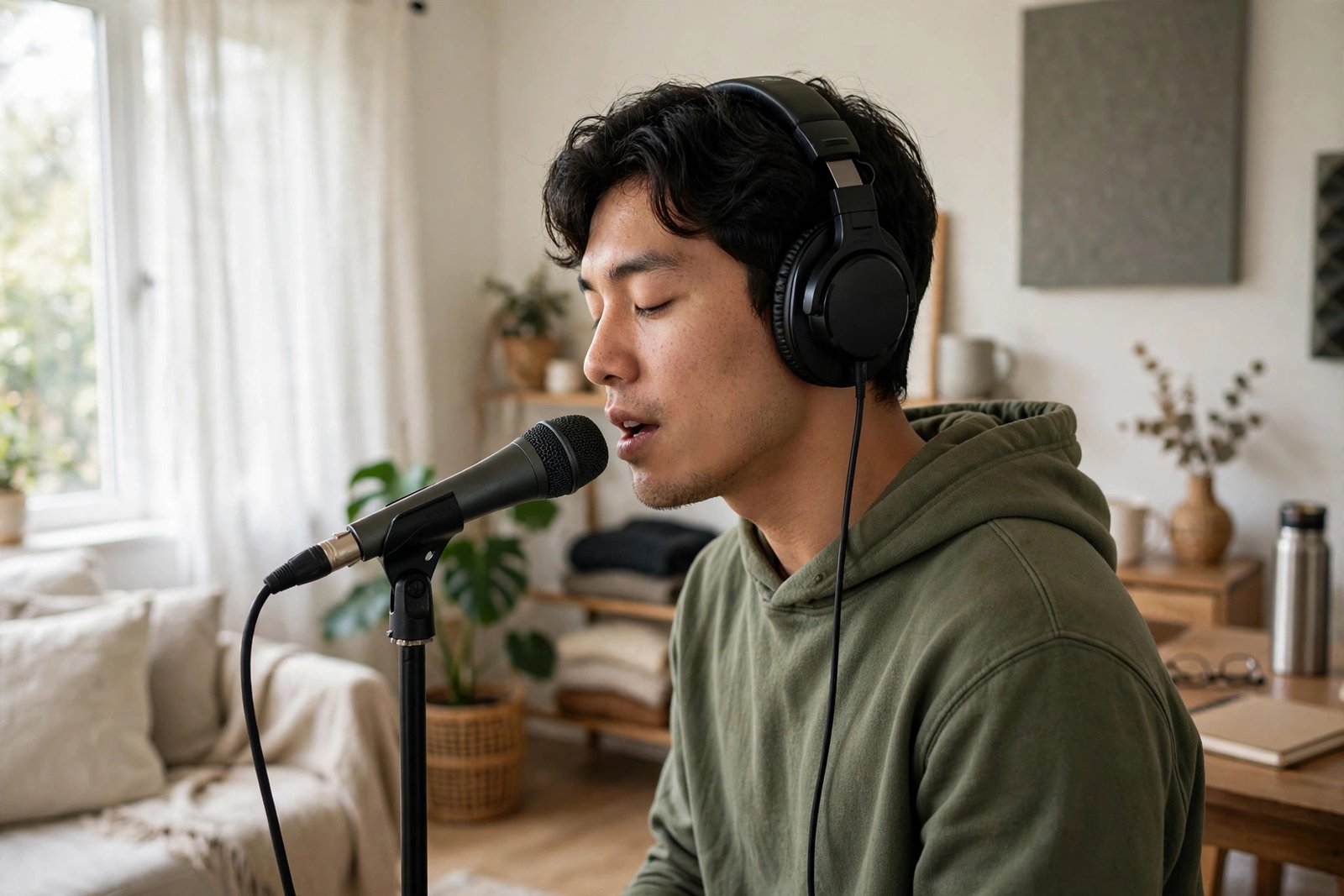
A vocal coach is wonderful — personalized feedback, structured progression, accountability. But coaches cost $50–$150+ per hour, and not everyone can afford weekly lessons. The good news: the fundamentals of good singing (breath support, pitch accuracy, resonance, ear training) can be developed substantially on your own with the right methods, free resources, and honest self-assessment. Self-taught singers won’t replace a coach’s ears, but they can absolutely transform their voices.
This guide gives you a complete self-training system: the daily routine, free resources that actually work, how to evaluate your own progress objectively, and when you’ve hit the point where a coach becomes worth the investment.
The Daily 30-Minute Self-Training Routine
Consistency beats duration — 30 focused minutes daily outperforms a 3-hour weekend binge. Minutes 1–5: Physical warm-up. Shoulder rolls, neck stretches, jaw release (massage the jaw hinge), tongue stretches. Tension anywhere in the body migrates to the voice. Minutes 6–12: Breath work. Diaphragmatic breathing drills: inhale for 4 counts (ribs expand), exhale on “sss” for 12+ counts keeping airflow perfectly even. Lip trills sliding up and down your range.
Minutes 13–22: Technical exercises. Rotate daily: Day A — 5-note scales on “mum” through your range (develops mix); Day B — octave arpeggios on “nay” (brightens resonance); Day C — sirens on “ng” (smooths the break); Day D — staccato scales on “ha” (breath precision). Minutes 23–30: Song application. Sing one song section, applying the day’s technical focus — technique without repertoire is sterile. Record this section every time (see below). This structure mirrors what good coaches assign; you’re just assigning it to yourself. Complement vocal work with instrumental skills — learning guitar as an adult makes you a more complete musician.
Free Resources That Replace (Some of) a Coach
YouTube pedagogy: channels run by qualified voice teachers (look for credentials — degrees in vocal pedagogy, not just good singers) offer structured exercise progressions. Search for your specific issue (“mix voice exercises,” “breath support for singing”) rather than browsing randomly. Apps: pitch-monitoring apps (Vocal Pitch Monitor, Sing Sharp) give real-time visual feedback on intonation — a coach’s most common correction, now automated. Metronome and drone apps support rhythm and pitch-center work.
Ear training: Teoria.com and musictheory.net’s free exercises build the pitch recognition that underpins all singing improvement — 10 minutes daily transforms intonation within months. Choir and community singing: the most underrated free “coach” — singing in a group under a director’s ear trains blend, pitch, and musicianship for free or cheap. Many communities have no-audition choirs. The National Association for Music Education maintains directories of community music programs.
Recording Yourself: Your Objective Ears
The single most important self-training tool is recording — because you cannot hear yourself accurately while singing (bone conduction lies to you). Record every practice session’s song section on your phone. Listen back the next day with fresh ears, asking: Is the pitch accurate? Is the tone consistent or does it wobble? Where does tension creep in? Can I understand every word?
Keep a practice journal: date, exercises done, what you noticed in playback, one focus for tomorrow. This journal is what a coach’s lesson notes would be — it creates the feedback loop that drives improvement. Monthly, record the same song and compare across months; progress that’s invisible day-to-day becomes obvious month-to-month. Be brutally honest but not cruel — assess like a supportive teacher, not an internet commenter. The Voice Foundation’s singer resources explain healthy self-assessment versus harmful self-criticism.
Fixing the Big Three Problems Yourself
Pitch problems: usually an ear issue, not a voice issue. Sing scales against a drone note (a sustained pitch from an app), matching precisely. Practice call-and-response with a piano app: play a note, sing it back, check with the pitch monitor. 10 minutes daily of this fixes most intonation within 2–3 months. Breathy/weak tone: usually insufficient breath support or incomplete vocal fold closure. Lip trills and staccato exercises build closure; the “sss” exhalation drill builds support. If breathiness persists after months, see a laryngologist to rule out medical causes.
Strain on high notes: almost always pushing chest voice too high — work the siren and “nay” exercises to develop mix voice (see the bridging work described in any good vocal method). Never push through strain; back off, work the exercises below the strain point, and let range expand gradually. For repertoire that matches your current ability while you build, choosing beginner-friendly karaoke songs keeps singing fun during the technical grind.
When a Coach Becomes Worth It
Self-training has a ceiling: you can’t diagnose your own blind spots forever. Consider even occasional coaching (monthly or quarterly) when: you’ve plateaued for 3+ months despite consistent practice; you’re preparing for auditions or performances; you experience persistent vocal fatigue or hoarseness; or you want to develop advanced skills (belting, vibrato control, style-specific techniques) where bad habits form easily.
A single diagnostic lesson ($75–$150) can identify issues months of self-practice missed — many singers do quarterly check-ins rather than weekly lessons, getting 80% of the benefit at 25% of the cost. Look for teachers with pedagogy degrees and performance experience in your style; a great classical teacher may not serve a budding R&B singer. Trial lessons are standard — interview two or three before committing. Self-training plus periodic professional calibration is the best value in vocal development.
Conclusion
Improving your singing voice without a vocal coach is entirely realistic: a structured 30-minute daily routine, free online pedagogy and pitch tools, relentless self-recording with honest review, targeted work on pitch/support/strain, and community singing for ensemble ears. You’ll progress slower than with weekly coaching — but you’ll progress, measurably, month after month. And when you eventually invest in a coach, you’ll arrive as an educated student who gets far more from every lesson. Your voice has been waiting for systematic training — give it thirty focused minutes a day, and it will surprise you.
Frequently Asked Questions
Can I really learn to sing well without any lessons?
You can improve dramatically — many gigging singers are largely self-taught. What self-training can’t fully replace is expert diagnosis of your specific issues and real-time correction. Think of it as learning a language from apps versus with a tutor: the apps take you far, but a tutor fixes what you can’t hear yourself doing wrong.
How do I know if I’m damaging my voice practicing alone?
Healthy practice never hurts. Warning signs: pain during/after singing, hoarseness lasting into the next day, loss of range, or a consistently tired voice. If any of these persist beyond two weeks of rest, see a laryngologist. When in doubt, sing less and gentler — you can’t injure yourself with relaxed, pain-free singing.
What’s the most important exercise for beginners?
Lip trills — they develop breath support, smooth the vocal break, and prevent strain simultaneously, and they’re nearly impossible to do harmfully. Five minutes of lip trills daily as your foundation exercise, plus pitch-matching work with a tuner app, covers the two highest-impact beginner needs.
How long before I notice improvement?
Breath control and pitch accuracy often improve noticeably within 4–6 weeks of daily practice; tone quality and range take 3–6 months; real transformation takes a year or more. Record monthly comparisons — the daily mirror lies, but the recordings don’t.