
 By admin
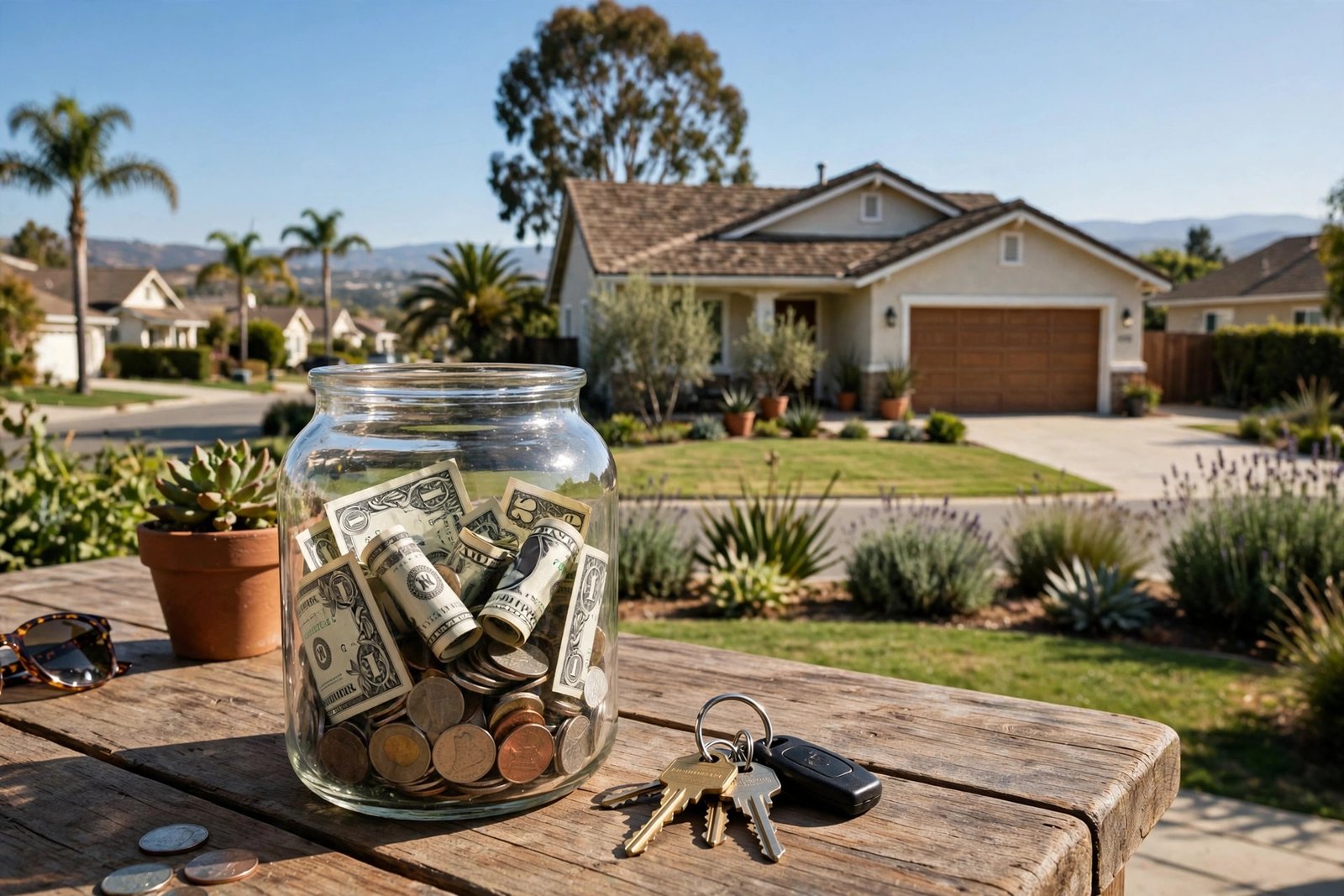
Saving for a down payment in California feels like running up a down escalator. You’re saving diligently while home prices climb faster than your savings account grows — the target moves every year. In markets where starter homes cost $600,000–$900,000, a 20 percent down payment is $120,000–$180,000: a number that paralyzes savers before they start.
But here’s what changes the game: you probably don’t need 20 percent, California offers more assistance programs than most buyers realize, and a systematic plan beats heroic saving. This guide lays out the realistic path to a California down payment in 2026.
First: How Much Do You Actually Need?
The 20-percent rule is outdated advice that keeps renters renting. In 2026, the median first-time buyer puts down well under 10 percent — conventional loans allow as little as 3 percent, FHA loans 3.5 percent, and VA/USDA loans zero. On a $650,000 home, 5 percent is $32,500 — still serious money, but a fundamentally different goal than $130,000.
Lower down payments have costs: private mortgage insurance ($150–$400/month until you reach 20 percent equity), slightly higher rates, and bigger monthly payments. But waiting five extra years to hit 20 percent while prices rise 4 percent annually often costs more than PMI ever will. Run your numbers honestly — the CFPB’s home-buying tools model the tradeoffs with real figures.
California Assistance Programs (Free Money You’re Ignoring)
California runs some of the nation’s most generous first-time buyer programs. CalHFA (California Housing Finance Agency) offers down payment assistance as silent second loans — including programs for first-generation homebuyers — that can cover most or all of your down payment. Many buyers combine a CalHFA first mortgage with a down payment assistance second, effectively buying with minimal cash out of pocket.
Beyond the state level: county and city programs (Los Angeles, San Diego, Bay Area municipalities each run their own), employer-assisted housing programs (universities, hospitals, and large employers increasingly offer them), and community land trusts in expensive metros. The HUD-approved housing counselors in California provide free guidance on which programs you qualify for — use them before assuming you don’t.
The Savings System (How the Money Actually Accumulates)
Separate it, automate it, protect it
Open a dedicated high-yield savings account — physically separate from your checking, earning 4–5 percent while you save. Automate a transfer on payday. Name the account “House” — behavioral research shows labeled accounts get raided less. This isn’t cute advice; it’s the difference between savers who make it and those who don’t.
Find the money in your existing budget
A $650,000 home at 5 percent down needs ~$40,000 including closing costs. Saving $1,100/month gets you there in three years. Where does $1,100 come from? The usual suspects: grocery spending (often $200–$400/month recoverable), subscriptions and dining (another $200–$300), and the big one — housing itself. Every $200/month rent reduction (roommate, cheaper area temporarily) is $2,400/year toward the goal. Budgeting tools surface the leaks you’d otherwise miss.
Accelerate with windfalls and side income
Tax refunds, bonuses, and raises go directly to the house fund — decide this in advance, not when the money arrives. A side hustle dedicated entirely to the down payment can compress a four-year timeline into two. The goal has a finish line; temporary intensity is sustainable when it’s time-boxed.
What to Avoid While Saving
Don’t invest the down payment fund. Money needed within 3–5 years belongs in high-yield savings, not the stock market — a 20 percent drawdown the year you planned to buy is catastrophic. Don’t raid retirement accounts — the taxes, penalties, and lost compounding dwarf any timeline benefit. Don’t take on new debt — that car loan doesn’t just cost payments; it reduces your mortgage qualification amount. And don’t wait for the “perfect” market — time the readiness, not the market.
House Hacking Your Way In
Can’t save fast enough solo? House hacking — buying a multi-unit property, living in one unit, renting the others — can collapse the down payment math entirely. With FHA loans available on 2–4 unit properties (3.5 percent down if you owner-occupy), rental income from the other units often covers most or all of the mortgage. You’re effectively getting paid to build equity, and lenders may count projected rental income toward your qualification.
The tradeoffs are real: you’re a landlord from day one (tenants, toilets, turnover), house hacking works best in specific markets with favorable multi-unit prices, and living next to your tenants isn’t for everyone. Milder versions exist too — buying a single-family home and renting out rooms, or purchasing a property with an ADU (accessory dwelling unit) to rent. California’s ADU-friendly laws have made this path increasingly viable. It’s not the conventional route, but for savers stuck on the escalator, it’s the closest thing to skipping steps — turning the housing expense itself into the savings engine.
Conclusion
Saving for a down payment in California in 2026 is a systems problem, not a willpower problem: know your real target (probably 3–10 percent, not 20), claim the assistance programs designed for you, automate savings into a separate high-yield account, and accelerate with windfalls and temporary intensity. The escalator is real — but buyers who run it systematically still reach the top. Start the system this month; the down payment is closer than the sticker price suggests.
Key Takeaways
You need 3–10%, not 20%. The 20-percent rule keeps renters renting — low-down-payment loans plus assistance programs change the math entirely.
Claim California’s programs. CalHFA silent seconds and local assistance can cover most of your down payment — free money buyers routinely ignore.
Automate into a separate account. A labeled high-yield savings account with payday transfers is the system that actually accumulates.
Never invest the down payment fund. Money needed within five years belongs in savings, not the market — a crash at the wrong time is catastrophic.
Consider house hacking. Multi-unit FHA properties let rental income cover the mortgage — the closest thing to skipping steps.
Time the readiness, not the market. Buy when your finances are ready; waiting for perfect market timing costs more than it saves.
Frequently Asked Questions
How much house can I afford in California on my salary?
The standard guideline caps housing costs at 28 percent of gross monthly income, but California buyers often stretch to 35–40 percent. Use the 28 percent rule for comfort, stretch cautiously beyond it, and never let a lender’s maximum become your target.
Are down payment assistance programs really free money?
Many are structured as forgivable or deferred-payment second loans — effectively free if you meet the terms (usually staying in the home 5+ years). Some must be repaid on sale or refinance. Read the terms carefully; “assistance” structures vary significantly.
Should I buy now with 5 percent down or wait to save 20 percent?
In appreciating markets, buying sooner with PMI usually wins — price growth during the waiting years typically exceeds PMI costs. The exception: if waiting 1–2 years gets you to 20 percent without market risk, patience pays.
Can I use gift money for a down payment?
Yes — most loan programs allow gift funds from family with a proper gift letter stating it’s not a loan. Lenders scrutinize large deposits, so document everything and avoid moving money around mysteriously before applying.