
 By admin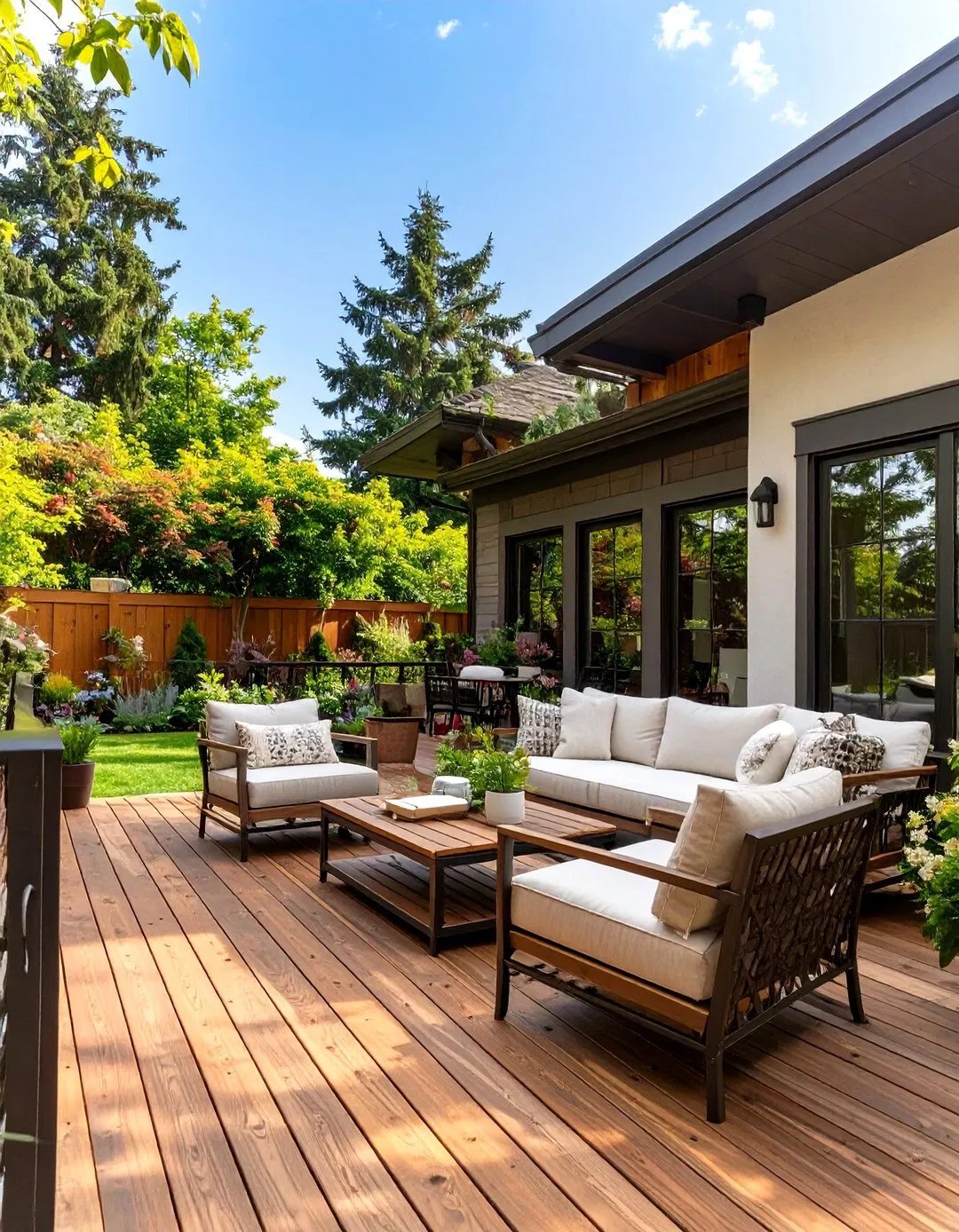
A backyard without a gathering space is just a yard. Whether you’re dreaming of summer barbecues, morning coffee outside, or a place the kids actually play, you’re probably weighing the two classic options: deck or patio. And the first question everyone asks — is it cheaper to build a deck or a patio? — has a clear answer, though the full decision involves more than price.
The Short Answer: Patios Are Cheaper
A patio typically costs $8–$20 per square foot installed, while a deck runs $15–$35+ per square foot. For a standard 300 sq ft space, that’s roughly $2,500–$6,000 for a patio vs. $5,000–$12,000+ for a deck. The patio wins on upfront cost by a wide margin — usually 40–60% cheaper for the same area.
Why the gap? Patios sit on the ground — no structural framing, no footings, no railings, no stairs. A deck is essentially an outdoor floor system engineered to hold weight above grade, and that engineering costs money.
Deck Costs in Detail
- Pressure-treated wood deck: $15–$25/sq ft installed. Cheapest deck option, 10–15 year lifespan with maintenance.
- Cedar/redwood deck: $20–$30/sq ft. Beautiful, naturally rot-resistant, 15–20 years.
- Composite decking: $25–$40+/sq ft. Minimal maintenance, 25–30 year lifespan, but the highest upfront cost.
Decks also need: footings below the frost line, permits and inspections in most jurisdictions, railings (required above 30″ height — $30–$60/linear ft), and stairs if it’s raised. These “extras” add thousands beyond the per-square-foot number.
Patio Costs in Detail
- Concrete slab: $8–$15/sq ft. Cheapest, durable, but plain — stamp or stain it ($3–$5/sq ft more) for vastly better looks.
- Pavers: $12–$20/sq ft. The sweet spot — attractive, repairable (lift and reset individual pavers), 25+ year lifespan.
- Natural stone: $18–$30/sq ft. Gorgeous, permanent, premium price.
- Gravel: $3–$6/sq ft. The true budget option — fine for casual spaces, less refined.
Patio prep (excavation, gravel base, compaction) is real work but straightforward — and very DIY-able, unlike deck framing.
Beyond Price: How to Actually Choose
Choose a deck when:
- Your yard slopes — decks handle uneven terrain gracefully; patios need extensive grading.
- The back door is well above grade — a patio would need many steps down.
- You want a raised view or breeze.
- Your soil has drainage issues — decks don’t care about standing water underneath.
Choose a patio when:
- Budget is the priority — it’s not close on cost.
- Your yard is flat and the door is near grade.
- You want minimal maintenance — pavers and concrete need almost nothing; wood decks need staining every 2–3 years.
- You prefer a grounded, garden-integrated feel — patios blend into landscaping naturally.
The Lifetime Cost Picture
Upfront cost favors patios heavily. But lifetime cost narrows the gap for wood decks vs. premium patios: a pressure-treated deck needs staining ($500–$1,000 every 2–3 years) and board replacement over 15 years. A paver patio needs essentially nothing for 25 years. Composite decks flip the math — expensive upfront, minimal maintenance, 30-year life.
Over 25 years, a paver patio is still usually the cheapest total option. A composite deck is the most expensive upfront but competitive over its full life.
ROI and Resale
Both add value, but differently: a wood deck typically recoups 50–60% of its cost at resale; a patio recoups 30–50%. Decks photograph better and read as “more house” to buyers. But neither is a profit center — build for your enjoyment, not as an investment.
Permits and DIY
Decks almost always need permits and must meet code (footing depth, railing height, load ratings). This is not a casual DIY for beginners — structural mistakes are dangerous. Patios usually don’t need permits (check locally), and a paver patio is one of the most satisfying DIY-friendly outdoor projects. DIY-ing a paver patio can cut costs to $5–$10/sq ft in materials.
DIY Paver Patio: A Weekend Project Guide
A paver patio is the most DIY-friendly option — here’s the realistic process for a 12×12 ft patio:
- Mark and excavate (Day 1 morning). Mark the area with spray paint and stakes. Dig 7–8 inches deep (paver + 1″ sand + 4–6″ gravel base). This is the hard labor — rent a sod cutter ($80/day) if removing grass. Call 811 before digging to mark utilities.
- Base layer (Day 1 afternoon). Lay landscape fabric, then 4–6″ of crushed gravel (paver base), compacting in 2″ layers with a rented plate compactor ($60/day). The base is everything — skimp here and pavers shift within two years.
- Screed the sand (Day 2 morning). Lay 1″ of coarse sand, screed level using pipes as guides. Don’t walk on the screeded sand.
- Lay pavers (Day 2). Start from a straight edge (the house), work outward in your pattern. Keep joints tight and consistent. Cut edge pavers with a rented wet saw or a paver splitter.
- Edge restraint + sand (Day 2 afternoon). Install plastic or metal edge restraint staked into the ground around the perimeter — this is what keeps pavers from migrating. Sweep polymeric sand into the joints, mist with water to activate.
Materials cost for 144 sq ft: pavers ($400–$700), gravel base ($150–$250 delivered), sand ($50), edge restraint ($40), fabric ($25), rentals ($140) = roughly $800–$1,200 total. Compare to $2,500–$6,000 professionally installed. Two hard weekends of work saves you thousands — and a patio you built yourself is a point of pride every time you use it.
When a Deck Is Worth the Premium
Patios win on cost — but decks win in specific situations where the premium pays off. If your backyard slopes significantly, a deck creates usable flat space where a patio would need expensive retaining walls and grading. If your back door sits 3+ feet above grade, a deck at door level beats a patio with a long staircase. And if you want the raised view, the breeze, and the classic outdoor-living feel, no patio replicates it. The key is going in with eyes open: budget 40–60% more than a patio, maintain it every 2–3 years, and you’ll love it. Just don’t build a deck for patio money and wonder why it’s falling apart.
For code requirements and safety standards if you build a deck, check the North American Deck and Railing Association — and pair the project with improving your home’s curb appeal on a budget for the full exterior transformation.
The Bottom Line
Is it cheaper to build a deck or a patio? The patio — by 40–60% upfront, and it stays cheaper over its lifetime thanks to minimal maintenance. Choose the patio for flat yards, tight budgets, and low upkeep. Choose the deck for sloped lots, raised entry doors, and that classic outdoor-living feel — just budget for the structure, railings, permits, and ongoing maintenance. Either way, you’ll use it more than you expect; outdoor living space has a way of becoming the favorite “room” in the house.