
 By admin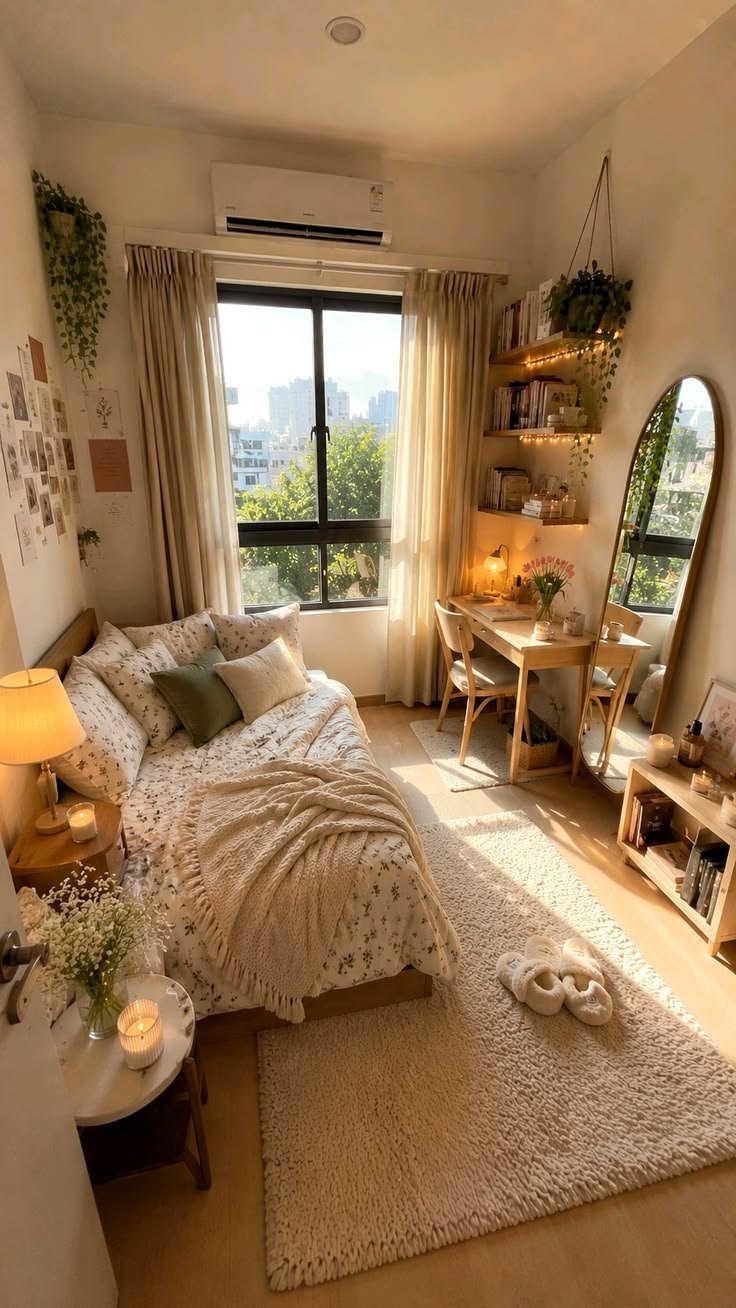
Painting a small bedroom feels like a high-stakes decision. Get it wrong and the room feels like a cave; get it right and the same 120 square feet feels calm, open, and twice as restful. I’ve painted enough small bedrooms — my own and friends’ — to know that the best paint color for a small bedroom isn’t one magic shade. It’s understanding how color, light, and finish work together in tight quarters.
The Short Answer: Light, Warm-Undertoned Neutrals Win
If you want one safe answer: a light neutral with warm undertones. Think soft white (not stark white), warm greige, pale warm gray, or a whisper of sage. These colors reflect light, recede visually, and work with any bedding or furniture you already own.
Why warm undertones? Cool whites and grays can make a small bedroom feel sterile and flat, especially with limited natural light. Warm undertones — a hint of yellow, pink, or beige in the mix — make the room feel inviting rather than institutional.
Best Paint Colors for Small Bedrooms by Situation
If your room gets lots of natural light
You have the most flexibility. Light colors will glow beautifully:
- Soft white (like Benjamin Moore White Dove or Sherwin-Williams Alabaster) — warm, classic, never stark.
- Pale sage green — restful, slightly colorful, pairs beautifully with wood tones and white bedding.
- Light warm gray — modern without feeling cold.
If your room is dark or north-facing
North-facing rooms get cool, bluish light that makes colors look drab. Fight it with warmth:
- Creamy off-white with yellow undertones — counteracts the blue cast.
- Warm greige — adds coziness without going dark.
- Avoid: cool grays and stark whites, which turn flat and gloomy in north light.
If you want a dark, moody bedroom (yes, it can work)
Here’s the contrarian take: deep colors — navy, forest green, charcoal — can make a small bedroom feel intimate and cocoon-like rather than cramped, if you commit fully. Paint all four walls (and ideally the ceiling) the same deep color so there are no contrasting boundaries. Keep bedding light for contrast. This works best in bedrooms used mainly for sleeping, where cozy beats airy.
The Finish Matters as Much as the Color
In a small bedroom, use eggshell or satin on walls. Flat paint absorbs light and can make the room feel smaller; satin reflects just enough to brighten things subtly. Save semi-gloss for trim. And always — always — paint the ceiling. A bright white ceiling lifts the whole room; a dingy one drags it down.
Colors to Avoid in Small Bedrooms
- Dark colors on only one wall (the “accent wall”) — it chops the room up and usually makes it feel smaller, not bigger.
- Very saturated brights — fire-engine red or electric blue overwhelm small spaces and make sleep harder.
- Cool stark white in low-light rooms — reads as gray and depressing by afternoon.
Test Before You Commit
This is the step everyone skips and regrets. Paint colors shift dramatically with your room’s specific light. Buy sample quarts ($5–10 each) and paint large test swatches — at least 2×2 feet — on two different walls. Live with them for 48 hours, checking in morning, afternoon, and evening light. The color that looked perfect in the store often looks completely different at home.
Peel-and-stick sample sheets are even easier if you don’t want to paint test patches. Either way, don’t skip this — repainting a wrong choice costs far more than samples.
Pairing Color With the Rest of the Room
Paint doesn’t work alone. To maximize the spacious feeling:
- Match bedding to walls in tone — tonal layering (light walls, slightly deeper bedding) feels serene and expansive.
- Keep large furniture light-colored or at least visually light — a massive dark dresser fights your paint choice.
- Mirrors opposite windows double the light your paint has to work with.
These same principles apply throughout the house — if you’re refreshing multiple spaces, our guide to repainting a living room covers budgeting, and making a small bathroom look bigger uses the same light-and-continuous color strategy.
If your home was built before 1978, check the EPA’s lead paint safety guidance before sanding or scraping old paint.
How Lighting Changes Everything (Test Accordingly)
The same paint color looks like three different colors depending on light — which is why testing in your actual room matters so much:
- Morning light (east-facing): bright, slightly cool. Colors look crisp and true. This is the most flattering light for most shades.
- Afternoon light (west-facing): warm and golden. It intensifies warm undertones — a greige can suddenly look beige, a sage can look olive. Test at 4 PM, not 10 AM.
- North-facing: consistent but cool and grayish all day. This light mutes colors and exaggerates blue/green undertones. Warm up your choices here.
- South-facing: bright and warm all day. Colors look their most vivid — you can go slightly cooler or deeper than in other exposures.
- Artificial light: warm LEDs (2700K) yellow everything; daylight LEDs (5000K) show true color. Check your swatches under the bulbs you’ll actually use at night, since bedrooms are mostly experienced in lamplight.
Practical method: paint your test swatches on a piece of poster board (not directly on the wall), and move the board around the room through the day. You’ll see the color shift in real time — and you’ll know exactly which version of the color you’re actually buying.
What About the Ceiling?
The ceiling is the fifth wall, and in a small bedroom it matters enormously. The standard move — flat bright white — visually lifts the room and bounces light down. For the cozy dark-bedroom approach, painting the ceiling the same deep color as the walls eliminates the boundary line and makes the room feel like a cocoon. What you should avoid: a dingy off-white ceiling that nobody’s painted in a decade. It’s the first thing your eye registers, even if you don’t consciously notice it.
The Bottom Line
The best paint color for a small bedroom is a light, warm-toned neutral — soft white, warm greige, or pale sage — in an eggshell or satin finish, tested in your actual light before committing. Want cozy instead of airy? Go dark on all walls, not just one. Either way, the sample quart is the cheapest insurance in home improvement. Your bedroom should feel like a retreat, not a box — and the right color gets you most of the way there.
[…] the noise is handled, finish the room right: pick from the best paint colors for small bedrooms, get the choosing the right light bulbs for the bedroom, and check Family Handyman’s […]