
 By admin
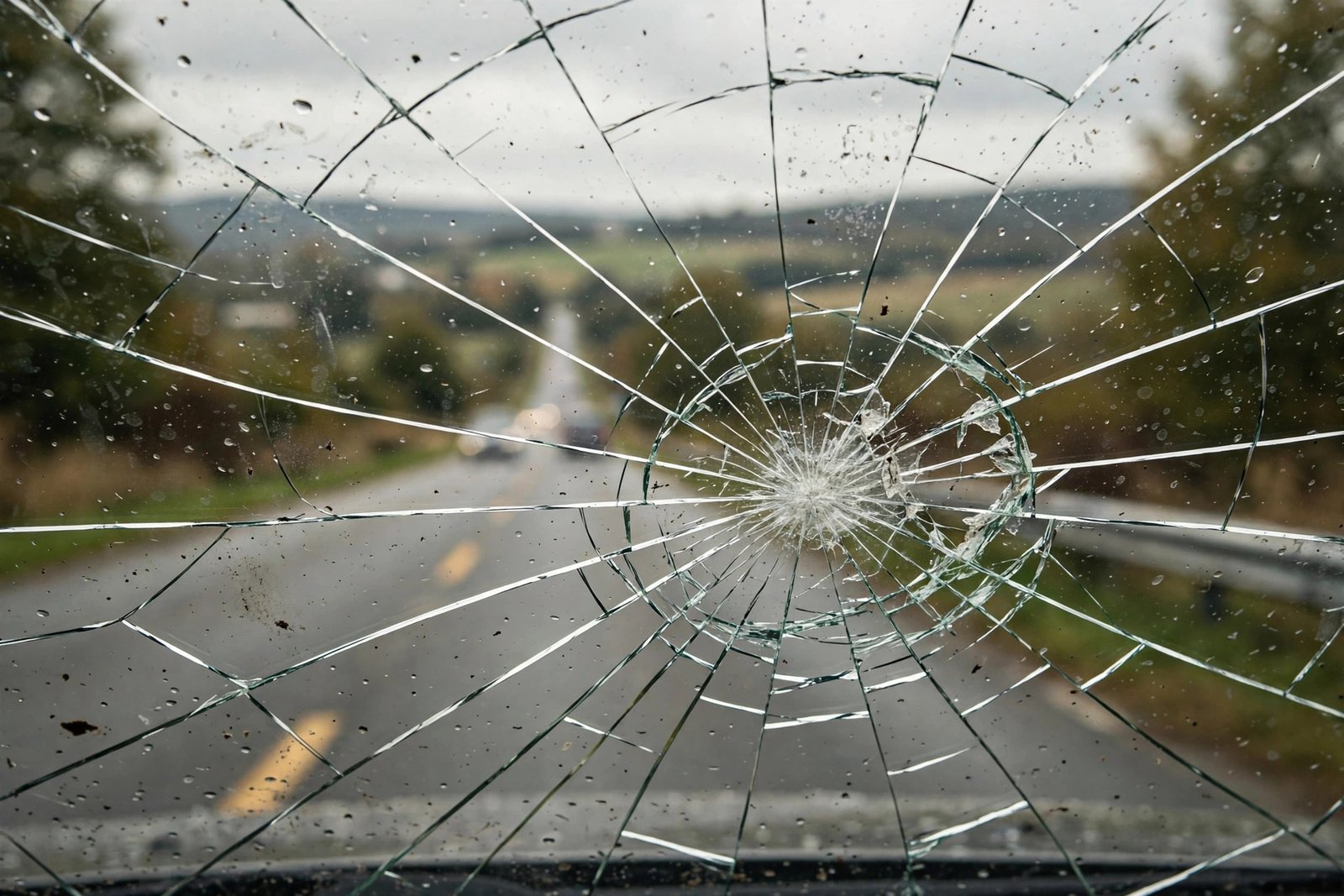
A rock flicked up on the highway yesterday, and now there’s a crack spidering across your windshield. It’s not in your direct line of sight, the car drives fine, and replacing a windshield costs $300–$600 you weren’t planning to spend. So the question sits there every morning: is it actually safe to drive with a cracked windshield, or are you one pothole away from a face full of glass?
The honest answer is “it depends” — on the crack’s size, location, depth, and type, plus your state’s laws. A small chip is a cosmetic nuisance; a long crack through the driver’s sightline is a genuine safety hazard and illegal in most states. Here’s how to assess your specific damage, what the law says, when repair suffices versus replacement, and how to handle it without overpaying.
What Your Windshield Actually Does (It’s Structural)
Most drivers think of the windshield as a window. It’s actually a structural component: modern windshields provide up to 30–45% of the cabin’s structural integrity in a rollover and up to 60% in some designs, and they’re engineered as the backstop for passenger-side airbag deployment — the airbag inflates against the windshield before cushioning the occupant. A compromised windshield can pop out in a collision, allowing roof collapse and airbag failure. This is why crack assessment isn’t cosmetic vanity — it’s structural safety.
Laminated safety glass (two glass layers bonded to a plastic interlayer) is designed to crack without shattering — the spiderweb pattern holds together rather than spraying shards. That’s reassuring, but it doesn’t mean a cracked windshield performs structurally like an intact one. The interlayer holds the pieces in place; it doesn’t restore the rigidity the cracks destroyed.
Assessing Your Crack: The Decision Framework
Size: the dollar-bill rule
Chips smaller than a quarter and cracks shorter than 3 inches are generally repairable. Cracks longer than 6 inches — or any crack longer than a dollar bill (6 inches) — typically require replacement. Between 3 and 6 inches is the judgment zone where repair is possible but replacement is often wiser.
Location: where matters more than size
Any damage in the driver’s critical viewing area (roughly the width of the steering wheel, centered on the driver) is the most serious — even repaired chips leave slight distortion that impairs vision, and most safety standards prohibit repairs here. Cracks at the windshield’s edges are structurally concerning because they compromise the bond to the frame and tend to spread rapidly. Damage in the passenger area, away from edges, is the least urgent.
Type and depth
Surface chips and bullseye breaks (circular) repair well. Star breaks (multiple cracks radiating) and combination breaks are less predictable. If the crack penetrates both glass layers or the inner plastic layer is damaged, replacement is mandatory — the structural sandwich is broken. Run your fingernail across the inside of the windshield; if you feel the crack on the interior surface, it’s through both layers.
Spread risk
Cracks grow — temperature swings, road vibration, door slamming, and even car washes propagate them. A 2-inch crack in October can be an 8-inch crack by January. What starts as a repairable chip becomes a mandatory replacement if you wait. Time is literally money here.
The NHTSA’s vehicle safety standards (FMVSS 205/212) govern windshield performance — the regulations exist precisely because windshield integrity is crash-safety critical, not cosmetic.
What the Law Says
Most states prohibit driving with windshield damage that obstructs the driver’s clear view — though specifics vary enormously. Some states (like Texas) allow cracks outside the wiper sweep area; others (like New York) fail any cracked windshield at inspection regardless of location. Many states empower officers to ticket “unsafe equipment” at their discretion. Beyond tickets, there’s a sharper risk: if you’re in an accident with a known cracked windshield, insurance companies and opposing attorneys can argue contributory negligence — your compromised visibility or structural integrity contributed to the outcome. The legal exposure exceeds the ticket cost.
Check your state’s vehicle code or inspection requirements specifically — “my friend drives with a worse crack” is not a legal defense, and enforcement varies by jurisdiction and officer.
Repair vs. Replacement: Costs and Process
Repair ($60–$120)
For qualifying chips and short cracks: a technician injects specialized resin into the damage, cures it with UV light, and polishes the surface. The process takes 30 minutes, restores structural integrity substantially (though not to factory-new), and leaves a faint blemish. Many insurance companies waive the deductible for repairs — they’d rather pay $80 now than $400 later — so check your policy; the repair might be free.
Replacement ($300–$600 standard; $1,000+ for ADAS vehicles)
Full windshield replacement takes 1–2 hours plus adhesive curing time (don’t drive for the specified safe-drive-away time, typically 1–2 hours). The modern complication: Advanced Driver Assistance Systems. If your car has lane-keeping, adaptive cruise, or automatic braking, cameras mounted at the windshield require recalibration after replacement — adding $200–$400 and requiring specialized equipment. Always confirm the shop performs ADAS recalibration; an uncalibrated system is worse than none, giving false confidence.
Choose shops carefully: ask about OEM vs. aftermarket glass (OEM fits and performs to factory spec; quality aftermarket is fine for most vehicles but verify ADAS compatibility), urethane adhesive quality and cure times, and warranty on the installation. Mobile replacement services offer convenience at comparable prices. The AAA’s auto repair guidance covers vetting glass shops and understanding insurance coverage.
Insurance: What You’re Actually Covered For
Comprehensive coverage (not collision) covers windshield damage from road debris — with your comprehensive deductible applying. Many states (Florida, Kentucky, South Carolina) mandate zero-deductible windshield replacement; several other states offer full glass coverage as a cheap policy add-on ($5–$10/month) that’s worth every penny if you drive highways regularly. Filing a comprehensive glass claim typically doesn’t raise your rates (it’s not an at-fault incident), but verify with your insurer — policies differ.
Call your insurer before paying out of pocket: the repair-or-replace decision, approved shops, and deductible waiver for repairs are all things they handle daily, and their preferred-shop pricing is often below retail.
Temporary Measures (And What Not to Do)
If you must drive briefly before repair: apply clear packing tape over the chip (keeps moisture and dirt out of the crack, improving repair quality), avoid extreme temperature swings (don’t blast the defroster on a frozen windshield), avoid slamming doors, and skip the car wash. Don’t use DIY repair kits on cracks in the driver’s sightline or longer than 3 inches — botched DIY repairs can make professional repair impossible, turning an $80 fix into a $400 replacement. And don’t ignore it: every day of delay risks the crack spreading past the repairable threshold.
Conclusion
Small chips away from the driver’s sightline: safe to drive briefly, repair promptly ($60–$120, often free through insurance). Long cracks, edge cracks, damage in the critical viewing area, or any penetration through both layers: not safely drivable — replace immediately, both for structural safety and legal compliance. The universal rule: address windshield damage within days, not months, because cracks only grow and repair windows only shrink. Your windshield is a structural safety component wearing a window’s disguise — treat it like the safety equipment it is.
If the damage is severe, don’t drive it — our comparison of renting a car vs. using rideshares covers your options while it’s in the shop. And before any long drive, our budget road-trip planning guide includes a full visibility and safety checklist.
Frequently Asked Questions
How long can I drive with a cracked windshield?
Small chips outside the driver’s view: days to a couple of weeks while arranging repair. Long cracks or driver’s-view damage: get it fixed immediately — it’s a safety hazard and likely illegal. Cracks spread unpredictably; delay converts repairs into replacements.
Will my insurance cover windshield replacement?
Comprehensive coverage covers it, minus your deductible. Several states mandate zero-deductible replacement, and many insurers waive deductibles for repairs. File under comprehensive — it typically doesn’t affect your rates.
Can a cracked windshield be repaired, or must it be replaced?
Chips under a quarter-size and cracks under 3 inches (some shops say 6) away from edges and the driver’s sightline are repairable. Longer cracks, edge damage, driver’s-view damage, and through-and-through cracks require replacement.
How much does windshield replacement cost?
$300–$600 for standard vehicles; $800–$1,500+ for vehicles with ADAS cameras requiring recalibration, heads-up displays, or rain sensors. Luxury vehicles and OEM glass push higher.
Is it illegal to drive with a cracked windshield?
In most states, yes, if the damage obstructs the driver’s clear view — though specific rules vary widely. Many states fail cracked windshields at safety inspection regardless of location. Check your state’s vehicle code.