
 By admin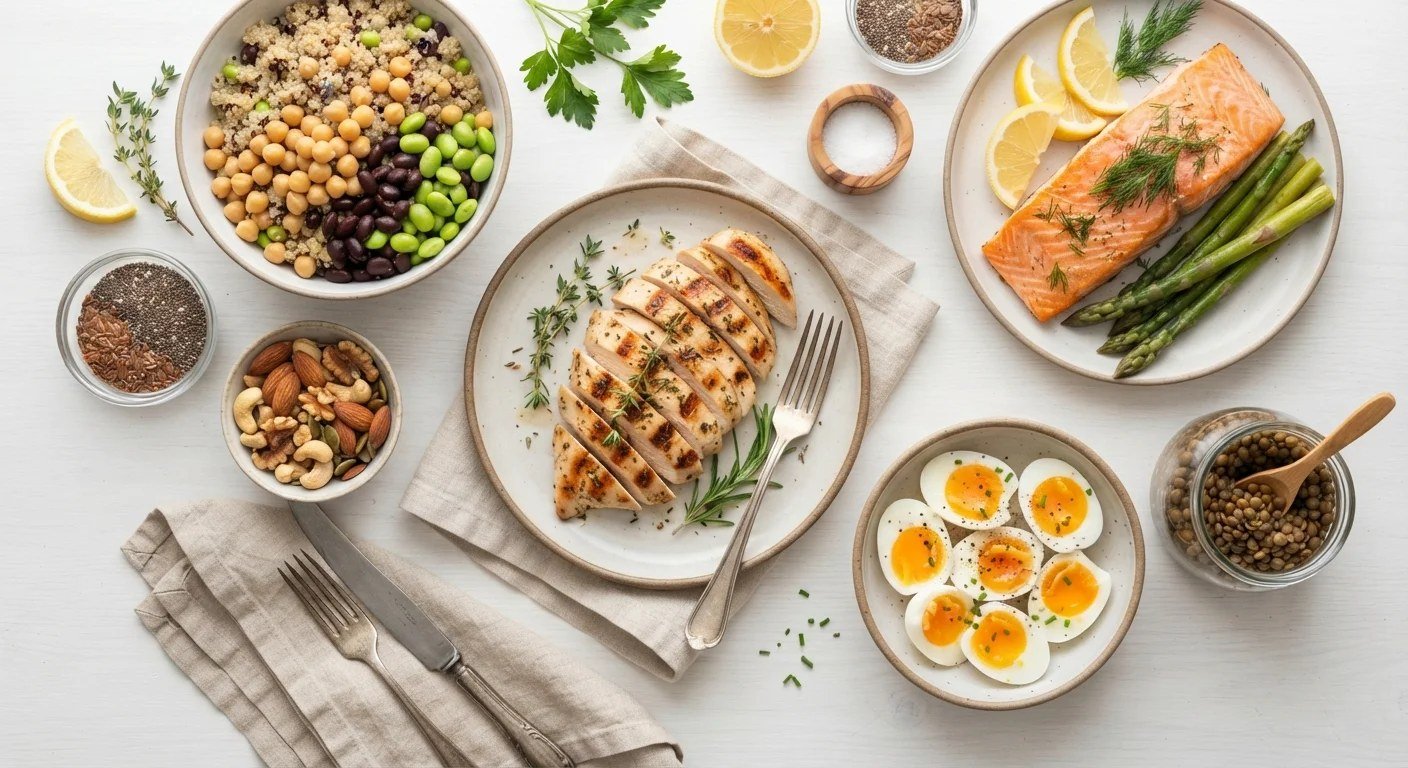
Protein has become the macronutrient everyone obsesses over. Influencers push 200-gram days, supplement companies imply you’ll wither without their powder, and somewhere in the noise the actual science gets lost. So let’s do the real math on how much protein you actually need per day — it’s probably less than Instagram says and more than you’re eating.
The Baseline Numbers
The official Recommended Dietary Allowance (RDA) is 0.8 grams per kilogram of body weight per day — about 0.36 grams per pound. For a 150-pound person, that’s roughly 54 grams; for 200 pounds, about 72 grams. But here’s the catch everyone misses: the RDA is the minimum to avoid deficiency, not the optimum for thriving. It’s the floor, not the target.
Most nutrition researchers now suggest active adults do better at 1.2–1.6 g/kg (0.55–0.73 g/lb). That puts our 150-pound person at 82–110 grams and the 200-pound person at 110–146 grams daily. Older adults need the higher end — after 60, the body becomes less efficient at using protein (anabolic resistance), so 1.0–1.2 g/kg minimum helps preserve muscle that keeps you independent.
Adjust for your situation
- Building muscle / lifting heavy: 1.6–2.2 g/kg is the evidence-backed range. More than that shows diminishing returns in studies.
- Losing weight: go higher (1.6–2.0 g/kg of target weight) — protein preserves muscle in a calorie deficit and keeps you fuller.
- Endurance athletes: 1.2–1.6 g/kg; long training depletes more than people expect.
- Sedentary adults: the RDA floor is technically enough, but 1.0–1.2 g/kg is a better everyday target.
- Pregnant or breastfeeding: needs rise to about 1.1–1.3 g/kg — check with your OB for your specific target.
How Much Protein Do I Actually Need Per Day? Do the Math
Take your weight in pounds, divide by 2.2 to get kilograms, then multiply: by 1.2 for a moderately active adult, 1.6 if you train hard or are dieting. Example: 170 lbs → 77 kg → ~92g (moderate) to ~123g (active). That’s it — that’s the whole formula the supplement industry doesn’t want you to have.
Now the practical part: most people eat protein backwards — a carb-heavy breakfast, light lunch, then a mountain of meat at dinner. Your body uses protein better spread across the day: roughly 25–40 grams per meal across 3–4 meals. Front-loading breakfast with protein is the single easiest fix for most people.
What 100 grams looks like in real food
Breakfast: Greek yogurt (20g) with oats. Lunch: chicken breast sandwich (35g). Snack: handful of almonds + cheese stick (12g). Dinner: salmon fillet with lentils (35g). That’s ~100 grams without a single shake. Whole foods first; the Academy of Nutrition and Dietetics notes most people can hit their targets through meals alone.
Protein Quality and the Fine Print
Animal proteins (meat, dairy, eggs) are “complete” — they contain all essential amino acids. Most plant proteins aren’t, but combining them across the day (beans + rice, hummus + pita, peanut butter + whole wheat) covers everything; you don’t need to combine them in a single meal, despite the old myth. Soy, quinoa, and buckwheat are complete plant options on their own.
Can you eat too much? For healthy kidneys, high protein intakes (up to ~2 g/kg) appear safe in studies, though going far beyond your needs just gets converted to expensive energy. People with kidney disease should follow their doctor’s limits — that’s the real exception. And protein powders are fine as a convenience tool, but check labels: the NIH supplement resources note that third-party testing (NSF, Informed Sport) is worth looking for given loose regulation.
Protein Myths That Won’t Die
- “More protein = more muscle.” Muscle growth is capped by training stimulus and genetics; excess protein beyond ~1.6–2.2 g/kg just becomes expensive energy. The bottleneck is the workout, not the shake.
- “You can only absorb 30g per meal.” Your body absorbs nearly all of it; the “limit” myth confuses muscle protein synthesis optimization with digestion. Larger meals are fine — distribution is about optimization, not a hard cap.
- “Plant protein doesn’t count.” It absolutely counts; you just need slightly more total and some variety across the day. Plenty of vegan athletes build serious muscle.
- “High protein damages healthy kidneys.” In people with healthy kidneys, high protein intakes show no kidney damage in studies. (Existing kidney disease is the real exception — follow your doctor.)
- “Protein makes you bulky” (aimed at women). Building significant muscle requires years of dedicated training plus surplus calories. Eating protein just makes you leaner and stronger, not bulky.
- “You need protein within 30 minutes.” The anabolic window is more like several hours, and total daily intake dominates. Eat after training when convenient, not in a panic.
Cheap high-protein foods ranked by value
Protein doesn’t have to be expensive. Best grams-per-dollar: dried lentils and beans (pennies per serving, ~18g per cooked cup of lentils), eggs (~6g each, still cheap), canned tuna (~25g per can), Greek yogurt (buy the big tub — ~20g per cup at half the single-cup price), peanut butter (~8g per 2 tbsp), whole chicken (cheapest per pound, roast it yourself), cottage cheese (~25g per cup, the bodybuilder’s budget secret), and oats (~5g per half-cup dry, plus fiber). A high-protein diet built on these costs less than the average American diet — the expensive part is the marketing, not the protein.
Protein Timing and Distribution: Does It Matter?
Total daily protein dominates, but distribution is the meaningful second factor:
- The 25–40g per meal target comes from muscle protein synthesis research — each meal’s protein triggers a rebuilding response, and spreading intake across 3–4 meals triggers it more often than one giant dinner.
- Breakfast is the opportunity. Most people eat 10–15g at breakfast and 60g+ at dinner. Shifting 20g from dinner to breakfast (Greek yogurt, eggs) improves the day’s distribution without eating more total.
- Pre-sleep protein works. 30–40g of slow-digesting protein (casein, cottage cheese, Greek yogurt) before bed supports overnight muscle repair — one of the better-supported timing strategies.
- Post-workout: don’t panic, but don’t fast either. Eating protein within a few hours of training is sensible; the “30-minute window” urgency was overstated.
- Older adults need more per meal. Anabolic resistance means 35–40g+ per meal to trigger the same response a younger person gets from 25g — another reason seniors should prioritize protein.
Protein and satiety: the weight-loss superpower
Protein’s most underrated property isn’t muscle — it’s fullness. Of the three macros, protein is the most satiating per calorie, and high-protein meals reduce subsequent calorie intake more than high-carb or high-fat meals. The mechanism is partly hormonal (GLP-1, PYY — the same pathways the new weight-loss drugs target) and partly the thermic effect (protein costs ~25% of its calories just to digest, vs. ~8% for carbs and ~2% for fat). Practical application: when cutting calories, keep protein high (1.6–2.0 g/kg) — it preserves muscle and makes the deficit tolerable. The people who “can’t stick to a diet” are often just under-protein’d; fixing that one macro changes the entire experience of eating less.
The Practical Takeaway
Most active adults thrive at 1.2–1.6 g/kg daily, spread over 3–4 meals of 25–40g each. Do the quick math for your weight, fix breakfast first, and save your money on megadose powders. Related reading: Is walking 10000 steps a day actually necessary and How much exercise do adults need each week.