
 By admin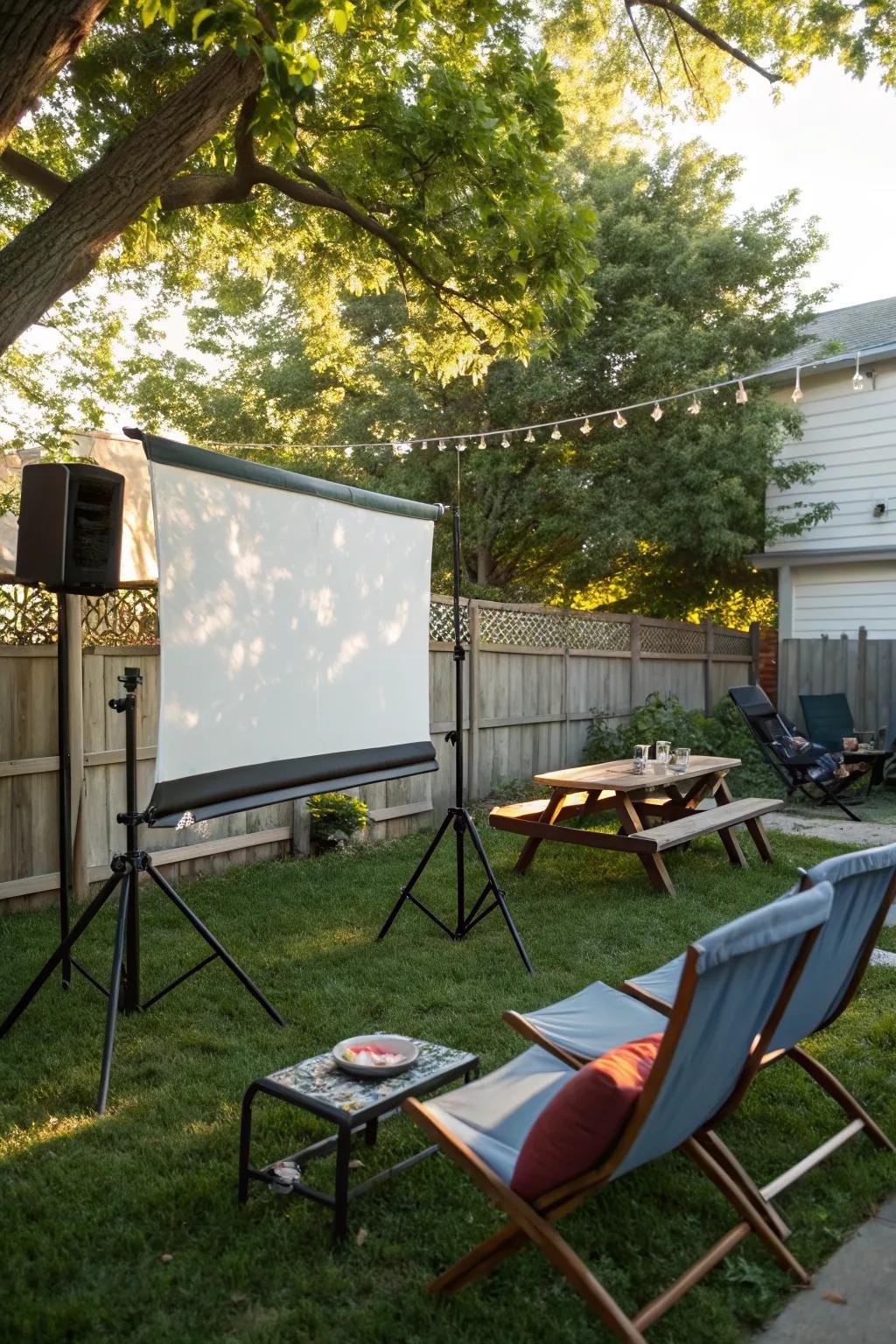
A backyard movie night is peak summer magic: a big screen under the stars, friends and family on blankets, popcorn in hand, fireflies doing their thing. It sounds expensive and complicated, but it’s neither — a basic setup costs under $150 (or under $50 if you borrow a projector), takes about an hour to set up, and creates the kind of evening people talk about for years. I’ve hosted backyard movie nights for date nights, kids’ birthdays, and neighborhood gatherings. Here’s exactly how to do it.
The Equipment: Simpler Than You Think
The Projector
This is the one thing you need. Options by budget:
- Borrow one (free). Ask around — someone you know has a projector gathering dust. Schools, offices, and churches often lend them too. This is the move for your first movie night.
- Budget buy ($80-150). Entry-level projectors on Amazon work fine for backyard use after dark. Look for at least 1080p native resolution (ignore inflated “supported” claims) and 300+ ANSI lumens. Don’t overthink it — in a dark backyard, even budget projectors look great.
- Mid-range ($300-500). Brighter, sharper, better colors. Worth it if you’ll do this monthly. Epson and BenQ dominate this range for good reason.
Key spec that matters: lumens (brightness). You need darkness more than brightness — no projector overcomes direct sunlight, but any projector works beautifully after sunset. Start the movie 30-45 minutes after sunset for the best picture.
The Screen
You have options, cheapest first:
- A white sheet ($10). The classic. Get a king-size white flat sheet, iron out wrinkles (they show on screen), and hang it taut. It works surprisingly well.
- A white wall or garage door (free). If you have a big blank wall, just project onto it. Zero setup, great picture.
- Inflatable screen ($100-150). The full experience — 14-foot screen, sets up in minutes with the included fan. Worth it if this becomes a tradition.
- DIY frame + blackout cloth ($40). PVC pipe frame with white blackout curtain fabric stretched over it. The enthusiast’s choice — wrinkle-free and excellent picture quality.
Whatever you use, make sure it’s taut. Wrinkles and billowing ruin the picture more than any equipment limitation. Clothespins, bungee cords, and weights are your friends.
The Sound (Don’t Skimp Here)
Projector speakers are universally terrible — tiny, tinny, and facing the wrong way. Sound matters more than picture quality for the experience. Options:
- Bluetooth speaker ($30-80). A decent portable speaker placed near the seating area transforms the experience. Connect via Bluetooth or aux cable (aux avoids sync delay).
- Your home soundbar. If you can run an extension cord, bring the soundbar outside. Dialog clarity goes way up.
- FM transmitter trick. For drive-in style: a $20 FM transmitter broadcasts the audio to car radios. Guests tune in from their cars — brilliant for neighborhood events.
The Setup (60 Minutes)
- Pick your spot. Flat ground, facing away from streetlights and neighbors’ windows. Consider the sun’s position — you want the screen in shadow as the sun sets.
- Set up the screen first. Hang it, tension it, step back and check for wrinkles and tilt.
- Position the projector. 10-15 feet from the screen for most projectors (check your model’s throw distance). Raise it on a table — the lens should be roughly centered on the screen. Run a test image and adjust focus and keystone.
- Run power. Outdoor-rated extension cords to the projector and speaker. Tape cords down or route them away from foot traffic — tripping hazards in the dark are no joke.
- Set up seating. Blankets, sleeping bags, lawn chairs, bean bags, air mattresses — the more casual the better. Arrange in rows with the back row raised (coolers work as risers).
- Test everything 30 minutes before guests arrive. Play 5 minutes of the actual movie to check picture, sound sync, and volume. Discovering problems with an audience waiting is stressful.
Snacks and Atmosphere
- Popcorn bar. Big batches of popcorn with toppings (butter, parmesan, cinnamon sugar, nutritional yeast). Serve in paper bags or buckets — it’s the movie theater experience, upgraded.
- Candy and drinks. A cooler of sodas and water, a candy selection. Keep it simple.
- Lighting. String lights or lanterns around the seating area (not near the screen — light kills the picture). Solar path lights marking walkways prevent trips.
- Bug defense. Citronella candles, bug spray available, and consider a fan pointed at the seating area — mosquitoes can’t fly in moving air. This is the most overlooked movie-night essential.
- Blankets. Even summer nights cool down. Have extras — nobody ever complained about too many blankets.
Picking the Movie
Outdoor movies have different rules than indoor: the atmosphere is festive, attention is looser, and the setting favors certain films. Best genres: adventure (Jurassic Park, The Goonies), feel-good comedies (see feel-good movies), animated films (see animated favorites — kids and adults both love them), and classics everyone knows (The Princess Bride, Back to the Future). Avoid: slow art films (the crickets will out-entertain them), horror (too scary for mixed groups outdoors… usually), and anything requiring careful attention to quiet dialogue.
For the indoor version of all this, see planning a movie night at home.
Neighborhood and Practical Considerations
- Noise. Keep volume reasonable, especially after 10 PM. Invite the neighbors — it turns a potential complaint into a community event.
- Weather backup. Check the forecast. A pop-up canopy over the equipment (not the audience — watching movies in light rain is actually fun) saves the night.
- End time. Start at dusk, aim to finish by 10:30-11. Respect the neighborhood.
Make a Backyard Movie Night: Quick Answers
How much does a backyard movie night cost? Under $50 if you borrow a projector (ask around — someone has one). Buying in: $80-150 for a budget projector, $10 for a white sheet screen, plus snacks. The speaker matters more than the projector — budget for decent sound.
Can I use a white sheet as a projector screen? Yes — a king-size white flat sheet, ironed and hung taut, works surprisingly well. Wrinkles show on screen, so tension it tightly with clothespins and bungees. A white garage door or wall works even better (zero setup).
What time should I start the movie? Thirty to forty-five minutes after sunset — projectors need darkness, and starting too early gives you a washed-out image. Check sunset time for your date and plan setup for an hour before.
How do I deal with bugs? Citronella candles, bug spray available for guests, and a fan pointed at the seating area — mosquitoes can’t fly in moving air. The fan trick is the most effective and most overlooked.
Check PBS listings for free family films to feature at your next screening.
Practical Takeaway
Backyard movie night = borrowed or budget projector + taut white sheet + decent Bluetooth speaker + blankets and popcorn + string lights and bug defense. Set up 60 minutes before, test everything, start 30 minutes after sunset. Total cost can be under $50 if you borrow the projector. Do it once and it’ll become your signature summer tradition — the kind of evening people ask about all winter.