
 By admin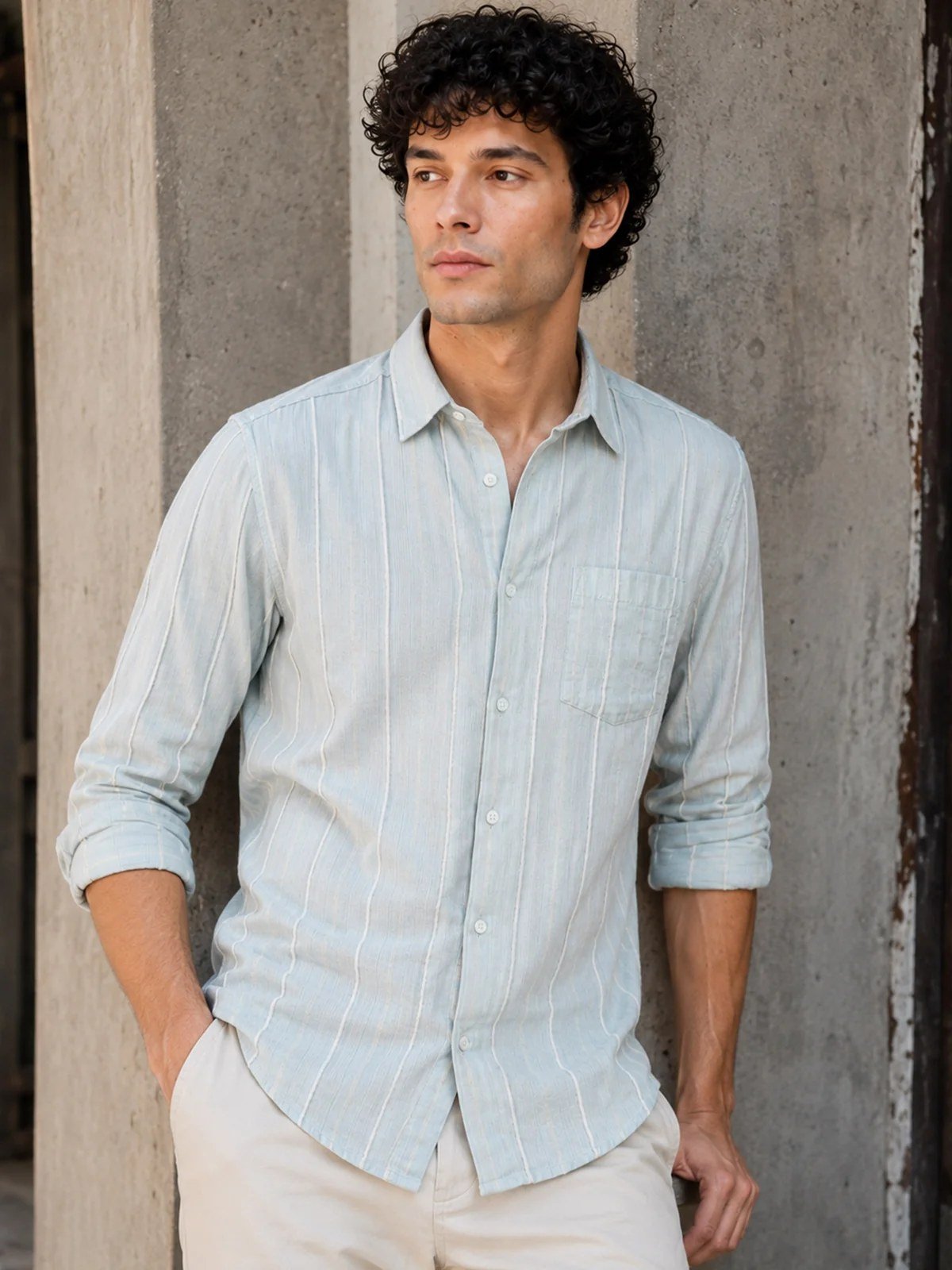
Men’s style has a secret advantage: the well-dressed man uniform is simple, timeless, and cheap to assemble. While women’s fashion churns through trends, the male essentials — dark jeans, Oxford shirts, a navy blazer, clean shoes — haven’t changed in decades and are available thrifted everywhere. Dressing well on a budget isn’t about deprivation; it’s about focus.
The Budget Wardrobe: 15 Pieces
- Tops: 2 Oxford shirts (white, light blue), 2 plain tees (white, gray/navy), 1 polo, 1 crewneck sweater
- Bottoms: dark indigo jeans, khaki or olive chinos, one pair of tailored trousers
- Layers: navy blazer, one casual jacket (denim, bomber, or field)
- Shoes: white leather sneakers, brown leather shoes (loafers or derbies), one pair of boots
Everything coordinates because the palette is restrained: navy, white, gray, brown, olive. Fifteen pieces, dozens of outfits, and most of it thriftable. Total cost new at budget retailers: $300–500. Thrifted: under $150.
How Can Men Dress Well on a Tight Budget? The Rules
- Fit first, always. A $15 thrifted shirt tailored for $12 looks better than a $80 shirt off the rack. Learn your measurements; tailor the keepers.
- Thrift the expensive categories. Blazers, wool coats, leather shoes, and quality button-downs are donated constantly and cost 10% of retail secondhand. Goodwill men’s sections are goldmines for exactly these.
- Buy new the cheap categories. Tees, socks, underwear — buy new, buy cheap, replace often.
- Shoes: one good pair beats three bad ones. If you buy one thing new and decent, make it shoes — cheap shoes look cheap and hurt. Polish them; maintained shoes look twice their price.
- Grooming is free style. Clean haircut (learn a simple style you can maintain), trimmed nails, neat facial hair — costs almost nothing, matters enormously.
- Iron your shirts. Or steam. Wrinkled clothes are the #1 budget-style killer and the fix is free.
Where to shop on a budget
Thrift/consignment for blazers, coats, shirts, shoes. eBay/Poshmark with saved brand+size searches for specific upgrades. Budget retailers (Uniqlo, H&M premium lines, Target’s Goodfellow) for basics — Uniqlo’s Oxford shirts and supima tees are the budget-staple kings. End-of-season sales for coats and boots at 50–70% off. GQ’s affordable-style coverage regularly highlights these exact sources.
What to Avoid
Logo-heavy clothes (paying to advertise), ultra-trendy pieces (dead in a season), cheap suits (a bad suit is worse than no suit — wear blazer + trousers instead), and the “I’ll tailor it later” pile (later never comes; tailor within a week or donate). Also: don’t buy “deals” on things outside your palette — a $10 purple shirt you’ll never wear is $10 wasted.
Men’s Grooming: The Free Style Multiplier
Clothes are half the equation. The grooming half costs almost nothing:
- Haircut that suits your face. The $20–30 cut from a decent barber, maintained every 3–5 weeks, outperforms any clothing purchase. Find a photo, show the barber, maintain the schedule.
- Facial hair: intentional or clean. Stubble, beard, or clean-shaven all work — “neglected” doesn’t. Keep necklines trimmed and edges defined; a $20 trimmer handles it.
- Skin basics. Cleanser, moisturizer, sunscreen — the $25 trio. You don’t need a 10-step routine; you need consistency.
- Nails and details. Trimmed nails, managed nose/ear hair, clean teeth — the details people notice subconsciously.
- Fragrance: one signature scent. A single versatile fragrance (fresh/citrus for day) applied lightly — two sprays max. The drugstore blind-buy is a gamble; sample first.
- Posture. Free, instant, transformative. Shoulders back, chin up — it changes how every garment hangs on you.
The confidence factor
Here’s what budget style guides often miss: the best-dressed men aren’t just well-clothed, they’re comfortable in their clothes. That comfort comes from two things — fit (clothes that fit right feel right) and self-knowledge (knowing what suits you). Both are free. Wear your 15-piece wardrobe with the ease of someone who chose it deliberately, maintain the grooming basics, stand up straight, and you’ll out-dress men spending ten times more who are uncomfortable in trendy clothes that don’t suit them. Style is mostly signal — and the signals are fit, grooming, and confidence, in that order. Money ranks fourth at best.
Men’s Style Mistakes That Cost Nothing to Fix
- Wearing the wrong size. The number one mistake — too big reads sloppy, too small reads uncomfortable. Know your measurements; try things on.
- Neglecting shoes. Scuffed, worn shoes undermine everything. Clean and polish — free transformation.
- Ignoring grooming. The zero-cost fix with the biggest return — haircut schedule, trimmed nails, neat facial hair.
- Wrinkled clothes. The steamer habit — two minutes that doubles the perceived price of everything.
- Too many logos. Paying to advertise brands — plain beats logo-covered at every price point.
- Dressing for the wrong life. The suit collection for a jeans job — audit for reality.
The minimalist men’s wardrobe (10 pieces)
The extreme version: 3 tops (white Oxford, blue Oxford, gray tee), 2 bottoms (dark jeans, chinos), 2 layers (navy blazer, casual jacket), 2 shoe pairs (white sneakers, brown shoes), 1 sweater. Ten pieces, endless combinations, everything fits in a carry-on. This is not deprivation — it is the logical endpoint of the budget-style philosophy: fewer, better, intentional. Most men find they wear 10 pieces 90 percent of the time anyway; the minimalist wardrobe just makes it official. Laundry twice a week, everything always clean, getting dressed in 60 seconds. Less deciding, less maintaining, less spending — and somehow looking better than ever.
The 30-day style challenge
Want to prove the budget-style philosophy? Try this: for 30 days, wear only 15 pieces (the wardrobe listed above). Photograph each outfit. You will discover three things: nobody notices the repetition, getting dressed takes 60 seconds, and you look better than ever — because every piece fits, coordinates, and is intentional. Most challengers never go back to the full closet. Constraint is not limitation; it is liberation. The 30 days will rewire how you think about clothes permanently.
The Practical Takeaway
Fifteen versatile pieces, thrift the expensive stuff, tailor for fit, invest in shoes, and master free grooming. Men’s style rewards simplicity — use that. Related reading: How to Dress Up Jeans for a Nice Dinner and Smart Casual Dress Code for Women, Explained.