
 By admin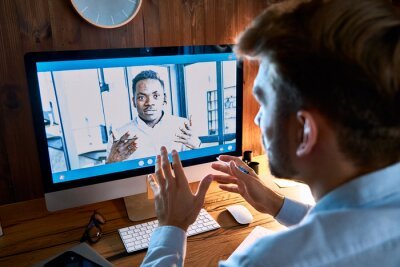
Remote work created the great wardrobe schism: pajamas on the bottom, business on the top, and a growing suspicion that none of it matters. It does, though — not because anyone sees your sweatpants, but because what you wear measurably affects how you think and perform. Researchers call it “enclothed cognition”: clothes carry symbolic meaning that shifts your mental state. Dress like it’s a workday and your brain treats it like one.
The Camera-Ready Formula
Video calls show roughly head to waist, so optimize that zone:
- Solid colors and subtle patterns. Small busy patterns (thin stripes, tiny checks) create a shimmering moiré effect on camera. Solids, especially jewel tones and blues, look crisp and professional on every webcam.
- Structured tops. A collared shirt, blazer, or structured knit reads “professional” instantly. Soft collarless tees read “weekend” even in nice fabrics.
- Necklines matter. Crew necks and collars frame the face well; deep Vs and strappy tops look underdressed on camera regardless of quality.
- Minimal shine. Matte fabrics photograph better than satin or silk, which blow out under ring lights.
Below the desk: wear whatever’s comfortable, but many remote workers swear by the full-outfit trick — getting completely dressed eliminates the “I’m still in pajamas” mental fog and the panic when someone says “can you come on camera?”
How Do I Dress Professionally While Working From Home? Build a WFH Uniform
The goal is a small rotation that looks intentional with zero morning decisions:
- 5–7 polished tops in camera-friendly colors — button-downs, blouses, quality knit polos, one blazer for important calls
- Comfortable bottoms — dark jeans, ponte pants, or chinos; professional enough for surprise camera-on, comfortable for 8 hours
- The “meeting upgrade” layer — one blazer or structured cardigan that dresses up any top in 10 seconds for client calls
- Shoes optional, grooming mandatory — nobody sees your feet, but hair, face, and visible tidiness register on camera immediately
The psychology is the point
Studies on enclothed cognition found people in “work clothes” showed better attention and abstract thinking than those in casual wear — the effect comes from the clothes’ meaning to the wearer. A real end-of-day clothing change matters too: swapping out of work clothes signals to your brain that work is over, which remote workers desperately need for boundaries. The Bureau of Labor Statistics data shows remote work is permanent for millions now — treating it as real work, wardrobe included, is just realism.
Comfort Without Sloppiness
Professional and comfortable aren’t opposites anymore: ponte pants look like trousers and feel like leggings; knit blazers replace stiff suiting; quality polo shirts split the difference. Shop for “polished comfort” pieces — and thrift them, since blazers and button-downs are thrift store staples. Keep one genuinely sharp outfit ready for the unexpected important call; everything else can live in the polished-comfortable middle.
WFH Wardrobe on a Budget
The work-from-home wardrobe doesn’t require a shopping spree — it’s mostly reorganization:
- Audit for camera-friendly tops. You probably own 5+ already. Pull them into a dedicated “work tops” section of the closet.
- Thrift the blazer. One navy or black blazer from a thrift store ($8–15) is the entire “meeting upgrade” system.
- Invest in 2–3 quality knit tops. If buying new, this is where small money goes — tops are what the camera sees.
- Comfortable bottoms you already own. Dark jeans, ponte pants, joggers that pass as trousers on a bad camera — no purchase needed.
- Grooming supplies over clothes. A $25 steamer does more for your on-camera presence than a $100 shirt that’s wrinkled.
Burnout, boundaries, and the psychology of remote dress
The deeper WFH wardrobe issue isn’t fashion — it’s boundaries. Remote workers report two opposite problems: dressing too casually and feeling unprofessional (the pajama trap — correlates with lower motivation and blurred work/life lines), and overworking because there’s no transition (the laptop never closes because the “office” is the kitchen table). The wardrobe is a tool for both: getting fully dressed signals “work mode” to your brain, and changing out of work clothes signals “work is over” — a boundary ritual as important as the morning one. Pair it with a real shutdown routine (review tomorrow, close the laptop, physically leave the workspace), and the clothes become part of a system that protects both your productivity and your evenings. The goal was never looking professional for the webcam — it’s using every tool, including the wardrobe, to make remote work sustainable for years.
The Psychology of Dressing for Work (Even at Home)
The research behind “dress for the job you want” is real:
- Enclothed cognition: the landmark finding — clothes’ symbolic meaning affects the wearer’s psychology. Lab coats improved attention; the mechanism transfers to work clothes.
- The professionalism loop: dressing well → feeling competent → performing better → getting treated as competent → dressing well. It compounds.
- Camera confidence: people who feel they look good on video participate more — speaking up in meetings correlates with feeling put-together.
- The boundary effect: work clothes on = work mode; work clothes off = personal time. Remote workers without this cue report worse work-life balance.
- It’s not vanity: the effect works regardless of who’s watching — even alone, dressed-up people perform better on cognitive tasks. The audience is your own brain.
Building a personal remote-work style
Beyond the basics, develop your version: find your uniform (the 2–3 formulas that feel like you — decision fatigue is the enemy), invest in what shows (tops, grooming, background — allocate budget by camera visibility), keep one “power outfit” (for the big presentation, the interview, the important client — the psychological armor), allow personal expression (the fun earrings, the colorful top — remote work’s dress code has room for personality; use it), and evolve it deliberately (review quarterly: what’s working, what’s worn out, what’s missing). Your remote-work style is part of your professional identity now — as much as your LinkedIn photo. Treat it with the same intention: authentic, polished, and unmistakably you.
The Practical Takeaway
Get fully dressed, build a small camera-friendly top rotation, keep a blazer handy for upgrades, and change clothes when work ends. Dress for the brain you want, not the couch you have. For more on this topic, see What Shoes to Wear With a Black Dress to a Formal Event and Smart Casual Dress Code for Women, Explained.
[…] heel type to dress length and venue, and always have a comfort plan for hour four. Keep exploring: How to Dress Professionally While Working From Home and Smart Casual Dress Code for Women, […]