
 By admin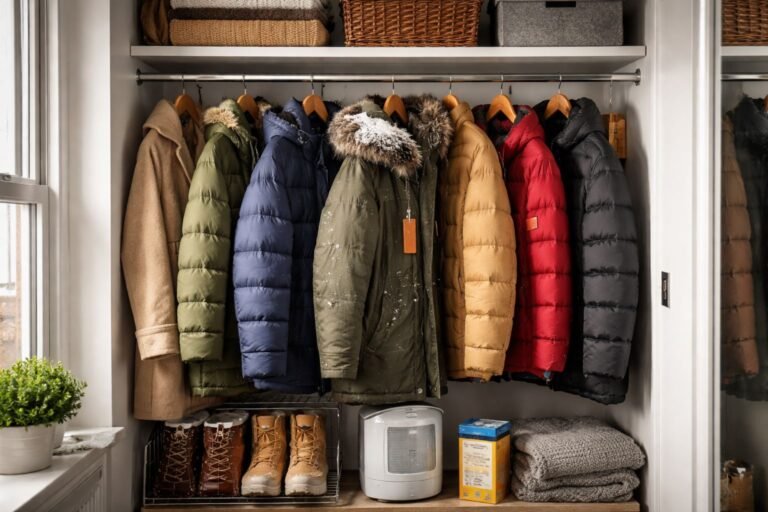
Come spring, most people commit the same crime against their winter coats: shove them unwashed into a closet corner or a plastic bag and forget them until November. Then they’re greeted by moth damage, musty smells, and mysterious stains that set permanently over summer. Storing coats properly takes about an hour and adds years to garments that cost hundreds of dollars.
Step 1: Clean Before You Store
This is non-negotiable. Moths and carpet beetles are attracted to body oils, food stains, and sweat — a “clean-looking” worn coat is a pest buffet. Invisible stains oxidize over months into permanent yellow marks. So: dry-clean wool and down coats (or wash per label — many down coats are machine-washable on gentle), empty every pocket (the fossil record of winter: receipts, gloves, lip balm), and make sure everything is bone-dry before storing. Storing even slightly damp down creates mildew you can’t fix.
What Is the Best Way to Store Winter Coats? Hang, Don’t Fold (Mostly)
- Use wide, sturdy hangers. Heavy coats on thin wire hangers develop stretched, pointy shoulders. Wide wooden or padded hangers distribute the weight properly.
- Breathable garment bags only. Canvas or cotton bags protect from dust while letting air circulate. Never store in plastic dry-cleaner bags or sealed plastic — trapped moisture breeds mildew and yellowing.
- Give them space. Cramming coats together compresses down fill and wrinkles wool. If closet space is tight, this is the moment to honestly cull the coats you didn’t wear.
- Fold knits, hang structure. Heavy wool coats and parkas hang; packable down can be loosely stored in its stuff sack (not compressed tight for months — it damages the loft).
- Cool, dark, dry location. Attics (heat) and basements (damp) are the two worst options. A closet in a climate-controlled room wins.
Moth protection that actually works
Cedar blocks and lavender sachets are mild deterrents, not extermination — and cedar loses potency as it dries (sand it lightly to refresh). For real protection, the cleaning step matters most, plus sealed storage for vulnerable wools. Moth traps in the closet let you monitor. If you’ve had moth damage before, consider airtight containers with the cleaned woolens inside. The American Cleaning Institute has detailed guidance on cleaning different coat materials before storage.
Special Cases
Down coats: wash (or dry-clean) fully dry, store uncompressed in a breathable bag; toss in the dryer with clean tennis balls for 10 minutes next fall to restore loft. Leather and shearling: condition leather before storage, never in plastic, and keep away from direct heat. Fur: honestly, professional cold storage is the correct answer — home closets are too warm and dry. If a coat is truly done, Goodwill takes coat donations year-round, and many areas run fall coat drives.
Storing the Rest of Your Winter Gear
Coats get the attention, but the accessories need proper storage too:
- Boots: clean, condition leather, stuff with boot shapers or newspaper, store upright (never folded — it cracks the shaft). Cedar shoe trees for the foot portion.
- Wool sweaters: wash or air out, fold with tissue (never hang — hangers stretch knits), cedar blocks nearby, breathable bins.
- Scarves and hats: clean, fold loosely, store in breathable bags. Wool hats keep shape stuffed with tissue.
- Gloves: clean leather gloves and condition lightly; store flat in pairs (clip them together — single gloves are a winter mystery).
- Ski/snow gear: wash technical fabrics with proper detergent (regular detergent kills DWR waterproofing — use tech wash), reproof if needed, store loose and dry.
- Blankets and throws: wash, dry thoroughly, store in breathable cotton bags with lavender or cedar.
The fall retrieval ritual
When coats come back out each fall, do the reverse routine: inspect everything before the first cold snap (moth damage found in October is fixable; found in December is a crisis), air out stored items for a day (storage smell dissipates), test zippers and buttons now, not when you’re late, re-waterproof boots and technical shells annually, and try on last year’s coat — bodies change; don’t discover the fit issue on the coldest morning of the year. This 30-minute fall ritual plus the spring storage routine means your winter gear is always ready, always in good condition, and never a surprise expense. The people scrambling for emergency coats in November are paying full price; you’re just unzipping a bag.
Coat Buying Guide: Investing Wisely
When it’s time for a new coat, buy like you’ll keep it a decade:
- Wool content: 80%+ wool for warmth and longevity — blends with cashmere for luxury, with nylon for durability. Avoid “wool-like” polyester at coat prices.
- Construction: check seams, lining (should be smooth and secure), buttons (spare included?), and weight (substantial = quality).
- Fit: room for a sweater underneath, shoulders aligned, sleeves showing ½” of shirt cuff. Try it on with winter layers.
- Length: knee-length is the most versatile; longer is warmer and dressier; cropped is trendy but less practical.
- Color: camel, black, navy, gray — in that order of versatility. The statement coat is your second coat.
- Buy off-season: February–March sales cut coat prices 40–70%. Plan ahead, buy smart.
Coat styles decoded
Overcoat/topcoat: the dress coat — tailored, knee-length, for suits and formal wear. Pea coat: the versatile classic — double-breasted, hip-length, works dressed up or down. Puffer: the warmth champion — casual, packable options for travel. Parkas: the extreme-weather choice — longer, hooded, often fur-trimmed (faux now standard). Trench: the rain coat — not for deep winter, perfect for shoulder seasons. Wool wrap coat: the elegant option — belted, feminine, timeless. Own two: one dressy wool, one casual warm — and every winter situation is covered. The coat is the most visible winter garment; it’s the last place to economize and the first place quality shows.
The Practical Takeaway
Clean everything, dry completely, hang on wide hangers in breathable bags, in a cool dry closet with moth deterrents. An hour now saves a $300 coat later. You might also like The Best Way to Fold T-Shirts to Save Space and How to Tell If a Thrift Store Find Is Good Quality.
[…] CeraVe or Vanicream moisturizer on damp skin, occlusive layer at night, gentle cleanser, humidifier in winter. Under $40 total, better results than most $150 routines. You might also like The Best Way to Fold T-Shirts to Save Space and The Best Way to Store Winter Coats. […]