
 By admin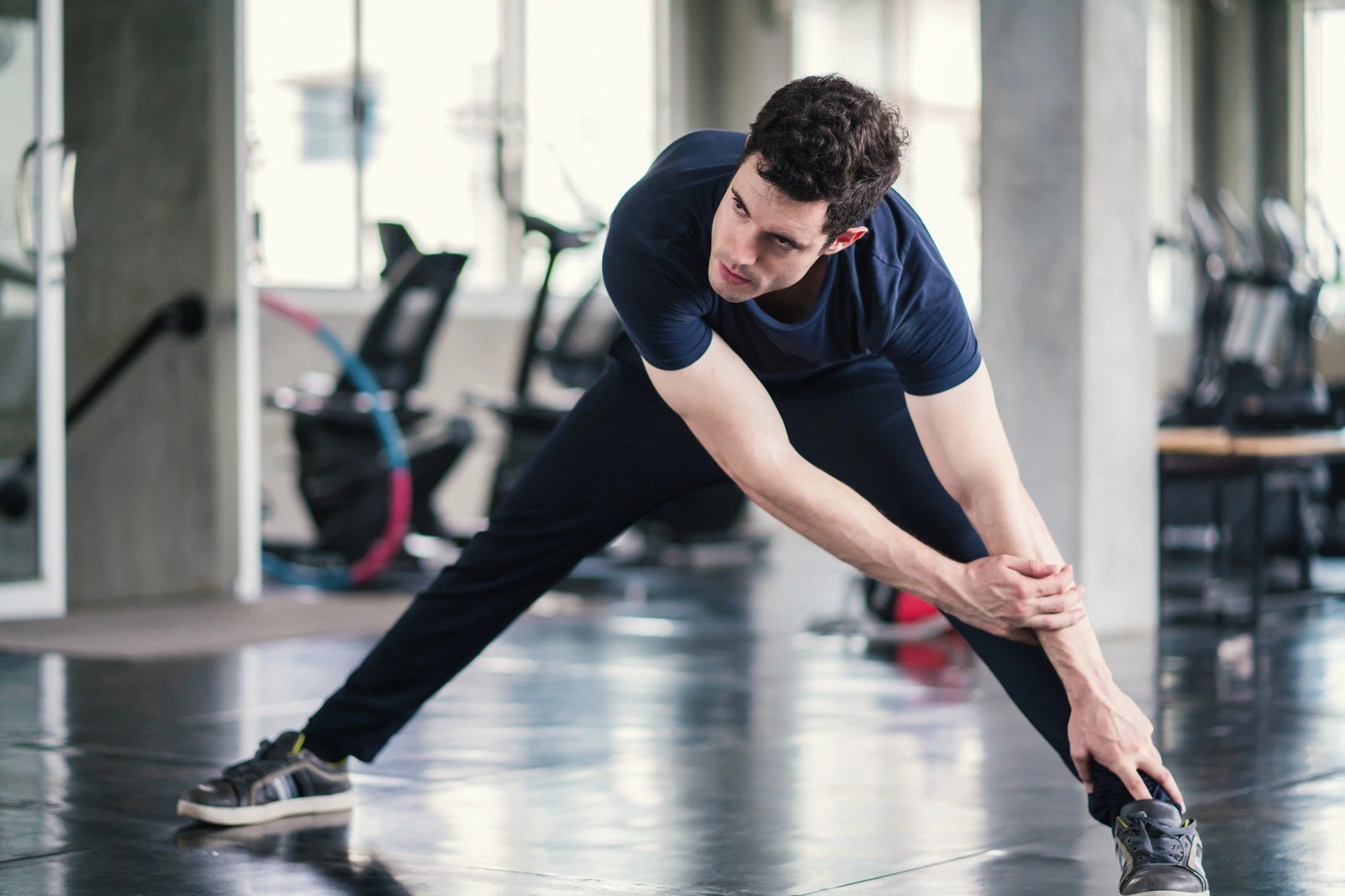
Stretching advice is a mess of contradictions. Your high school coach said stretch before everything. Then studies said pre-workout stretching weakens you. Then someone said that’s only static stretching. So what’s the actual answer? It’s refreshingly clear once you separate the two types of stretching.
The Two Types (This Is the Whole Key)
Dynamic stretching = moving through ranges of motion: leg swings, arm circles, walking lunges, hip openers. It warms tissue, lubricates joints, and primes the nervous system. Static stretching = holding a position for 15–60 seconds: touching your toes and hanging out there, the classic hurdler stretch. They do different things and belong in different places.
Before Exercise: Dynamic, Not Static
The research consensus: prolonged static stretching (60+ seconds per muscle) immediately before explosive or strength activity temporarily reduces power and strength — by a few percent, which matters to athletes and barely matters to casual exercisers, but the direction is consistent. Dynamic warm-ups, meanwhile, improve performance and are the standard in sports science.
So the pre-workout formula: 5–10 minutes of dynamic movement. Brisk walk or easy jog to raise body temperature, then movement-specific drills — leg swings before running, arm circles and band pull-aparts before upper-body lifting, bodyweight squats before leg day. Finish with lighter sets of your first exercise. That’s a complete warm-up; no toe-touching required.
The exception
If a muscle is genuinely so tight it limits safe form (can’t squat without your heels lifting three inches), brief static stretching of just that area pre-workout is reasonable — the form benefit outweighs the small power cost. Rules serve the goal, not the other way around.
Is It Better to Stretch Before or After Exercise? After: Static Is Fine
Post-workout is static stretching’s natural home. Muscles are warm and pliable, there’s no performance to impair, and gentle sustained stretching after exercise may help maintain or improve flexibility over time. Hold each major muscle group 15–30 seconds, breathe normally, stretch to mild tension — never pain. This is also just… pleasant. A calm cool-down downshifts your nervous system after hard effort.
One myth to retire: stretching doesn’t meaningfully prevent next-day soreness (DOMS). That’s driven by the workout itself, particularly unfamiliar eccentric loading. Stretch because it feels good and maintains mobility, not because it prevents soreness — the American College of Sports Medicine is clear on this distinction.
The Separate Practice: Flexibility Training
Here’s what most people miss: the best flexibility gains come from dedicated sessions separate from workouts — 10–15 minutes of focused stretching 2–3 times a week, when you’re warm but not fatigued. Yoga classes, mobility routines, targeted stretching for problem areas (hips and thoracic spine for desk workers especially). Treat mobility as its own small training block and it improves steadily; cram it into the two minutes after lifting and it never happens.
The NIH notes flexibility as one of the four pillars of fitness alongside cardio, strength, and balance — worth training deliberately, especially as you age.
Stretching for Desk Workers: The 5-Minute Fix
If you sit all day, these are the stretches with the highest return on time — the ones that undo what the chair does:
- Hip flexor stretch (half-kneeling). Sitting shortens hip flexors, tilting the pelvis and straining the lower back. 60 seconds per side, daily — the single most important desk-worker stretch.
- Doorway chest stretch. Counteracts the hunched-forward posture: forearms on a doorframe, lean through gently. Your shoulders will thank you within a week.
- Thoracic extension over a chair. Hands behind head, arch backward over the chair back — reverses the desk slump at the exact spot it forms.
- Figure-4 glute stretch. Seated or lying — tight glutes from sitting refer pain everywhere downstream.
- Chin tucks. 10 reps against the headrest or wall — strengthens deep neck flexors weakened by forward-head posture.
- Calf stretch on a step. For the heel-wearers and stair-climbers; tight calves affect everything up the chain.
Flexibility and aging: use it or lose it
Flexibility declines with age largely from disuse, not destiny — and the losses that matter are functional: reaching overhead, getting up from the floor, turning to check blind spots. After 50, the priority stretches shift toward balance-adjacent mobility (ankle flexibility for stable walking, hip mobility for stairs) because falls become the real risk. Yoga and tai chi earn their reputation here — they combine flexibility, balance, and strength in exactly the proportions aging bodies need. Ten minutes of daily mobility work after 50 does more for independence than any single other exercise habit. Start where you are: gentle, consistent, and progressive beats intense, sporadic, and injured.
Stretching Equipment: What’s Worth Buying
You need almost nothing, but a few cheap tools help:
- Foam roller ($15–25): the single best mobility tool — quads, IT bands, upper back, lats. Daily 5-minute rolling beats occasional heroic sessions.
- Lacrosse ball ($3): glutes, feet, upper back knots — precision the roller can’t reach.
- Stretch strap ($8–12): for hamstring and shoulder stretches you can’t reach yet — bridges the flexibility gap safely.
- Yoga blocks ($15/pair): bring the floor closer in forward folds and support hips in seated stretches.
- What to skip: vibrating foam rollers (marginal benefit, 5x price), stretching machines (a strap does the same), and anything promising to “double flexibility in 7 days.”
Building your personal mobility routine
Generic routines are starting points; the best routine targets your restrictions. The assessment: deep squat test (can you? heels down? — reveals ankle/hip issues), overhead reach (arms straight overhead without rib flare — thoracic/shoulder check), toe touch (hamstring/low-back screen), shoulder mobility (hands clasped behind back — the desk-worker diagnostic). Spend your mobility time on what fails, not what’s already fine — 10 minutes on your two worst areas beats 30 minutes of general stretching. Re-test monthly; the tests that improve tell you the program works. And remember the hierarchy: strength through range (loaded mobility like deep goblet squats) builds more useful flexibility than passive stretching alone — flexible and strong is the goal, not just bendy.
The Practical Takeaway
Before: dynamic warm-up, 5–10 minutes. After: gentle static stretching if you like. For real flexibility gains: separate short mobility sessions a few times a week. You might also like What to Eat Before and After a Workout and How to Recover Faster After a Hard Workout.