
 By admin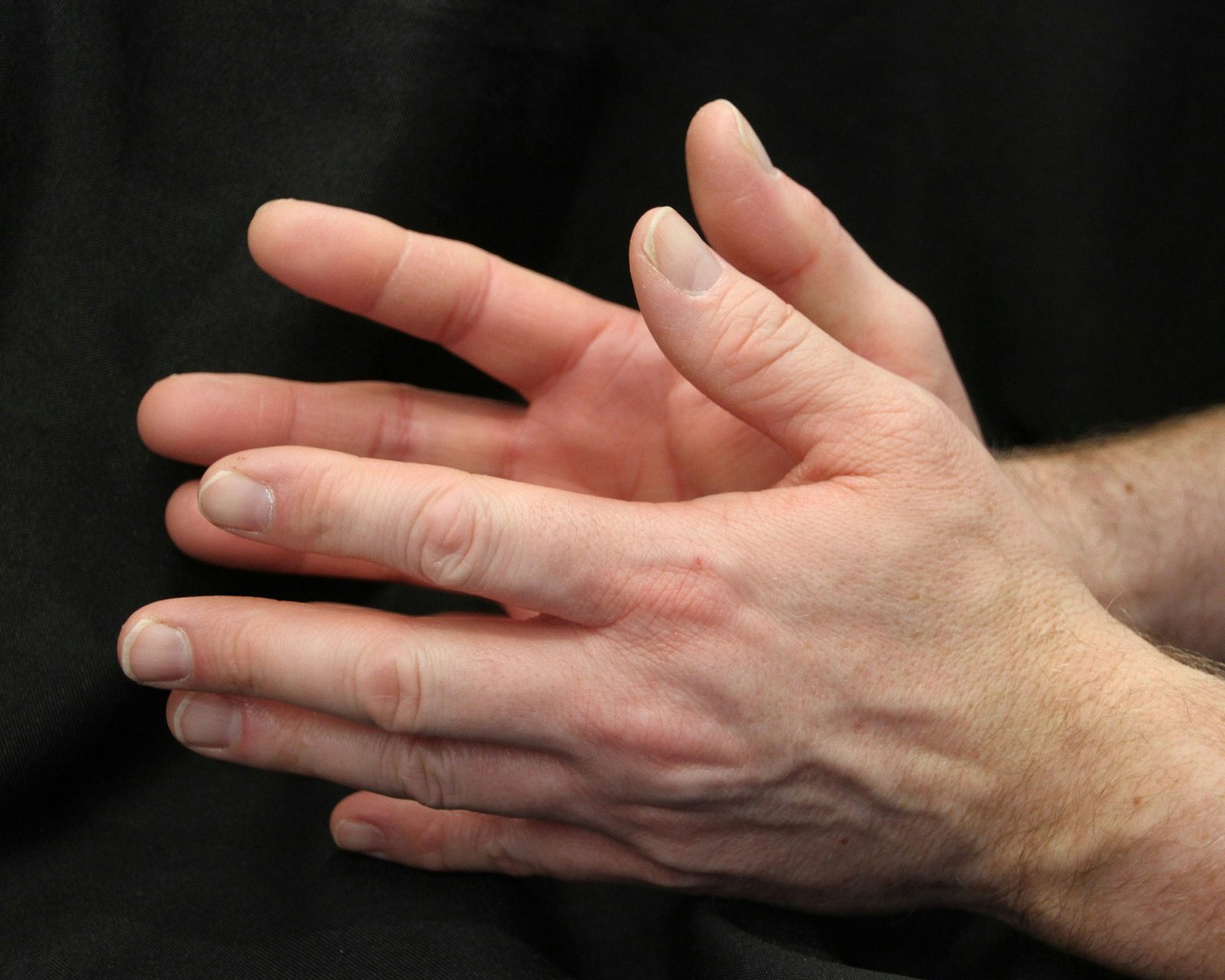
Every family has someone who does it — that satisfying pop-pop-pop of knuckles that makes everyone else in the room wince. And every family has someone who warns it’ll give you arthritis. I grew up hearing both, so I finally looked at what the research actually says about whether cracking your knuckles is bad for you.
Short version: the arthritis warning is a myth. Longer version: it’s mostly harmless, with a couple of caveats worth knowing.
What Actually Makes the Cracking Sound
For years, scientists debated what causes the pop. The leading explanation now: when you pull or bend a joint quickly, pressure drops inside the synovial fluid that lubricates it, and dissolved gases — mostly nitrogen — form a bubble that rapidly collapses. That collapse is the sound you hear. It’s the same physics behind a champagne cork, just on a much smaller and less celebratory scale.
This also explains the refractory period — why you can’t immediately crack the same knuckle twice. The gases need about 20 minutes to dissolve back into the fluid before another good pop is possible.
Is It Bad to Crack Your Knuckles? What the Studies Say
The most famous study on this is almost a legend in medicine. Dr. Donald Unger cracked the knuckles of his left hand at least twice a day for more than 50 years while never cracking his right, then compared the two hands. No arthritis in either. He published the results and won an Ig Nobel Prize for his dedication to extremely annoying science.
Larger studies back him up. Research comparing habitual knuckle crackers with non-crackers has found no increased risk of arthritis or reduced hand function. A 2011 study of several hundred adults found that knuckle cracking was not a risk factor for hand osteoarthritis. The American Academy of Orthopaedic Surgeons doesn’t list knuckle cracking among arthritis risk factors either.
The exceptions worth knowing
- Forcing stiff or injured joints — cracking a joint that’s swollen, painful, or recently injured is different from your usual habit. Pain is your body asking you to stop.
- Neck cracking — aggressively twisting your own neck carries a small but real risk of damaging blood vessels. Knuckles are low-stakes; necks are not.
- Compulsive cracking — if you feel you must crack constantly or it’s tied to anxiety, that’s worth mentioning to a doctor, not because of joint damage but because the compulsion itself can be addressed.
Why People Find It So Satisfying
Part of it is physical — the release of pressure genuinely feels good, like stretching a tight muscle. Part of it may be habit loop: tension builds, you crack, relief follows, and your brain files that sequence away. Some researchers have also noted a small endorphin response. None of this is harmful in itself; it just explains why telling a knuckle-cracker to “just stop” rarely works.
If the sound bothers people around you (it bothers a lot of people), the practical compromise is doing it less often in shared spaces rather than quitting entirely. Stress balls, hand stretches, and keeping your hands busy can redirect the urge. But medically speaking, per the National Institutes of Health‘s arthritis resources, your grandmother’s warning doesn’t hold up.
Other Joint Sounds, Explained
Knuckles get all the attention, but your body is a whole percussion section. Understanding the other noises takes the mystery (and worry) out of them.
- Knee cracking on stairs. Usually tendons or ligaments snapping over bony structures — common, usually harmless, especially if painless. The term is “crepitus,” and painless crepitus is rarely concerning.
- Shoulder popping. Often the biceps tendon shifting in its groove. Again, painless = usually fine.
- Ankle cracking. Tendons sliding over the ankle bones; extremely common when circling the foot.
- Neck and back “cracks” from stretching. Same gas-bubble mechanism as knuckles when gentle. The caution applies to forceful self-manipulation, not gentle stretching.
- Jaw clicking. This one’s worth watching — persistent jaw clicking with pain can indicate TMJ issues, which dentists can evaluate.
The rule for all joint noises
Orthopedists use a simple heuristic: noise without pain, swelling, locking, or loss of motion is almost always benign. Noise with any of those deserves evaluation. That single rule covers knuckles, knees, shoulders, and everything else — it’s the filter that separates “bodies are noisy” from “something needs attention.” So crack away at your knuckles if you enjoy it, and apply the same calm logic to the rest of the soundtrack.
And if you’re the person driven mad by someone else’s cracking — noise sensitivity (misophonia) is real and studied. It’s not just being grumpy; certain repetitive sounds trigger genuine distress in some brains. Headphones, honest conversation (“it really bothers me, could you do it less around me?”), and picking your battles are all reasonable responses.
Should You Try to Stop Cracking?
Medically, there’s no reason to quit. Socially, it’s another story — knuckle cracking consistently ranks among the most irritating habitual sounds in surveys, up there with pen-clicking and loud chewing. If the habit is causing friction at work or home, it’s worth addressing as a courtesy, not a health measure.
Breaking the habit uses standard habit-reversal techniques: notice the trigger (boredom? stress? idle hands during meetings?), substitute a competing response (press your palms together, stretch your fingers wide and hold, squeeze a stress ball), and recruit accountability (ask people to flag it gently — awareness alone cuts the frequency dramatically). Most people find the urge fades within a few weeks once the automatic loop is interrupted. And if you only crack occasionally and nobody minds? There’s genuinely nothing to fix — enjoy the pop.
The bottom line on joint health
Zoom out from the cracking question and the things that actually protect your joints are unglamorous: maintaining a healthy weight (every pound matters for knees and hips), staying active (motion nourishes cartilage — joints are one of the few body parts that get healthier with use), strength training (muscles stabilize joints), and not smoking (it impairs tissue repair). Nobody ever got arthritis from cracking knuckles, but plenty of people got it from the factors above. Focus your joint-health energy where the evidence points.
The Practical Takeaway
Cracking your knuckles doesn’t cause arthritis — that’s settled science. Keep doing it if you like, ease off if a joint hurts, and leave your neck alone. The one thing it definitely damages is the patience of everyone within earshot. You might also like The Best Low-Impact Exercises for Bad Knees and Is Drinking Coffee Every Day Bad for You?.
[…] Swim or water-walk, cycle, walk on forgiving surfaces, and strengthen your quads and glutes 2–3 times a week. Consistency with gentle exercise beats occasional heroic workouts — your knees want a reliable routine, not a boot camp. For more on this topic, see Is Drinking Coffee Every Day Bad for You? and Is Cracking Your Knuckles Actually Bad for You?. […]