
 By admin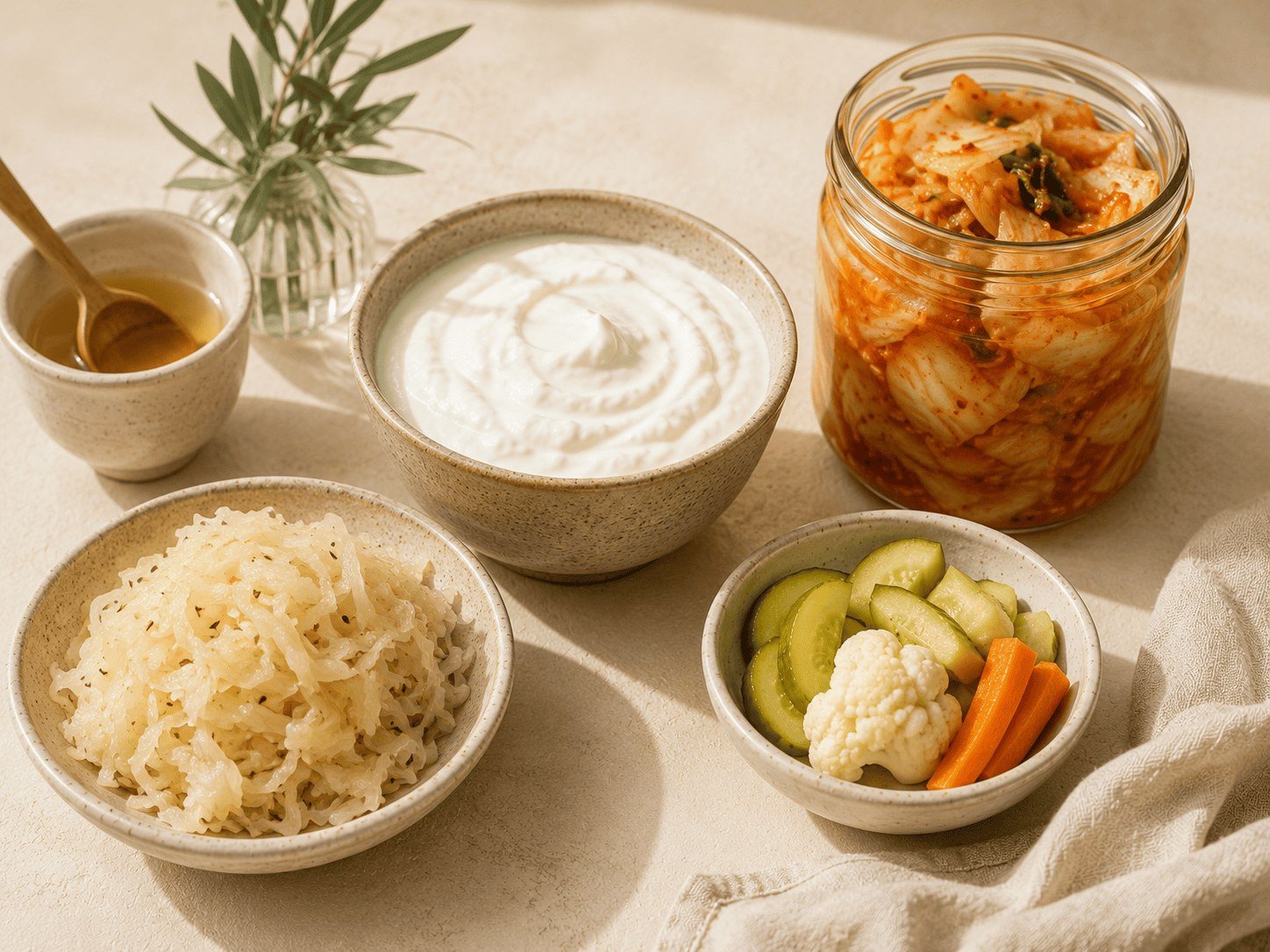
Your gut does a lot more than digest lunch. The trillions of microbes living in your digestive tract — the gut microbiome — influence immunity, mood, inflammation, and even how well you absorb nutrients. So when people ask what foods are good for gut health, they’re really asking: what should I eat to keep that whole ecosystem thriving?
The honest answer from dietitians is less exotic than the wellness industry wants you to believe. You don’t need expensive powders or 30-day cleanses. You need fermented foods, plenty of fiber, and enough variety that your microbes get different fuel sources every week. I’ve watched friends spend hundreds on probiotic supplements while eating almost no vegetables, which is a bit like buying premium gas for a car with flat tires.
What Foods Are Good for Gut Health? Start With Fermented Foods
Fermented foods are the closest thing to a direct delivery of beneficial bacteria. Yogurt with live active cultures is the easiest entry point — look for “live and active cultures” on the label, and pick plain varieties so you’re not getting 20 grams of added sugar canceling out the benefit. Kefir goes a step further with a wider range of bacterial strains, and its tangy flavor works well in smoothies.
Sauerkraut and kimchi bring crunch and probiotics in one bite, as long as you buy the refrigerated kind. Shelf-stable jars are pasteurized, which kills the live cultures. Miso paste stirred into soup at the end of cooking (not boiled) keeps its cultures alive, and tempeh gives you fermented protein that even committed carnivores tend to like once it’s crisped in a pan.
Fiber: the fuel your gut bacteria actually eat
Here’s what most people miss: probiotics are the seeds, but fiber is the fertilizer. Your gut bacteria ferment fiber into short-chain fatty acids like butyrate, which nourish the gut lining and calm inflammation. Americans average about 15 grams of fiber a day; most adults need 25 to 38.
- Beans and lentils — a cup of lentils packs around 15 grams of fiber and costs pennies per serving.
- Oats — the beta-glucan fiber in oats is especially well studied for gut and heart benefits.
- Berries, apples, and pears — the skins hold much of the fiber, so eat them unpeeled when you can.
- Vegetables of every color — aiming for 30 different plant foods a week is the target researchers associate with the most diverse microbiomes.
- Whole grains — barley, farro, and brown rice beat refined grains every time for feeding gut bacteria.
Foods That Quietly Hurt Your Gut
It’s not only about what you add. Ultra-processed foods — the ones with ingredient lists that read like a chemistry exam — are consistently linked to less diverse gut microbiomes. Artificial sweeteners are a gray area worth watching; some research suggests certain types alter gut bacteria in ways we’re still trying to understand. And while alcohol in moderation is a personal call, heavy drinking is rough on the gut lining, full stop.
One more underrated factor: eating speed. Scarfing meals in four minutes flat means poorly chewed food and swallowed air, which your gut has to deal with downstream. Slowing down is free and it works.
A Simple Gut-Friendly Day of Eating
You don’t need a meal plan, but it helps to see how this fits together. Breakfast could be plain Greek yogurt with oats, berries, and a spoonful of ground flaxseed. Lunch: a big salad or grain bowl with chickpeas, mixed vegetables, and olive oil. Snack: an apple with a handful of almonds. Dinner: salmon with roasted vegetables and a side of kimchi or sauerkraut. Nothing fancy, nothing expensive — just fermented food plus fiber at most meals.
Small swaps count too. Trade white rice for brown or barley a few nights a week. Keep a bag of frozen berries for smoothies. Choose the refrigerated sauerkraut instead of the shelf-stable jar. These are $2 decisions that add up over months.
If you want a framework for the rest of your plate, the USDA’s MyPlate nutrition guide lays out balanced proportions, and the CDC’s healthy eating guidance covers the basics without any fad-diet noise.
Gut Health Myths Worth Dropping
The wellness industry has built a small empire on gut anxiety, so let’s clear a few things up. First, you almost certainly don’t need a “gut cleanse” or detox tea — your liver and kidneys handle detoxification around the clock, and aggressive cleanses mostly just dehydrate you. Second, probiotic supplements help in specific situations (after antibiotics, for certain IBS symptoms) but a generic daily probiotic for an already-healthy person has surprisingly thin evidence. Food sources are cheaper and better studied.
Third, “leaky gut” as sold online is not the same as the intestinal permeability researchers actually study. If someone is selling you a cure for a condition they diagnosed via a quiz, keep your wallet closed. And fourth, there’s no single “gut superfood.” The research consistently favors dietary pattern over individual heroes — people eating varied, fiber-rich diets have healthier microbiomes than people eating poorly plus one trendy powder.
When gut symptoms deserve a doctor
Normal digestive quirks (occasional bloating, irregularity when traveling) don’t need medical attention. But see a doctor for: blood in stool, unexplained weight loss, persistent abdominal pain, trouble swallowing, or bowel changes lasting more than a few weeks — especially after 45. These can signal conditions from celiac disease to IBD to colorectal cancer, and early evaluation matters enormously. Don’t let internet gut advice delay real care for red-flag symptoms.
Also worth knowing: if you suspect a food intolerance, skip the expensive IgG food-sensitivity tests sold online — major allergy organizations consider them unproven. A structured elimination diet with a dietitian, or tested approaches like low-FODMAP for IBS (done short-term, with guidance), are the evidence-based paths.
The Practical Takeaway
Feed your gut two things: live cultures from fermented foods and fiber from a wide variety of plants. Do that most days, cut back on ultra-processed stuff, and give it a few weeks — gut changes don’t happen overnight, but most people notice better digestion within a month. Keep exploring: A Simple Morning Routine for Better Health (That Takes 30 Minutes) and The Best Low-Impact Exercises for Bad Knees.
[…] Taper instead of quitting cold turkey, eat enough protein and fiber so you’re never running on empty, clear your environment of temptation, and protect your sleep. The first few days are uncomfortable, but they pass — and on the other side, your energy steadies and your taste buds reset. Related reading: Is Cracking Your Knuckles Actually Bad for You? and The Best Foods for Gut Health, Backed by Nutrition Science. […]
[…] best morning routine is the one you’ll still be doing in March. For more on this topic, see The Best Foods for Gut Health, Backed by Nutrition Science and How to Talk to Your Doctor About Mental […]