
 By admin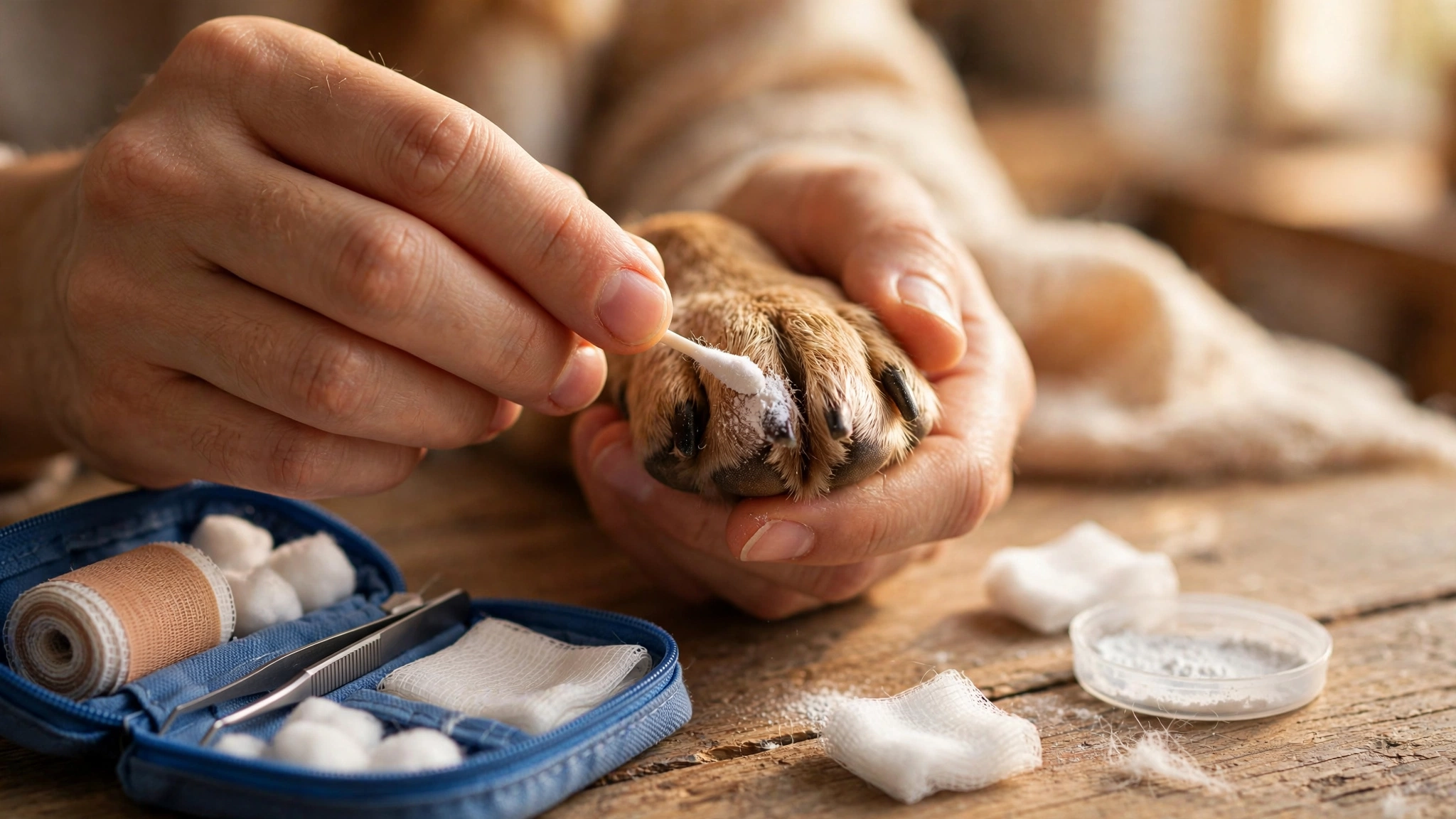
Quick Answer: To stop dog nail bleeding, apply firm pressure with a clean cloth or gauze for 5–10 minutes, then pack the nail tip with styptic powder (or cornstarch/flour as a substitute) and hold for another few minutes. Keep your dog calm and still, avoid walking on hard surfaces for 30 minutes, and watch for bleeding that restarts. If bleeding does not stop within 20–30 minutes, call your vet.
It happens to almost every dog owner eventually: one clip too short, a yelp, and suddenly there is blood on the floor. Cutting the quick — the blood vessel inside the nail — looks dramatic, but it is rarely dangerous. The key is knowing exactly what to do in those first minutes, because the right response stops the bleeding fast while the wrong one (panicking, letting the dog run around) makes it worse.
This guide walks you through immediate first aid, what to use when you do not have styptic powder, aftercare, and how to avoid cutting the quick next time.
Why Dog Nails Bleed: Understanding the Quick
Inside every dog nail runs the quick — a bundle of blood vessels and nerves. In light-colored nails, it is visible as the pinkish area inside the nail. In dark nails, it is hidden, which is why black nails get nicked more often.
The quick grows along with the nail, so dogs whose nails are trimmed infrequently develop long quicks, making safe trimming harder. Regular trimming (every 3–4 weeks) actually causes the quick to recede over time, giving you more safe nail to work with.
Step-by-Step: How to Stop the Bleeding
Step 1: Stay Calm and Restrain Gently
Your dog feeds off your energy. Speak softly, pet them, and have a helper hold the dog still if possible. A squirming dog reopens the clot repeatedly.
Step 2: Apply Direct Pressure
Press a clean cloth, gauze pad, or paper towel firmly against the nail tip for 5–10 full minutes. Do not peek early — lifting pressure breaks the forming clot. Set a timer if you need to.
Step 3: Apply Styptic Powder
Dip the bleeding nail directly into styptic powder (Kwik Stop is the classic brand) or press a pinch of powder onto the tip with your finger. Styptic powder contains ferric subsulfate, which contracts blood vessels and speeds clotting dramatically. Hold the powder in place with gentle pressure for 2–3 minutes.
Step 4: Keep the Dog Quiet
After bleeding stops, keep your dog calm and off hard floors for at least 30 minutes. No walks, no fetch, no excited zoomies — activity dislodges the clot and restarts bleeding. A stuffed Kong or chew in their bed works well.
Step 5: Monitor
Check the nail after 30 minutes and again in a few hours. A small dark clot at the tip is normal. If bleeding restarts, repeat pressure + styptic powder.
No Styptic Powder? Use These Substitutes
Styptic powder is the best option, but these household alternatives work in a pinch:
- Cornstarch: the best substitute — pack it onto the nail tip generously and hold with pressure
- Flour: works similarly to cornstarch, slightly less effective
- Baking soda: can help clotting; press a paste of baking soda and water onto the nail
- A bar of soap: press the nail tip firmly into a dry bar of soap to plug the vessel — an old groomer’s trick
- Ice: holding ice against the nail constricts vessels; combine with pressure
Every dog owner who trims nails at home should keep styptic powder in the grooming kit — it costs under $10 and lasts for years. Cornstarch as a backup is smart too.
What NOT to Do
- Do not use hydrogen peroxide on the nail — it damages tissue and delays healing
- Do not wrap the paw tightly in bandages; restricted circulation causes more harm, and dogs chew bandages off anyway
- Do not apply human liquid bandage with alcohol — it stings badly and your dog will not trust nail trims again
- Do not keep trimming — stop the session, deal with the bleeding, and resume another day
- Do not punish the dog for flinching; it makes future trims harder
Aftercare: The Next 24–48 Hours
Once bleeding has stopped:
- Keep the paw clean and dry; avoid muddy yards and puddles for a day
- Skip walks on concrete or rough surfaces for 24 hours — soft grass only
- Watch for signs of infection over the next few days: swelling, redness spreading up the toe, discharge, or limping that worsens instead of improving
- Do not pick at the clot — let it fall off naturally
Mild limping for a few hours is normal. If your dog refuses to bear weight the next day, or the toe swells, see your vet — occasionally a nail can crack or split up into the nail bed, which needs professional care.
When to Call the Vet
Most quicked nails stop bleeding within 10–20 minutes with proper care. Call your veterinarian if:
- Bleeding has not stopped after 20–30 minutes of proper pressure and styptic powder
- The nail is cracked, split, or partially torn off (not just a clean nick)
- There is swelling, pus, or a foul smell in the following days
- Your dog is on blood thinners or has a known clotting disorder
- Your dog will not put weight on the foot after 24 hours
How to Avoid Cutting the Quick Next Time
For Light Nails
Trim small slices and stop when you see a pinkish-gray oval appear in the center of the cut surface — that is the quick approaching. Leave 2–3 mm of safe margin.
For Dark Nails
Trim in tiny slivers and check the cut surface after each one. You are looking for the texture change: hard white/gray outer nail gives way to a darker, softer center with a tiny dark dot — stop there. When in doubt, stop early; you can always trim more next week.
General Tips
- Trim little and often (every 2–3 weeks) rather than a lot rarely — this recedes the quick
- Use sharp, appropriately sized clippers; dull clippers crush instead of cutting
- Consider a nail grinder (Dremel-style) — slower, but far less likely to hit the quick, and great for dark nails
- Trim after a bath or walk when nails are softer
- Keep styptic powder within arm’s reach every single time you trim
- Reward generously — one treat per nail builds positive associations
Dewclaws Deserve Attention Too
Dewclaws (the “thumbs” on the inner leg) do not wear down from walking and are the most commonly overgrown — and quicked — nails. Check them every trim. Some dogs also have rear dewclaws. They curl into the pad if neglected, which is painful and can require vet removal.
Further Reading
- How Many Times a Day Should a Dog Poop? Complete Answer
- How to Make a Dog Vomit: Step-by-Step Guide (2026)
- How to Help Your Dog Lose Weight: Step-by-Step Guide (2026)
- ASPCA’s pet care resources
- AKC’s dog breed guide
Frequently Asked Questions
How long does a dog nail bleed after cutting the quick?
With pressure and styptic powder, most stop within 5–15 minutes. Without treatment, a quicked nail can ooze for 30+ minutes, especially if the dog stays active.
Will my dog’s nail grow back normally?
Yes. A nicked quick heals completely, and the nail regrows normally within a few weeks. Only severely damaged nail beds (cracked up to the base) may grow back deformed — those need vet care.
Can I use flour to stop dog nail bleeding?
Yes — flour or cornstarch packed onto the nail with firm pressure works as an emergency substitute for styptic powder. Cornstarch is slightly more effective.
Does cutting the quick hurt the dog?
Yes, briefly — the quick contains nerves. It stings like cutting your own nail too short. The pain fades quickly, but the memory can make dogs fearful of future trims, so go slow and reward heavily afterward.
Should I bandage a bleeding dog nail?
Usually no. Light bandaging for the first hour can protect the clot if the dog must move around, but remove it promptly — tight or prolonged bandaging restricts circulation and invites chewing.
Conclusion
A bleeding dog nail looks scary but is one of the most routine minor injuries in dog ownership. Firm pressure, styptic powder, and 30 minutes of calm resolve the vast majority of cases. Keep styptic powder in your grooming kit, trim little and often, and you will turn nail trims from a dreaded event into just another part of the routine.