
 By admin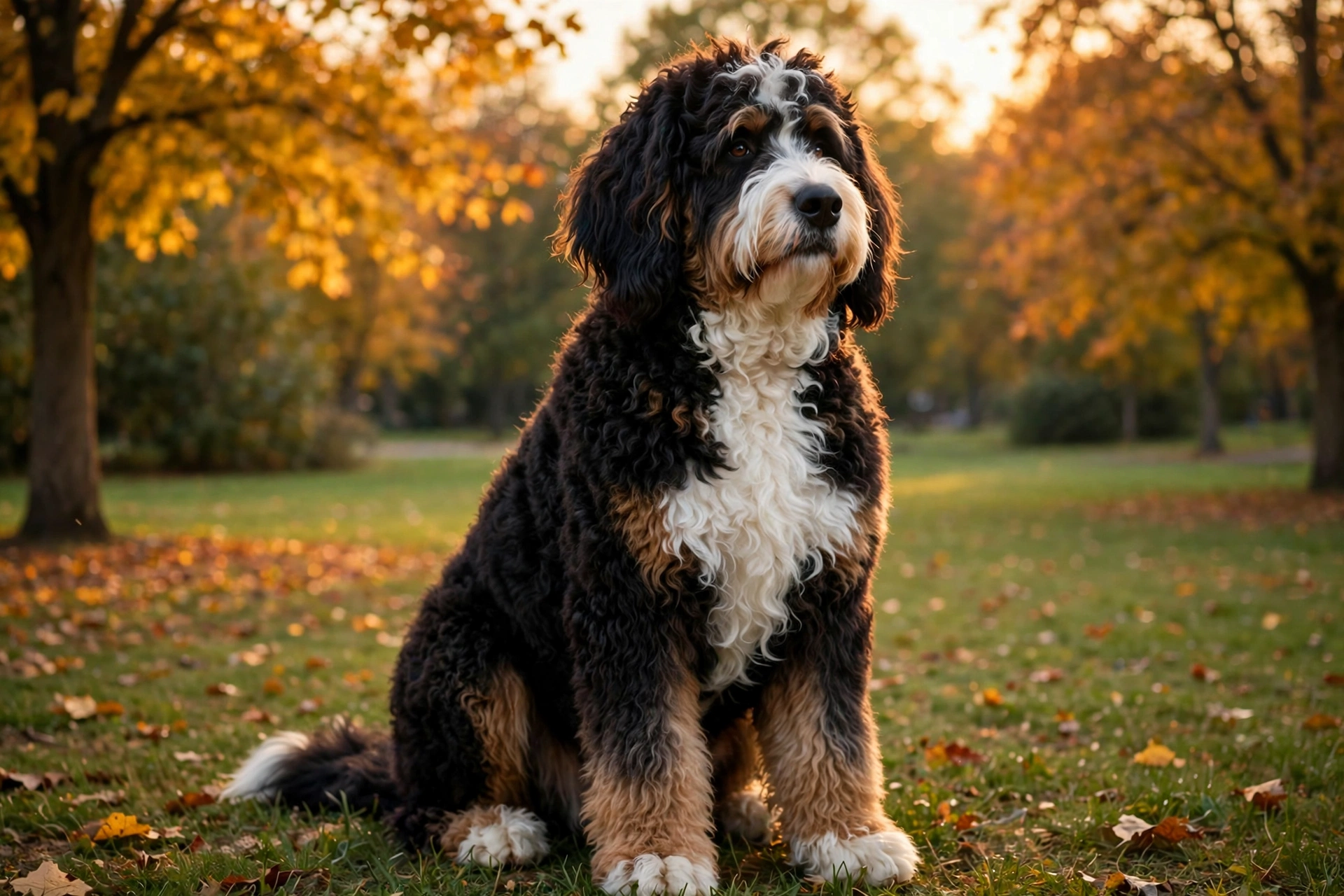
Quick Answer: Bernedoodles live 12 to 18 years on average. Mini Bernedoodles tend to live the longest (14–18 years), while Standard Bernedoodles average 12–15 years. Like most dogs, smaller individuals and those from health-tested parents tend to outlive the average.
If you are thinking about bringing a Bernedoodle into your family, one of the first questions you will ask is how many good years you can expect together. The Bernedoodle — a cross between a Bernese Mountain Dog and a Poodle — has become one of the most popular doodle breeds in the United States, loved for its friendly temperament, low-shedding coat, and goofy charm. The good news is that Bernedoodles are relatively long-lived dogs, especially compared to their Bernese Mountain Dog parent, which sadly averages only 7 to 10 years.
Average Bernedoodle Lifespan by Size
Size is the single biggest predictor of how long a Bernedoodle will live. Smaller dogs generally outlive larger ones, and this holds true within the Bernedoodle breed:
- Standard Bernedoodle (50–90+ lbs): 12–15 years
- Mini Bernedoodle (25–49 lbs): 14–17 years
- Tiny / Micro Mini Bernedoodle (10–24 lbs): 15–18 years
These are averages, not guarantees. A well-bred Standard Bernedoodle from health-tested lines can absolutely reach 15 or 16, while a poorly bred Mini may fall short of its potential. Genetics, weight management, and everyday care matter enormously.
Why Bernedoodles Live Longer Than Bernese Mountain Dogs
The Bernese Mountain Dog is a wonderful breed with a heartbreakingly short lifespan of roughly 7 to 10 years, largely due to a high rate of cancer (especially histiocytic sarcoma) and other inherited conditions. Crossing the Berner with a Poodle — a breed that routinely lives 12 to 15 years — introduces hybrid vigor. The resulting puppies benefit from a wider gene pool, which tends to reduce the expression of breed-specific diseases.
That said, hybrid vigor is not magic. Bernedoodles can still inherit health problems from either parent, which is why choosing a breeder who performs proper health testing is so important.
Common Health Issues That Can Shorten a Bernedoodle’s Life
Hip and Elbow Dysplasia
Both parent breeds are prone to joint dysplasia. Responsible breeders screen breeding dogs with OFA or PennHIP evaluations. Keeping your Bernedoodle at a healthy weight and avoiding excessive high-impact exercise during puppyhood (under 12–18 months) protects developing joints.
Cancer
Bernese Mountain Dogs have one of the highest cancer rates of any breed. While the Poodle influence lowers the risk, Bernedoodles are not immune. Regular vet checkups and prompt attention to lumps, lethargy, or appetite changes are essential.
Eye Conditions
Progressive retinal atrophy (PRA) and cataracts can occur. Breeders should provide current eye clearances (CAER exams) for both parents.
Skin Allergies and Hot Spots
Doodles are notorious for skin sensitivities. Chronic allergies will not usually shorten life directly, but unmanaged skin disease tanks quality of life. Work with your vet on diet trials, allergy testing, or medication if itching persists.
Bloat (Gastric Dilatation-Volvulus)
Large, deep-chested Standard Bernedoodles carry a bloat risk. Feed two or three smaller meals per day, avoid vigorous exercise right after eating, and know the emergency signs: restlessness, drooling, unproductive retching, and a swollen abdomen. Bloat kills fast — it is always an emergency.
How to Help Your Bernedoodle Live Longer
1. Choose a Health-Tested Puppy
Ask breeders for OFA hips/elbows, cardiac, and eye clearances, plus genetic panels. A breeder who cannot produce these is a breeder to walk away from, no matter how cute the puppies are.
2. Keep Them Lean
Obesity is the number one preventable life-shortener in dogs, linked to diabetes, joint disease, and heart problems. You should be able to feel (not see) your Bernedoodle’s ribs, and they should have a visible waist from above. Treats should make up no more than 10 percent of daily calories.
3. Feed a Quality Diet
Feed an AAFCO-balanced food appropriate for your dog’s size and life stage. Large-breed puppy formulas matter for Standards to control growth rate. Avoid boutique grain-free diets unless your vet recommends one — the FDA has investigated links between some grain-free foods and heart disease (DCM) in dogs.
4. Exercise Daily, But Smartly
Adult Bernedoodles need 30 to 60 minutes of activity daily. For puppies under a year, stick to the “5 minutes per month of age, twice daily” guideline to protect growth plates.
5. Prioritize Dental Care
Dental disease affects most dogs by age three and is linked to heart and kidney problems. Brush teeth several times a week, offer dental chews, and schedule professional cleanings as your vet advises.
6. Stay Current on Preventive Vet Care
Annual exams (twice yearly for seniors over 8), vaccinations, parasite prevention, and early bloodwork catch problems when they are most treatable. Senior screening starting around age 7 is money well spent.
When Is a Bernedoodle Considered a Senior?
Most Bernedoodles enter their senior years around 7 to 8 years old (slightly earlier for Standards, a bit later for Minis). Senior dogs benefit from softer bedding, joint supplements, adjusted exercise, and more frequent vet visits. Graying muzzles, slower stairs, and longer naps are normal — sudden changes are not, and always deserve a vet check.
Bernedoodle Lifespan vs. Other Popular Doodles
How does the Bernedoodle stack up against its doodle cousins? Pretty well. Labradoodles average 12–14 years, Goldendoodles 10–15 years, and Sheepadoodles 12–15 years. The Bernedoodle’s 12–18 year range puts it at the top of the pack — largely because the Poodle’s longevity genes do heavy lifting against the Bernese Mountain Dog’s cancer predisposition. Among large doodle mixes, the Bernedoodle is one of the best longevity bets you can make, provided the breeder health-tests.
Does Coat Type Affect Lifespan?
There is no evidence that curly, wavy, or straight coats correlate with longevity. The furnishings gene that gives doodles their low-shedding coats is unrelated to lifespan. Do not let a breeder charge a “health premium” for a particular coat type — focus on the health clearances behind the puppy instead.
Further Reading
- How Long Do Raccoons Live? Complete Answer (2026)
- How Long Do Great Danes Live? Complete Answer (2026)
- How Long Do Boston Terriers Live? Complete Answer
- ASPCA’s pet care resources
- AKC’s dog breed guide
Frequently Asked Questions
Do male or female Bernedoodles live longer?
Across dogs generally, spayed females tend to live slightly longer than intact males, but the difference is small — often under a year. Neutering/spaying decisions affect cancer and behavior risks more than raw lifespan, so discuss timing with your vet.
Do F1 Bernedoodles live longer than F1B?
There is no solid evidence that one generation outlives another. Health testing of the parents matters far more than whether the puppy is F1, F1B, or multigenerational.
What is the oldest recorded Bernedoodle age?
Bernedoodles are a young breed (popularized in the early 2000s), so verified extreme-longevity records are scarce. Owners commonly report Minis reaching 16–18 years, which is excellent for any dog.
Do Bernedoodles have more health problems than Poodles?
Not necessarily. Well-bred Bernedoodles are generally healthy dogs. The main inherited risks come from the Bernese side (cancer, joint issues), which is exactly why breeder health testing is non-negotiable.
At what age do Bernedoodles calm down?
Most Bernedoodles settle noticeably between 2 and 3 years old. Mental maturity lags behind physical maturity, so consistent training through adolescence pays off.
The Bottom Line
Bernedoodles are among the longer-lived large companion dogs, with most living 12 to 18 years depending on size and care. Start with a health-tested puppy, keep them lean and active, stay on top of vet care, and you give your doodle the best shot at a long, happy life by your side.