
 By admin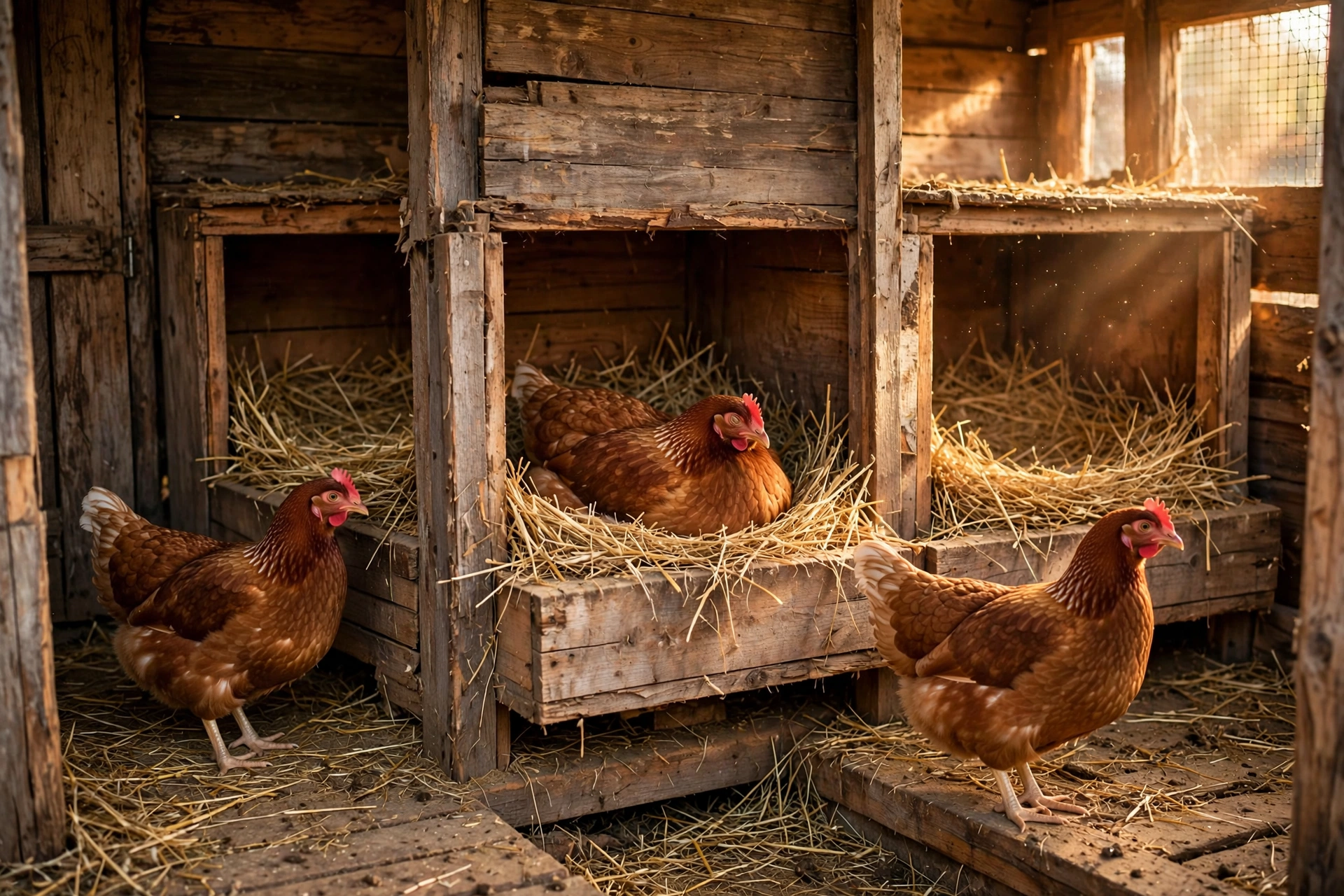
Quick Answer: Provide one nesting box for every 4 to 5 hens. So a flock of 12 hens needs 3 boxes, and 20 hens need 4 to 5 boxes. Hens naturally share — you will often find three hens queued up for the same favorite box while others sit empty — so you do not need one box per bird. What matters more than the exact count is that boxes are the right size, kept clean, and placed in a quiet, dim corner of the coop.
New chicken keepers almost always overbuild nesting boxes, imagining each hen needs her own private suite. In reality, hens are communal layers with strong preferences: give them six identical boxes and they will fight over the same two. Understanding the real ratio — and why box quality beats box quantity — saves you money, coop space, and a lot of cracked eggs.
The Golden Ratio: 1 Box Per 4–5 Hens
This ratio comes from decades of poultry science and backyard experience. It works because hens do not all lay at the same moment; laying is spread across the morning, and each visit to the box lasts only 20 to 40 minutes. With one box per four to five hens, there is almost always a free box when a hen needs one.
- 4–5 hens: 1 box (minimum — always provide at least 1)
- 6–10 hens: 2 boxes
- 11–15 hens: 3 boxes
- 16–20 hens: 4 boxes
- 21–25 hens: 5 boxes
Going above this ratio is harmless but wastes coop space. Going below it causes problems: hens laying on the coop floor (dirty, cracked eggs), egg-eating from overcrowding stress, and occasional squabbles.
What Makes a Good Nesting Box
Size
For standard breeds (Rhode Island Reds, Orpingtons, Plymouth Rocks), each box should be about 12 × 12 × 12 inches. Bantams do fine with 10-inch cubes; extra-large breeds like Jersey Giants appreciate 14-inch boxes. Too small and hens will not use them; too big and two hens crowd in, which leads to broken eggs.
Placement
Mount boxes 18 to 24 inches off the coop floor — low enough for heavy breeds to hop in, high enough to feel safe. Crucially, position them lower than the roosts. Chickens instinctively sleep at the highest point; if boxes are higher than roosts, hens will sleep (and poop) in the boxes, fouling the eggs. Keep boxes in the darkest, quietest corner — hens prefer dim, private spots and lay better in them.
Bedding
Line boxes with 2 to 3 inches of soft bedding. Pine shavings are the most popular choice: absorbent, cheap, and easy to replace. Straw works well too and looks natural, though it can harbor mites if not changed regularly. Avoid sawdust (too dusty) and cedar shavings (aromatic oils irritate respiratory systems). Refresh bedding weekly and top up as needed — clean boxes mean clean eggs.
Design details that help
- A front lip: A 3 to 4 inch lip across the bottom front keeps bedding and eggs from rolling out.
- Sloped roof: Prevents hens from roosting on top of the boxes.
- Easy access for you: Hinged lids or exterior collection doors let you gather eggs without entering the coop.
- Curtains: A simple fabric flap over the entrance darkens the box and dramatically increases use — hens love the privacy.
Why Hens All Use the Same Box
It is one of backyard poultry’s great mysteries: six identical boxes, and every hen wants box number three. This is normal flock behavior — hens are socially influenced layers and prefer boxes that already contain eggs (it signals “this is a safe place to lay”). You can use this to your advantage: place a golf ball or ceramic dummy egg in each box to distribute laying. Do not waste money building more boxes to solve favoritism; improve the favorite box’s rivals instead by making them equally dark and private.
Common Nesting Box Problems
Hens laying on the floor
Usually caused by too few boxes, boxes placed too high, or boxes that are dirty or brightly lit. Add a box, lower them below roost height, darken with curtains, and refresh bedding. Young pullets just starting to lay also drop eggs randomly for the first week or two — this resolves on its own.
Broody hens hogging boxes
A broody hen will sit in a box all day, blocking layers. With the 1-per-4–5 ratio you have spares, but persistent broodies may need “broody breaking” (a wire-bottom cage for a few days) if you do not want chicks.
Egg eating
Often starts when eggs crack in crowded boxes and hens discover they taste good. Fix the crowding, collect eggs at least twice daily, and ensure adequate calcium (oyster shell supplement) so shells stay hard.
Sleeping in boxes
Means your roosts are lower than the boxes, too narrow, or drafty. Fix the roosts — wide 2×4s laid flat, higher than the boxes — and block box entrances at night for a week to retrain the habit.
Do You Need Nesting Boxes for All Hen Types?
Laying breeds use boxes daily. Dual-purpose breeds use them slightly less often. Meat birds and young pullets not yet laying do not need boxes at all — add them around 16 to 18 weeks, just before laying starts, so pullets learn where to go. If you introduce boxes too late, hens develop floor-laying habits that are hard to break.
Budget tip: You do not need to buy fancy nesting boxes. Sturdy milk crates, 5-gallon buckets mounted sideways, wooden wine boxes, and even old dresser drawers all make excellent nesting boxes once fitted with a front lip and bedding. Hens care about darkness, privacy, and comfort — not price tags. Spend the savings on quality feed and bedding instead.
Further Reading
- How Many Sheep Per Acre? (2026)
- How to Tell How Old a Kitten Is: Step-by-Step Guide (2026)
- How Long Do Raccoons Live? Complete Answer (2026)
- Humane Society of the United States
- ASPCA’s pet care resources
Frequently Asked Questions
Can two hens share one nesting box?
They will do it voluntarily all the time, and it is fine. What you want to avoid is forcing it through overcrowding — stick to the 1-per-4–5 ratio and let them sort out their preferences.
Should nesting boxes be inside or outside the coop?
Inside the coop is standard and most secure from predators and weather. Exterior-mounted boxes with collection doors from outside are a popular upgrade — same ratio applies, just built into the coop wall.
How often should I clean nesting boxes?
Remove soiled bedding weekly and do a full clean-out monthly. In wet seasons or with messy flocks, check twice weekly. Clean boxes produce clean eggs and discourage parasites.
Do I need nesting boxes if my hens free-range?
Yes. Free-range hens still return to the coop to lay if boxes are inviting — which is exactly what you want, since eggs hidden in bushes get lost or eaten by predators. Keep boxes attractive and they will come home to lay.
What if my hens refuse to use the boxes?
Run through the checklist: boxes lower than roosts? Dark and private (add curtains)? Clean, dry bedding? Dummy eggs inside to signal safety? Correct size for the breed? In almost every case, one of these is the culprit.
Conclusion
One nesting box per four to five hens is the proven ratio — simple, space-efficient, and backed by how hens actually behave. Invest your effort in box quality instead of quantity: right size, dark and quiet location, clean bedding, and a front lip. Do that, and you will collect clean, uncracked eggs every morning with minimal fuss.
[…] How Many Hens Per Nesting Box? (2026) Coop Guide […]