
 By admin
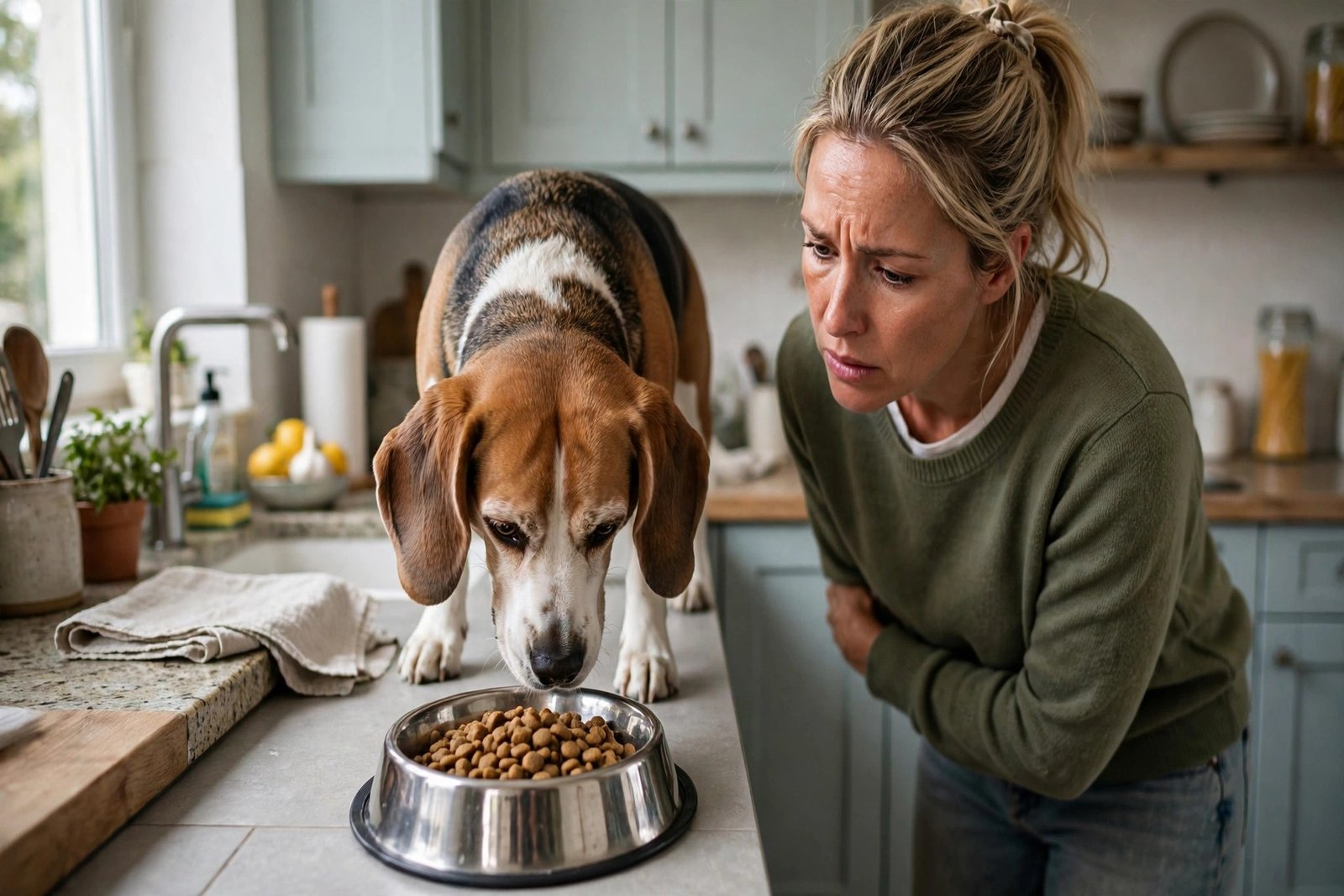
Your dog has never missed a meal in his life. He inhales breakfast before you’ve finished pouring coffee. So when he sniffs the bowl and walks away — once, then twice — the alarm bells are justified. A sudden appetite loss in a normally food-motivated dog is one of the most reliable early warning signs in veterinary medicine. Dogs don’t go on hunger strikes for philosophical reasons; when they stop eating, something is wrong.
This guide explains why dogs suddenly stop eating, how to triage at home (what’s “watch and wait” versus “vet now”), the diagnostic path your vet will follow, and the common benign causes that resolve on their own — because not every skipped meal is a crisis, but every skipped meal deserves attention.
First: How Worried Should You Be? The Triage Rules
Vet NOW (emergency): not eating combined with vomiting (especially repeated), diarrhea (especially bloody), abdominal pain or bloating, collapse or extreme lethargy, pale gums, difficulty breathing, or suspected toxin ingestion. A bloated, retching-but-can’t-vomit large dog is a gastric dilatation-volvulus (bloat) emergency — minutes matter. Vet TODAY: not eating for 24 hours with no other symptoms in an otherwise healthy adult dog; any appetite loss in a puppy under 6 months (they dehydrate and crash fast); not eating plus any single additional symptom (lethargy, mild vomiting, limping).
Watch and wait (12–24 hours): a healthy adult dog skips one meal but is otherwise completely normal — bright, energetic, drinking water, normal stool. Single-meal skips happen: mild stomach upset, stress, hot weather, or the aftermath of counter-surfing something regrettable. The rule: appetite + other symptoms = vet; isolated single skipped meal in a normal-acting dog = monitor. Puppies, seniors, diabetics, and dogs on critical medications get shorter leashes — 12 hours of not eating warrants a call for them. And watch hydration closely during any appetite lapse — a dog that won’t eat but drinks is far less urgent than one refusing both.
The Common Causes, From Benign to Serious
Benign and common: mild gastrointestinal upset (ate something odd, sudden food change, scavenged garbage), stress or routine disruption (moving, new pet, owner travel, fireworks season), hot weather (many dogs eat less in heat — normal within limits), pickiness or food boredom (especially with recent food changes or excessive treats/table scraps making kibble unappealing), and post-vaccination or post-medication appetite dips (usually 24–48 hours).
Dental and mouth pain: a leading hidden cause — fractured tooth, severe dental disease, oral tumor, or something stuck in the mouth. The tell: the dog wants to eat (approaches the bowl eagerly) but drops food, chews oddly, cries, or eats only on one side. Nausea without vomiting: dogs show nausea as lip-licking, drooling, and turning away from food — pancreatitis, dietary indiscretion, and toxin exposure all present this way. Systemic illness: kidney disease, liver disease, infections (including tick-borne), and cancer commonly announce themselves through appetite loss — which is why persistent inappetence in a senior always gets bloodwork.
Behavioral/management causes: the bowl moved, a new noisy dishwasher next to the feeding spot, competition from another pet, or — the classic — treat overload: a dog getting 30% of calories from treats and scraps isn’t “not eating,” it’s full. Audit the extras before assuming illness. The AVMA’s pet care guidance emphasizes this step: rule out the management causes before the medical workup, and you’ll solve a surprising fraction of cases at home.
Home Triage: What to Check Before the Vet
Run this checklist while you decide: gums — lift the lip; gums should be pink and moist, returning to pink within 2 seconds of pressing (capillary refill). Pale, white, yellow, or brick-red gums = vet now. Hydration — pinch the skin over the shoulders; it should snap back instantly. Tenting = dehydration = vet. Abdomen — gently press; pain, rigidity, or distension = vet now. Temperature — if you can take it rectally, normal is 101–102.5°F; above 103.5°F is fever. Mouth — look for foreign objects, broken teeth, ulcers, or foul odor.
Offer tests: will the dog take a high-value treat (cheese, chicken)? A dog refusing kibble but taking chicken is likely picky/nauseated-mild; a dog refusing chicken is genuinely ill or in pain — that distinction is diagnostically useful, so report it to your vet. Try warming the food slightly (enhances aroma), offering wet food instead of dry, or hand-feeding — these are diagnostic as well as therapeutic. Document: when the dog last ate normally, what was offered and refused, water intake, stool, vomiting, energy level, and any possible toxin access. This history saves your vet 15 minutes and you a chunk of the bill.
What the Vet Will Do
Expect: thorough physical exam (mouth, abdomen, lymph nodes, pain assessment), then bloodwork (CBC + chemistry — the workhorse for appetite loss: reveals infection, kidney/liver values, electrolytes, blood sugar) and often urinalysis. If exam suggests abdominal causes: X-rays or ultrasound (foreign bodies, masses, organ changes). Fever of unknown origin may need tick-borne disease panels. The workup for isolated appetite loss typically runs $200–$600; add imaging and it’s $500–$1,500.
Treatment follows the cause: anti-nausea medication (maropitant/Cerenia works remarkably well), appetite stimulants for the short term, dental work for mouth pain, specific treatment for the underlying disease. VCA Hospitals’ pet health resources describe the common diagnostic approaches for appetite loss. Do not start human medications at home — many are toxic (ibuprofen, acetaminophen).
Getting Them Eating Again: Recovery Strategies
Once the cause is addressed (or while monitoring a benign blip): warm the food — 10 seconds in the microwave releases aroma that triggers appetite. Upgrade temporarily — bland, enticing foods: boiled chicken and rice, low-sodium bone broth over kibble, warmed wet food. Small, frequent meals — 4–5 tiny meals beat 2 normal ones for a recovering appetite. Hand-feeding — the social component genuinely helps some dogs. Reduce competition and stress — feed the recovering dog separately, in a quiet spot.
Transition back gradually: once appetite returns, blend the bland diet back to regular food over 5–7 days — abrupt switches cause the GI upset you’re recovering from. Reassess the baseline diet if pickiness was the cause: is the food fresh (kibble goes stale/rancid — check dates, store sealed)? Is the feeding routine consistent? Are treats under 10% of calories? Chronic pickiness is usually a management problem wearing a medical costume — fix the extras, warm the food, feed on schedule (put the bowl down for 15 minutes, then pick it up — no grazing), and most “picky” dogs become enthusiastic eaters within days. A consistent clean, calm feeding setup removes the environmental friction that suppresses appetite more often than owners realize.
Conclusion
A dog that suddenly won’t eat is telling you something — run the triage (other symptoms = vet now; single skipped meal in a normal dog = monitor 12–24 hours), check gums, hydration, and mouth at home, and note whether high-value treats still tempt (diagnostically useful). Puppies, seniors, and dogs refusing water get faster timelines. Most isolated appetite blips resolve; persistent loss gets bloodwork. The bowl is a barometer — learn to read it, and you’ll catch problems while they’re still small.
Frequently Asked Questions
Why is my dog not eating all of a sudden?
The most common causes: mild GI upset, stress/routine change, dental pain, nausea, treat overload (the dog is full, not ill), or early systemic illness. Triage by companions: appetite loss plus any other symptom warrants a vet visit; a single skipped meal in an otherwise normal adult dog can be monitored for 12–24 hours.
How long can a dog go without eating?
A healthy adult dog can survive days without food, but that’s not the standard — the concern is why they’re not eating. Call the vet after 24 hours of food refusal in a healthy adult, 12 hours in puppies, seniors, diabetics, or small breeds. A dog refusing both food and water needs same-day evaluation.
Should I be worried if my dog skips one meal?
Usually not, if everything else is normal — energy, water intake, stool, behavior all fine. Monitor the next meal; if the dog eats normally, it was a blip. If skipping extends past 24 hours or any other symptom appears, escalate to a vet call.
What can I give my dog to stimulate appetite?
Short-term: warm the food, offer aromatic options (warmed wet food, boiled chicken and rice, low-sodium bone broth), hand-feed, and feed small frequent meals. Veterinary appetite stimulants (mirtazapine, capromorelin) exist for diagnosed cases — ask your vet rather than freelancing.
My dog won’t eat kibble but eats treats — what’s wrong?
Most likely: the dog has learned that holding out produces better offers, or the kibble is stale. Less commonly, dental pain makes hard kibble hurt while soft treats are tolerable. Fix: vet-check the mouth, cut treats under 10% of calories, feed on a strict schedule — appetite normalizes within days.