
 By admin
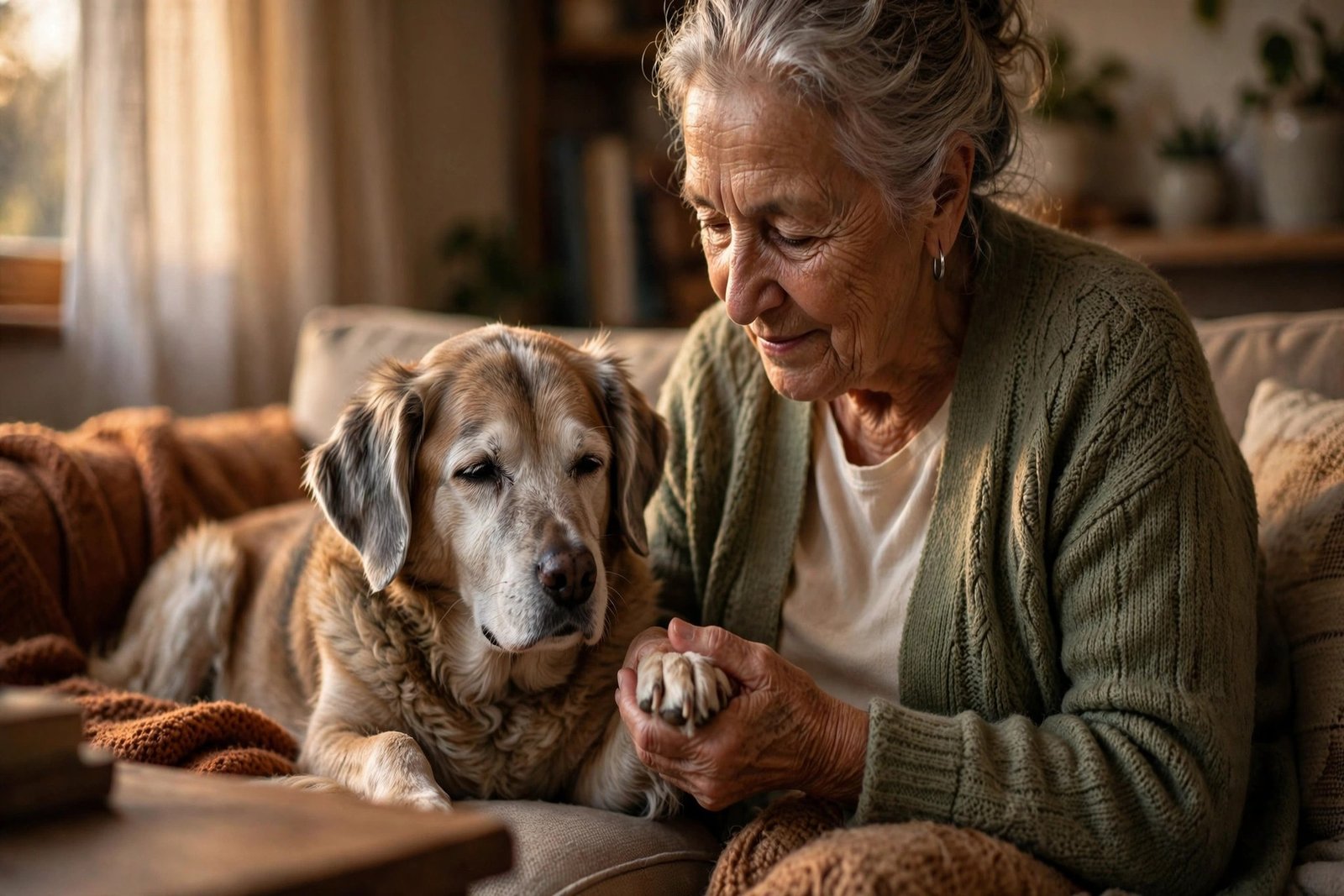
There’s a particular kind of grief that starts before the loss. Your old friend is still here — sleeping in the sunbeam, leaning against your leg — but the stairs have become a mountain, the meals go half-eaten, and the spark in those eyes flickers. You find yourself studying her face, asking the impossible question: how do I know when it’s time? It’s the hardest decision in pet ownership, and the fact that you’re asking means you’re already doing it right — you’re putting her experience ahead of your own reluctance.
This guide won’t make the decision for you — no article can. But it will give you the frameworks veterinarians use, the quality-of-life scales that turn vague dread into assessable data, guidance on the euthanasia process itself, and honest counsel on grief, guilt, and the days after. The goal: a decision made with clarity and love, timed for her sake, not a moment too late.
The Quality-of-Life Frameworks Vets Use
The HHHHHMM Scale (developed by veterinary oncologist Dr. Alice Villalobos) scores seven factors 1–10: Hurt (pain control — breathing, panting, restlessness), Hunger (eating enough?), Hydration (drinking, dehydration signs), Hygiene (can they stay clean? soiling themselves?), Happiness (interest in family, toys, surroundings?), Mobility (can they move to do the basics?), and More good days than bad. Total above 35 suggests acceptable quality of life; the trend matters more than any single score — score weekly and watch the direction.
The “good days vs. bad days” calendar: mark each day good or bad on a calendar. When bad days consistently outnumber good ones, the answer is emerging. The three-favorite-things test: name your pet’s three favorite things (the morning walk, the tennis ball, greeting you at the door). When they can no longer enjoy two of the three, quality of life has fundamentally changed. The dignity lens: ask not “is she still alive?” but “is this a life she’d choose?” — incontinence a proud housetrained dog can’t control, pain that medication no longer touches, fear or confusion that never lifts. These frameworks don’t decide for you; they convert love-clouded judgment into observable facts. The Lap of Love’s quality-of-life resources (a veterinary hospice organization) offer the most compassionate walkthrough of these tools available.
Signs the Time May Be Approaching
Physical markers: chronic pain unresponsive to medication (panting at rest, restlessness, crying out), inability to stand or walk without assistance, incontinence the animal finds distressing, labored breathing, persistent vomiting or diarrhea, refusal of food for more than 24–48 hours (or eating only with extreme coaxing), significant weight loss with muscle wasting, and withdrawal — hiding, avoiding family, the social animal going solitary.
The pattern that matters most: not any single bad day, but the trajectory. A dog who has three bad days then rallies for a week is different from one whose baseline slides downward month over month with briefer, dimmer rallies. Vets call the latter “the dimmer switch” — and it’s the most common end-of-life pattern. Also trust the look: experienced vets and long-time owners both describe a moment when the animal’s eyes change — the engagement fades. It sounds mystical; it’s actually your brain integrating hundreds of micro-observations. Don’t dismiss it. And the lethargy that no longer lifts — when rest stops restoring — is one of the clearest physiological signals.
Having the Conversation With Your Vet
Your vet has had this conversation thousands of times — lean on that experience. Ask directly: “If this were your pet, what would you do?” (Most vets will answer honestly.) Ask for a prognosis with and without continued treatment: what does the next month look like? What suffering is likely, and can it be managed? Ask about palliative options you may not know — pain protocols can be escalated significantly, appetite stimulants exist, subcutaneous fluids help kidney cats enormously.
The question vets wish owners asked more: “Are we treating her, or treating my inability to let go?” Continued intervention (surgeries, hospitalizations) in a failing body can serve the owner’s timeline rather than the animal’s comfort. A good vet will tell you when treatment has shifted from helping to prolonging — listen when they do. Consider a hospice vet consultation (services like Lap of Love operate nationally): a vet who comes to your home, assesses quality of life without the stress of a clinic visit, and gives you an unhurried, honest evaluation. Many owners describe it as the conversation that finally brought clarity.
The Euthanasia Process: What Actually Happens
Knowing the mechanics reduces fear — for you, which helps them. At home vs. clinic: in-home euthanasia (now widely available) lets your pet pass in their favorite spot, on their bed, with no car ride or clinic stress. It costs more ($250–$500 typically) and is worth considering seriously. Clinic euthanasia is equally peaceful medically; the difference is the setting.
The procedure: the vet typically gives a sedative first — your pet drifts into a deep, dreamless sleep in your arms, feeling only drowsiness. Then the euthanasia injection (an overdose of anesthetic) stops the heart within seconds. There may be a final breath or muscle twitch — reflexive, not conscious. It is, by every veterinary account, peaceful. Be there if you can — your pet’s last conscious experience should be your presence, not abandonment in a strange room. Aftercare decisions (private cremation with ashes returned, communal cremation, home burial where legal) can be arranged beforehand — decide now, not in grief.
Guilt, Grief, and the Days After
The guilt is universal and almost always misplaced. “Too soon” guilt and “too late” guilt both afflict nearly every owner — often simultaneously. Here’s the reframe veterinarians offer: the goal was never perfect timing (which doesn’t exist); it was a decision made from love with the information you had. Choosing euthanasia a week early spares suffering; a week late is understandable reluctance, not cruelty. Either way, you acted from love — the guilt is grief wearing a disguise.
Grief is grief. Losing a pet is losing a family member — the routines, the presence, the unconditional witness to your life. Don’t let anyone (including yourself) minimize it with “just a pet.” The house will feel wrong for weeks. Keep one routine (the morning walk, solo, is healing for many), and know that grief comes in waves — month three can ambush you worse than week one. Resources: the ASPCA and many veterinary schools run pet-loss hotlines; Lap of Love offers grief support (see the ASPCA’s pet loss resources); and the same grief-processing tools that help with human loss — talking, writing, ritual, time — apply fully. Consider a ritual: a letter, a planted tree, a donation to the shelter in her name. Grief needs somewhere to go.
Conclusion
You know it’s time when the bad days outnumber the good, when the three favorite things are gone, when pain outruns medication, when dignity fades — and when your honest answer to “is this a life she’d choose?” becomes no. Trust the frameworks, trust your vet’s candor, trust the look in her eyes that you’ve been reading for years. Be there at the end; it’s the last gift and the most important one. And afterward, grieve fully — the depth of the grief is the measure of the love, and that love was the whole point all along.
Frequently Asked Questions
How do I know when it’s time to put my pet to sleep?
Use structured assessment: the HHHHHMM quality-of-life scale (scored weekly — watch the trend), the good-days-vs.-bad-days calendar, and the three-favorite-things test. Your vet’s honest prognosis — “what would you do if she were yours?” — is the most valuable input.
Will I feel guilty after euthanizing my pet?
Almost certainly — and it’s nearly always misplaced. Both “too soon” and “too late” guilt are universal among loving owners. Perfect timing doesn’t exist; you made a loving decision with the information you had. The guilt is grief in disguise.
Should I be present when my pet is euthanized?
If you can, yes. Owners who stay consistently report better closure and less guilt than those who leave. The procedure is peaceful — sedation first, then the injection — and your presence means your pet’s last conscious experience is comfort, not abandonment. It’s the hardest part of pet ownership and the most meaningful. Aftercare decisions (private cremation, communal cremation, home burial where legal) can be arranged beforehand.
Is in-home pet euthanasia better?
For many families, yes — the pet passes in their favorite spot with no stressful car ride or clinic smells. It typically costs $250–$500. The medical procedure is identical; the difference is entirely the setting.
How long does grief after losing a pet last?
There’s no timeline — acute grief commonly lasts weeks to months, with waves resurfacing for a year or more . It’s real grief deserving real support: pet-loss hotlines, veterinary school counseling lines, and grief rituals all help. Don’t rush it, and don’t let anyone minimize it.