
 By admin
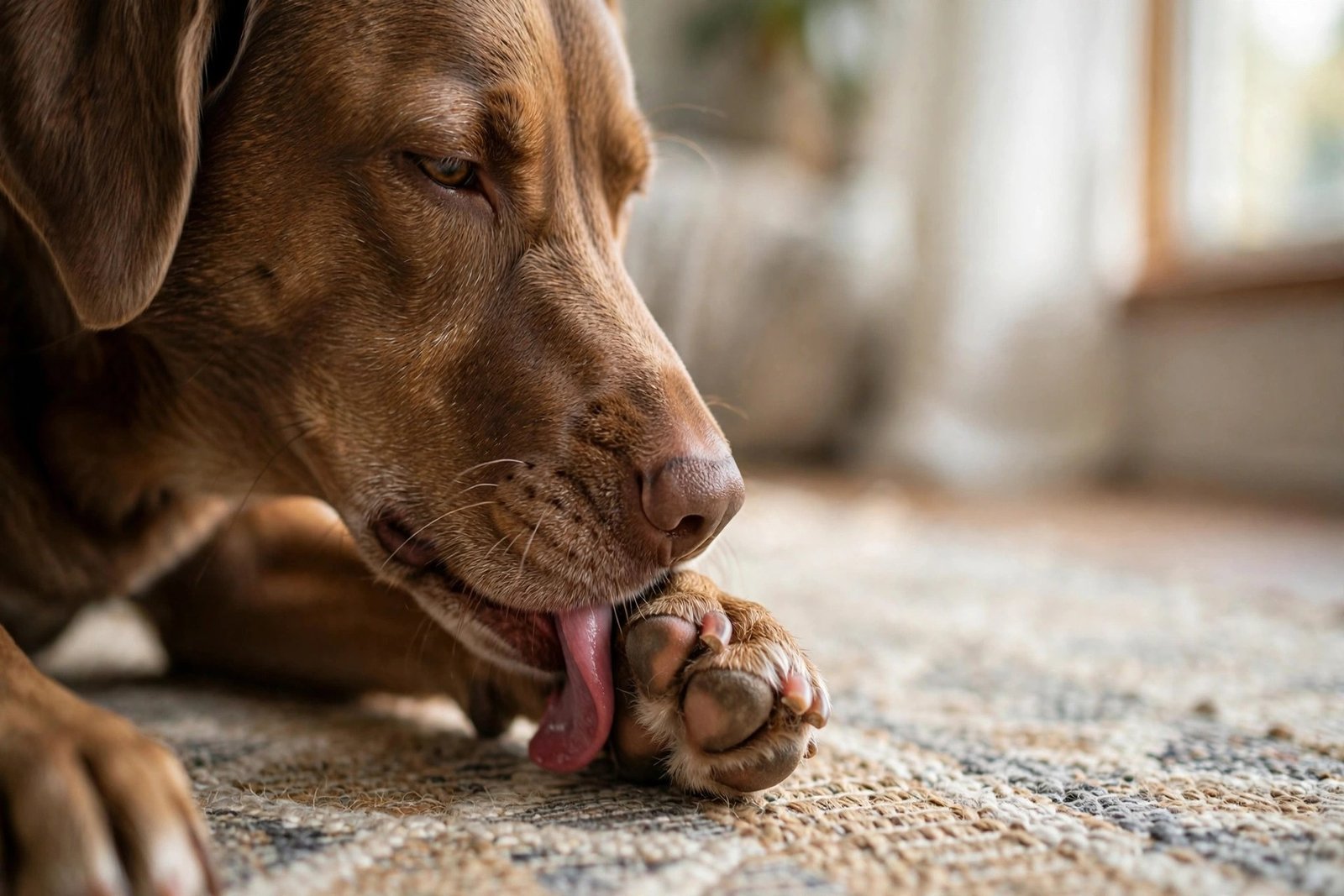
It’s 11 p.m., the house is quiet, and then it starts: lick, lick, lick — your dog working over their paws with the focused intensity of a full-time job. Occasional paw licking is normal grooming. But when it becomes constant — raw, red paws, licking that interrupts sleep and play — it’s your dog’s way of telling you something is wrong, and the cause is rarely “just a habit.”
Constant paw licking is one of the most common reasons dogs visit the vet, and the underlying causes range from simple allergies to pain to anxiety. This guide walks through every major reason dogs lick their paws obsessively, how to tell them apart at home, what you can safely try yourself, and the red flags that mean it’s time for a vet visit rather than another round of internet remedies.
Normal Grooming vs. Problem Licking: How to Tell
Dogs lick their paws as part of routine grooming — a few licks after a walk or before settling down is completely normal, the canine equivalent of washing your hands. The line into problem territory is about frequency, intensity, and damage. Normal: brief sessions, paws look healthy, dog is easily distracted. Problem: daily prolonged sessions, fur staining (reddish-brown discoloration from saliva called porphyrin staining), bald spots, redness between the toes, swelling, or a sour smell.
The location pattern is your best diagnostic clue, and vets ask about it first. All four paws, especially the tops and between toes: points toward allergies (environmental or food). One paw only: points toward something local — a thorn, cut, foxtail, insect sting, or joint pain in that leg. Front paws specifically, often with licking of the wrists: can indicate anxiety or boredom behaviors. Note the pattern for a few days before your vet visit — it’s genuinely useful information.
Allergies: The #1 Cause
By a wide margin, allergies are the most common cause of chronic paw licking. Environmental allergies (atopy) — pollen, grass, dust mites, mold — make dogs’ paws itch the way ragweed makes human eyes itch. Dogs absorb allergens through their footpads, so paws are ground zero. If the licking is seasonal (spring/fall worse), affects all four paws, and comes with itchy ears or belly, allergies are the prime suspect.
Food allergies are less common (maybe 10–15% of cases) but real — usually triggered by proteins like beef, dairy, or chicken. Unlike environmental allergies, food-related itching is year-round. Proper diagnosis requires an 8–12 week elimination diet trial — the American Kennel Club’s allergy guide explains why blood tests are unreliable and elimination trials are the gold standard.
What helps: wiping paws with a damp cloth or pet-safe wipe after every walk removes pollen before it triggers itching — simple and surprisingly effective. Your vet may recommend antihistamines, prescription Apoquel or Cytopoint for moderate-severe cases, medicated shampoos, or allergy testing and immunotherapy for long-term management. This is a manageable chronic condition, not a mystery — but it does need a proper diagnosis rather than endless guessing.
Pain, Injury, and the Single-Paw Pattern
When only one paw gets the attention, think local problem. Check between the toes carefully: foxtails and thorns embed there, cuts from glass or sharp gravel hide in the webbing, and insect stings cause sudden intense licking. In foxtail country (much of the West Coast), a suddenly frantic single-paw licker in summer should be checked the same day — foxtails migrate inward and can require surgical removal.
Less obvious: dogs lick near a painful leg, not just a painful paw — arthritis, a sprain, or a torn nail can all present as paw licking. Older dogs licking one front leg deserve an orthopedic look. Cracked pads from hot pavement or ice-melting salt cause licking too — paw balm and booties are the fix, and keeping floors and entryways clean reduces irritating grit.
Infections: When Licking Causes Licking
Here’s the vicious cycle: whatever starts the licking (allergy, irritant), the constant moisture from saliva creates a perfect environment for yeast and bacterial infections between the toes. Infected paws smell distinctly — often described as corn chips or sour — look red and swollen, and itch more, which causes more licking. The infection becomes its own cause.
Yeast (Malassezia) loves warm, moist skin folds and is especially common in allergy-prone breeds like Bulldogs, Basset Hounds, and Westies. Treatment needs a vet: medicated antifungal/antibacterial shampoos or wipes, sometimes oral medication for deep infections. Home antifungal creams meant for humans aren’t formulated for paws the dog will immediately lick — skip them. If the paws smell, look angry-red, or the dog yelps when you touch them, that’s infection until proven otherwise, and it won’t resolve with allergy management alone.
Anxiety, Boredom, and Compulsive Licking
Some paw licking is behavioral. Dogs lick to self-soothe — it releases endorphins — so anxious, under-stimulated, or bored dogs can develop licking as a coping mechanism, the way humans bite nails. The behavioral pattern: licking that happens during downtime, when left alone, during storms, or in stressful situations; often focused on one spot (classically the front wrist); and the dog may develop a lick granuloma — a raw, thickened, hairless patch from obsessive licking of one area.
The trap: lick granulomas get infected, the infection itches, and the cycle self-perpetuates — so even behavioral licking needs medical treatment of the wound first. Then address the cause: more exercise, puzzle feeders, training sessions (mental work tires dogs faster than physical), and for true anxiety, the same stress-reduction principles that help humans apply — routine, predictability, and calm environments. Severe compulsive cases sometimes need anti-anxiety medication alongside behavior work; there’s no shame in that, any more than there is for humans.
What You Can Try at Home (Safely)
For mild, recent-onset licking: paw wipes after walks (unscented, alcohol-free), an oatmeal or medicated paw soak a few times a week, paw balm for dry or cracked pads, and an e-collar or inflatable collar short-term to break the cycle while the underlying cause is addressed. An Epsom salt soak (lukewarm, 5 minutes, then rinse) can soothe irritated paws — but never on open wounds.
What not to do: no essential oils (many are toxic — tea tree especially), no unsupervised bandages (dogs chew them off and can cut circulation), no human antihistamines without vet dosing (some contain xylitol or decongestants). And never punish the licking — it’s a symptom, and the ASPCA’s behavior resources emphasize addressing causes over suppressing symptoms.
When to See the Vet
Book a vet visit if: licking has lasted more than a week or two despite paw wipes and basic care; there’s redness, swelling, odor, limping, or visible wounds; it’s suddenly one paw (possible foxtail or injury); the dog can’t be distracted from licking; or there’s a raw lick granuloma. Bring notes on the pattern — which paws, when it started, seasonal or constant, what you’ve tried. That history saves diagnostic time and money.
Expect the vet to examine between the toes, possibly do skin cytology (a quick tape or swab test identifying yeast vs. bacteria), and discuss allergy workup if the pattern fits. Most paw-licking cases resolve once the actual cause is identified — the frustration comes from treating symptoms for months without diagnosing. A methodical vet visit beats a year of guessing.
Conclusion
Constant paw licking is almost never “just a habit” — it’s allergies, pain, infection, or anxiety wearing a disguise. Read the pattern (all paws vs. one paw tells you most of what you need), try the safe home basics for mild cases, and get a vet diagnosis for anything persistent, smelly, or wound-producing. Dogs can’t tell us their paws itch — but the licking is them telling us anyway. Listening is the easy part.
Frequently Asked Questions
Why does my dog lick his paws at night specifically?
With no distractions at night, an itchy or anxious dog focuses on the discomfort. If licking consistently disrupts sleep, the underlying cause warrants a vet visit.
Can I give my dog Benadryl for itchy paws?
Only with veterinary dosing guidance — plain diphenhydramine is sometimes recommended, but many formulations contain xylitol (toxic) or decongestants (dangerous). And antihistamines help only ~25–30% of allergic dogs.
Why are my dog’s paws stained red-brown?
Porphyrin staining — saliva pigments dyeing light fur reddish-brown. It’s cosmetic, but tells your vet the behavior is long-standing. Resolving the cause stops new staining; old fur grows out.
What is a lick granuloma and how is it treated?
A raw, thickened sore from obsessive licking, usually a front wrist. Treatment is two-track: heal the wound (e-collar, antibiotics if infected) and address the cause (pain, allergy, anxiety) — or it recurs.
Do dog boots help with paw licking?
As a barrier, yes — they prevent allergen contact and block licking. But they’re management, not diagnosis: most dogs won’t wear them all day, and they don’t treat the underlying cause.