
 By admin
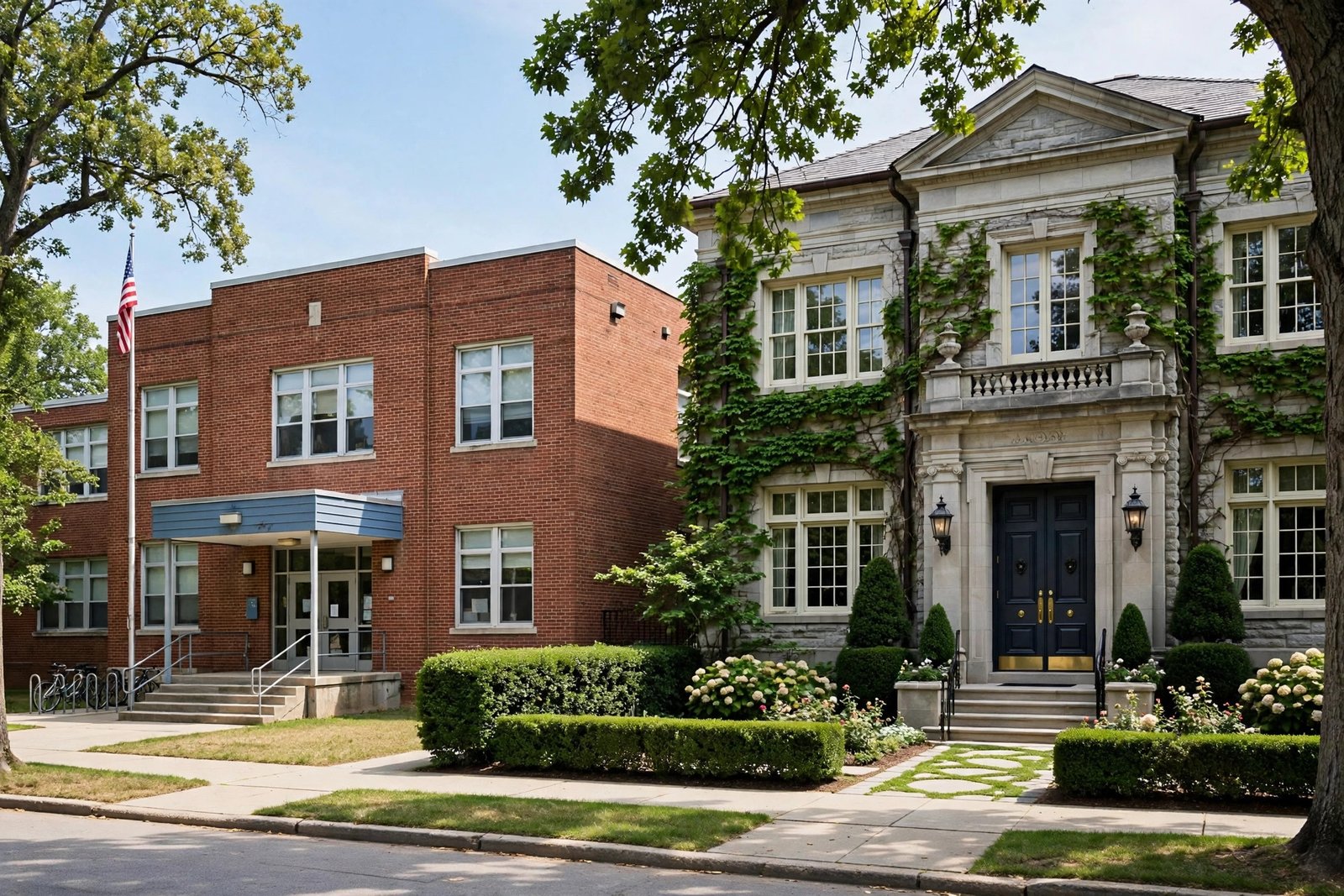
Private school tuition now averages $12,000–$25,000+ per year — and elite academies charge $60,000+. For that money, parents expect something transformative. But does private school actually deliver better outcomes than public school? The research answer is uncomfortable for everyone: after controlling for family background, the academic advantage of private schools mostly vanishes — yet families keep paying, often happily. Both sides of this debate are half-right. Here’s the full picture so you can decide for your kids, not for the ideology.
What the Research Says About Outcomes
The landmark finding, replicated across decades and summarized by researchers at Brookings: raw private-school test scores and college admissions look better, but the students were already advantaged — wealthier, more educated parents, more resources at home. When researchers control for family background, the private-school academic advantage shrinks to near zero for most students. The National Center for Education Statistics analyses and major longitudinal studies converge here: the family matters far more than the school type. A motivated student with engaged parents thrives in either setting; a disengaged one struggles in both.
The honest exceptions: for low-income students, particularly in urban areas, high-quality private or charter schools (often via vouchers or scholarships) do show meaningful gains — the advantage appears where the alternative public school is genuinely failing. And at the very top, elite private schools’ college-counseling machinery and alumni networks confer real admissions advantages that aren’t purely academic. But for the middle-class family choosing between a good public school and a mid-tier private school, the academic difference is mostly the peer group you’re buying, not better teaching.
What You’re Actually Buying With Private Tuition
Peer group and network
This is the real product. Private schools curate peer groups — ambitious, resourced, college-bound — and peer effects on student outcomes are among the strongest findings in education research. Your child absorbs the norms, expectations, and connections of their classmates. Elite networks also compound over decades in ways test scores don’t capture. If you’re paying $30,000/year, you’re largely buying who sits next to your child.
Resources and attention
Smaller classes (often 12–18 vs. 22–30), more counselors per student, richer arts/athletics facilities, and more responsive administration. For students who need significant individual attention — learning differences, gifted needs, quirky learners — this can be genuinely transformative in ways averages hide. A child who’d be one of 30 in public school getting lost, versus one of 14 getting known, experiences a different education regardless of what the studies average out.
Values alignment and control
Religious formation, specific pedagogies (Montessori through high school, classical education), or simply an environment matching family values — these are legitimate reasons that have nothing to do with test scores. Parents choosing private school for mission fit are buying something public schools structurally can’t sell. Specific pedagogies — Montessori, Waldorf, classical education — illustrate how philosophy drives these decisions.
What Public School Offers That Money Can’t Buy
Diversity — economic, racial, neurological — that prepares children for the actual world. Public schools’ special education infrastructure is legally mandated and often superior (private schools can and do decline to serve significant needs). Extracurricular breadth at large public schools dwarfs most privates: robotics teams, 20 varsity sports, orchestras, debate. And the strongest public schools in affluent suburbs match or beat mid-tier privates on every academic measure — for free. The “public vs. private” question is really “this specific public vs. this specific private” — always compare actual schools, never categories. When touring, look past the marketing at classrooms, teacher warmth, and student engagement.
The Charter and Magnet Middle Ground
Before defaulting to the binary, investigate the middle options many districts offer: magnet schools (specialized themes, free, admission by lottery or criteria), charter schools (publicly funded, independently run, often with distinct pedagogies), and dual-language immersion programs. These can deliver private-school-like focus areas — STEM, arts, classical education — without tuition. In many cities, the best educational value isn’t public-vs-private but finding the right magnet or charter fit. They’re competitive to enter, so research application timelines early, but they deserve a place in every family’s comparison set.
The Financial Math Nobody Does Honestly
Twelve years of $20,000 tuition is $240,000 — before compounding. Invested instead at 7 percent, it’s roughly $400,000+ by college time: enough to fund elite universities outright. The question isn’t “is private school good” but “is it $400,000 good” — because that’s the true cost. For families where tuition requires real sacrifice (second jobs, no retirement savings, massive debt), the math rarely works: financial stress harms children more than school type helps them. Private school makes financial sense when: tuition is comfortably affordable (<10–15% of income) — and calmer family routines do more for learning than a prestigious logo on the building — the local public option is genuinely inadequate, your child has specific needs the private school serves dramatically better, or a scholarship/subsidy covers most costs. If you’re stretching to the breaking point for a mid-tier private over a decent public, you’re buying anxiety, not advantage.
A Decision Framework
Ask in order: (1) Is our local public school actually good? (Visit, check growth data, talk to parents — many “bad reputation” schools are fine.) (2) Does our child have specific needs either setting serves clearly better? (3) Can we afford tuition without sacrificing retirement, emergency funds, or family sanity? (4) What exactly are we buying — peer group, values, attention, facilities? (5) Would the tuition money, invested for college, serve our child better? Families who answer honestly usually find the decision clarifies itself. And remember: the research’s loudest message is that engaged parenting outweighs school type — the energy spent agonizing over this choice is better invested in reading together, talking, showing up — and protecting family time from screens.
Conclusion
Private school’s academic advantage, adjusted for family background, is small for most students — but peer groups, individual attention, values fit, and networks are real products worth paying for when affordable and well-matched. Public schools offer diversity, mandated special-education support, breadth, and — at their best — equal academics for free. Compare specific schools, do the honest 12-year math, visit the middle-ground magnet and charter options, and weight your child’s specific needs over ideology. The best school is the right fit, not the right category — and the most important factor remains the engaged family behind the child, whichever building they walk into each morning.
Frequently Asked Questions
Do private school students perform better academically?
Raw scores look better, but after controlling for family income and parental education, the advantage largely disappears for typical students. Family background predicts outcomes far more than school type.
Is private school worth the money?
It can be, when tuition is comfortably affordable and you’re buying something specific: a curated peer group, much smaller classes, values alignment, or dramatically better fit for your child’s needs. It’s rarely worth financial ruin or choosing a mediocre private over a strong public.
When is private school clearly the better choice?
When the local public school is genuinely failing, when your child needs individual attention a large public school can’t provide, for specific pedagogical or religious missions, or when scholarships make costs comparable.
Do colleges prefer private school applicants?
Elite colleges admit disproportionately from elite private schools — but that’s largely the applicant pool’s advantages (preparation, counseling, legacy), not a preference for the school type itself. A top student from a public school is equally attractive.
How much should I spend on private school?
A common guideline: keep total tuition under 10–15% of household income, never at the expense of retirement savings or emergency funds. If the math requires real hardship, the local public school plus engaged parenting is the better investment.