
 By admin
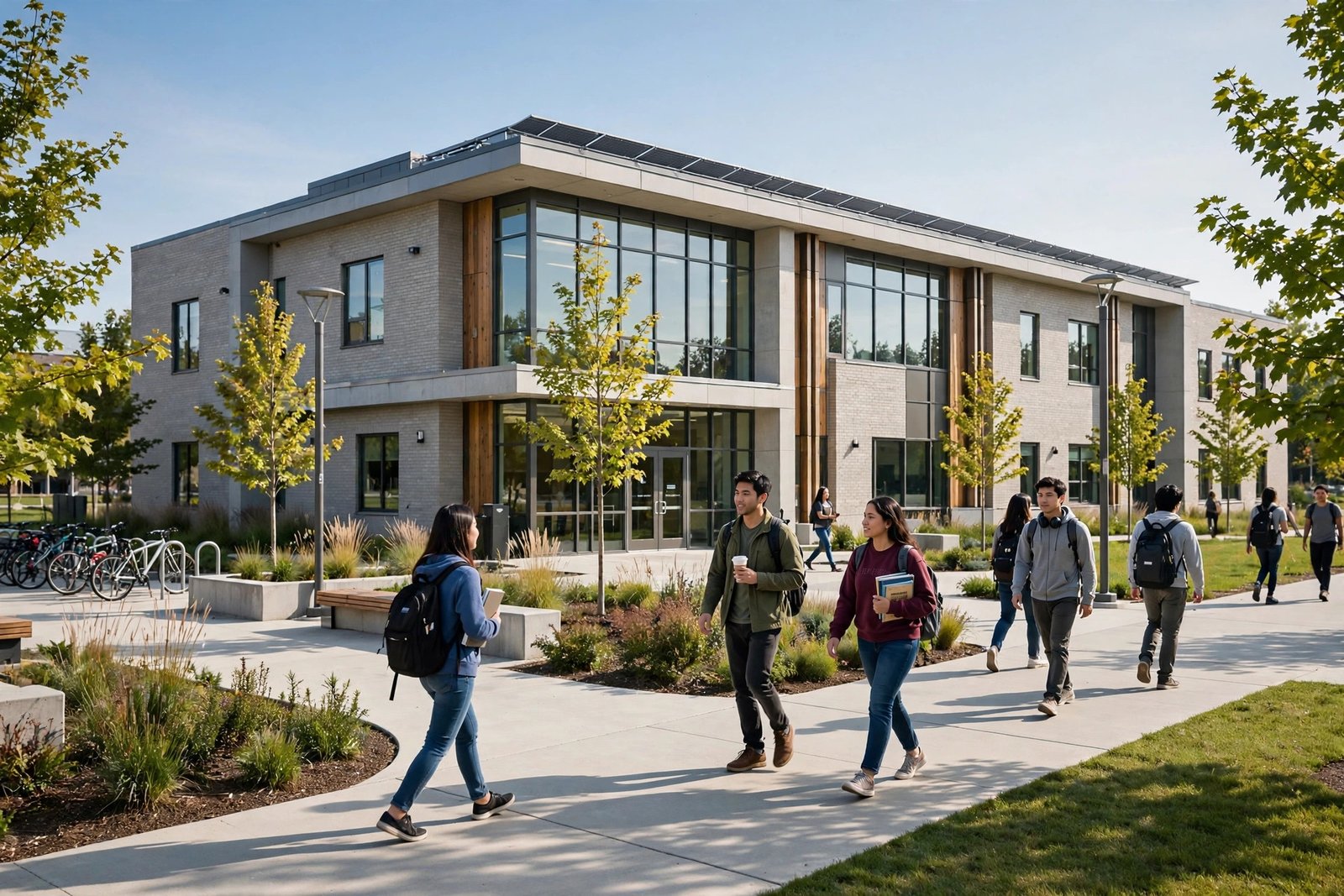
Portland families watching four-year university tuition climb past $25,000 a year (and private options far beyond) keep asking the same question: is starting at community college actually smart, or does it cost more in the long run? For most Portland-area students, the answer is decisively smart — with savings of $20,000 to $40,000 over two years and transfer pathways into Oregon’s best universities that are smoother than most realize. But “community college” isn’t automatically the right move for everyone. Here’s the honest math, the transfer realities, and how to tell if it’s right for you.
The Math: What Community College Actually Saves in Portland
Portland Community College (PCC) — the area’s largest — charges Oregon residents roughly $5,000–$6,000 per year in tuition and fees for full-time study. Compare that to the University of Oregon (~$15,000/year in-state tuition), Oregon State (~$13,500), or Portland State (~$11,000) — figures tracked by the National Center for Education Statistics — and the two-year savings land between $12,000 and $20,000 on tuition alone. Add living at home instead of paying for dorms ($12,000–$15,000/year at Oregon universities), and total two-year savings can reach $30,000–$50,000.
That’s not abstract money — it’s the difference between graduating with manageable debt and graduating with a second rent payment. The average bachelor’s graduate carries about $30,000 in student loans; starting at PCC can cut that nearly in half for the same diploma. And the diploma is the same: your degree says “University of Oregon” or “Oregon State” regardless of where you spent freshman year. Employers never see — or care about — the transfer path. For the broader framework on weighing education debt — alongside how AI is changing what degrees are worth — the rule stays simple: the less you borrow, the less the question matters.
Oregon’s Transfer System: Better Than You Think
This is where the Portland calculation gets genuinely strong. Oregon’s community colleges and public universities operate under structured transfer agreements: the Associate of Arts Oregon Transfer (AAOT) degree guarantees junior standing at any Oregon public university, with general education requirements considered complete. PCC, Mt. Hood Community College, and Clackamas Community College all feed directly into Portland State, Oregon State, and University of Oregon through these pathways — plus dual-enrollment programs that let you take classes at both institutions simultaneously while accessing university resources.
The key detail most families miss: transfer admission is often easier than freshman admission at competitive programs, and transfer students graduate at rates comparable to students who started as freshmen — when they follow structured transfer plans. The failure mode isn’t the system; it’s students who take random classes without a transfer plan and discover half their credits don’t apply. Which brings us to the critical rule.
The One Rule That Decides Everything: Plan the Transfer From Day One
Community college saves money only if your credits transfer efficiently. Before registering for a single class: (1) identify your target university and major, (2) meet with a transfer advisor (not just a general advisor) at the community college, (3) pull up the transfer articulation agreement for your major — these documents map exactly which community college courses satisfy which university requirements, and (4) confirm everything in writing each term. Students who do this transfer seamlessly; students who “figure it out later” lose semesters and savings. This planning discipline mirrors a simple principle — know the destination before choosing the route.
When Community College Is the Right Call
It’s smartest when: you’re unsure of your major (exploring at $5,000/year beats exploring at $15,000/year), your high school record wouldn’t earn merit scholarships at four-year schools (community college GPAs reset the clock — strong CC grades earn transfer scholarships), you need to work while studying (flexible scheduling and lower costs make employment viable), or you’re a first-generation student who’d benefit from smaller classes and more advising support during the transition. It’s also ideal for prerequisite-heavy paths like nursing or engineering, where the first two years are largely standardized coursework anyway.
When It’s Not: The Honest Exceptions
Community college is weaker when: you’ve earned substantial merit scholarships making a four-year school comparably priced (always compare net price, not sticker price), your intended major has a lockstep cohort program that’s hard to enter as a transfer (some engineering and business honors tracks), you thrive on the residential college experience and can afford it without crippling debt, or your target is a highly selective private university with poor transfer credit acceptance (check articulation before assuming). Also: students who need the structure and immersion of full-time university life to stay motivated sometimes flounder with community college’s commuter flexibility — know yourself.
Making It Work: The Portland Playbook
Live at home if possible — housing is where the real savings compound. Work part-time (15–20 hours) to graduate with minimal debt; Portland’s job market supports student employment well. Join the honors program — PCC’s and others’ honors tracks offer smaller classes, transfer agreements with additional universities, and scholarship advantages. Use the transfer center early and often, not just before graduating. Keep everyday costs down too — choosing a budget laptop for college over a premium machine saves hundreds you can put toward tuition. And build relationships with professors — transfer recommendation letters from instructors who know you well carry real weight. The Oregon Higher Education Coordinating Commission publishes transfer data and resources worth reviewing before you commit. Finally, file the FAFSA every year even at community college prices — many PCC students qualify for Pell Grants that cover most or all of tuition, making an already affordable path nearly free.
A Final Word on Timing
If you’re on the fence, visit PCC or your local community college this month — sit in on a class, talk to the transfer center, and run your own numbers. The students who benefit most are the ones who decide early and plan deliberately. Two affordable, well-planned years now can mean graduating debt-free later, and that freedom shapes every choice that follows.
Conclusion
For most Portland students, starting at community college is one of the smartest financial moves in higher education: $20,000–$50,000 in savings, a guaranteed transfer pathway through the AAOT, and the same final diploma. The strategy fails only through poor planning — random course selection without a transfer map. Plan the transfer from day one, work while you study, file the FAFSA every year, and you’ll graduate with the same degree, the same opportunities, and a fraction of the debt. In an era of crushing student loans, that’s not settling. That’s winning.
Frequently Asked Questions
Is community college looked down on by employers?
No. Your diploma comes from the university where you finish — employers see the bachelor’s degree, not the transfer path. Transfer students’ career outcomes match those of four-year starters in study after study.
How much can I save going to community college in Portland first?
Typically $20,000–$50,000 over two years compared to starting at an Oregon public university, counting tuition savings plus living at home instead of paying for housing.
Will my community college credits transfer to Oregon universities?
Yes, reliably — the AAOT degree guarantees junior standing with gen-eds complete at any Oregon public university. The key is following a structured transfer plan from day one, not taking random courses.
Is it harder to transfer into competitive majors?
Some majors (nursing, engineering, business) have competitive transfer admission with GPA thresholds and prerequisite sequences. Check the specific program’s transfer requirements early — they’re published and predictable, but they demand planning.
Can I still get scholarships as a transfer student?
Yes — many universities offer dedicated transfer merit scholarships, and a strong community college GPA (3.5+) unlocks awards that a weaker high school record wouldn’t have. Phi Theta Kappa membership adds further scholarship access.