
 By admin
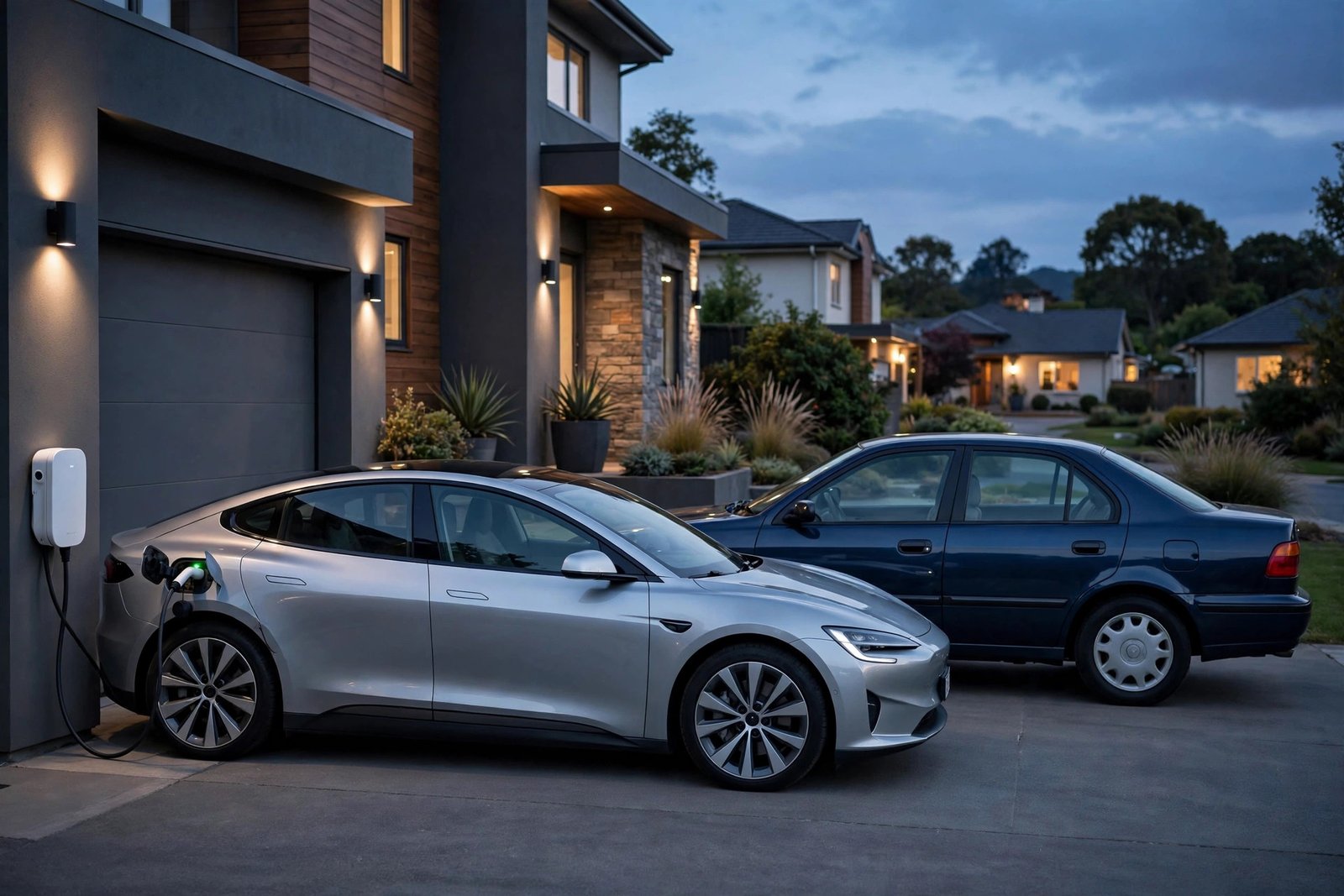
Electric cars promise freedom from gas stations, but the sticker price tells only a fraction of the story. Between purchase price, fuel or charging costs, maintenance, insurance, depreciation, and incentives, the true cost of owning an EV versus a gas car over five to ten years surprises most buyers — sometimes in the EV’s favor, sometimes not. The answer depends heavily on how much you drive, where you charge, and which models you’re comparing.
This guide runs the complete total-cost-of-ownership math: every cost category side by side, the scenarios where EVs win big, the ones where gas still wins, and how to calculate your own break-even point.
Purchase Price: The Gap Is Closing
EVs still cost more upfront on average — roughly $5,000–$10,000 more than comparable gas models, though the gap shrinks yearly as battery prices fall. But the sticker price isn’t the purchase price: the federal EV tax credit (up to $7,500 for qualifying new EVs, up to $4,000 for used) plus state incentives can erase much of the difference. California buyers, for example, have historically stacked state rebates on top of federal credits.
Check eligibility carefully — income caps, MSRP caps, and battery-sourcing rules determine whether a specific car qualifies, and the rules change. Also compare financing: some automakers offer promotional EV lease rates that make the monthly cost competitive with gas cars from day one. When comparing, use out-the-door price after all incentives, not MSRP. The DOE’s FuelEconomy.gov lets you compare specific models’ fuel costs side by side with your local gas and electricity prices.
Fuel vs. Charging: Where EVs Usually Dominate
This is the EV’s biggest win. The average American drives about 14,000 miles per year; at 30 mpg and $3.80/gallon, that’s roughly $1,770/year in gas. The same miles in an EV at 0.30 kWh/mile and $0.17/kWh home electricity cost about $714/year — a savings of over $1,000 annually. Over ten years, that’s $10,000+ back in your pocket, and the gap widens wherever gas is expensive (California) and electricity is cheap.
But the charging caveat matters enormously: these savings assume home charging. If you can’t charge at home and rely on public fast chargers at $0.40–$0.60/kWh, your “fuel” savings shrink dramatically — sometimes to near zero. Apartment dwellers without home charging should run their specific numbers honestly. Workplace charging, where available, is the next best thing. Homeowners considering the full electrification picture should also look at whether solar panels are worth it — rooftop solar plus an EV is the cheapest possible “fuel” combination.
Maintenance: Simpler Machines, Cheaper Upkeep
EVs have roughly 20 moving parts in their drivetrain versus 2,000+ in a gas car — no oil changes, no transmission services, no spark plugs, no exhaust systems. Data from multiple fleet studies shows EV maintenance costs running 30–50% lower than comparable gas cars. Brake pads last far longer thanks to regenerative braking. Over 100,000 miles, expect to save $3,000–$5,000 on maintenance alone.
The counterpoint: tires wear faster on heavy EVs (budget for earlier replacement), and out-of-warranty battery replacement is the nightmare scenario — $10,000–$20,000, though actual battery failures within warranty are rare and most packs are warrantied for 8 years/100,000 miles. Also, not every independent shop services EVs yet, so dealer service can be pricier per visit even if visits are rarer. Net: maintenance strongly favors EVs, with the battery as the one big tail risk. Edmunds’ true cost to own data breaks maintenance down model by model.
Insurance, Depreciation, and the Hidden Costs
Insurance runs 10–25% higher for EVs on average — heavier cars cause more damage, and specialized repairs cost more. Get quotes before buying; the difference can be $300–$600/year. Depreciation is the wildcard: EVs historically depreciated faster than gas cars (technology improving rapidly makes last year’s model feel dated), though this varies enormously by brand — Teslas held value well for years, while some compliance EVs cratered.
Don’t forget registration: many states now charge EVs extra annual registration fees ($100–$250) to replace lost gas-tax revenue. And home charger installation runs $500–$2,000 if your panel needs upgrading. None of these kill the EV case, but they belong in honest math. On the plus side, many employers, utilities, and local programs offer charging incentives that offset these costs — check the Department of Energy’s incentive database for your zip code. Energy-conscious homeowners can compound the savings with home energy efficiency upgrades.
Your Break-Even Calculation
Here’s the simple framework. Step 1: Compute the purchase-price difference after all incentives (EV price minus gas price). Step 2: Compute annual operating savings: (annual gas cost − annual charging cost) + (annual gas maintenance − annual EV maintenance) − (EV insurance premium − gas insurance) − extra EV registration fees. Step 3: Divide step 1 by step 2 — that’s your break-even in years.
Typical results: a high-mileage driver (18,000+ miles/year) with home charging often breaks even in 2–4 years and then saves thousands annually. A low-mileage driver (8,000 miles/year) relying on public charging might never break even on operating costs alone — for them, the EV purchase is about preferences (driving experience, emissions, HOV lane access) rather than savings. Be honest about which driver you are; the math rewards honesty.
Conclusion
After tallying purchase price, fuel, maintenance, insurance, and depreciation, the picture is clear but conditional. The real cost of owning an electric car versus gas comes down to your situation: high-mileage drivers with home charging save substantially with EVs — often $8,000–$15,000 over a decade — while low-mileage drivers without home charging may find gas cars cheaper overall. Run the break-even math with your miles, your electricity rate, and your local incentives before deciding. The EV transition is real and accelerating, but the financially smart move is still the one where your personal numbers work. Ten minutes with a calculator today can save you thousands over the life of the car.
Frequently Asked Questions
Do electric cars really save money overall?
For the typical American driver with home charging, yes — total cost of ownership usually favors EVs by several thousand dollars over 5–10 years, driven by fuel and maintenance savings. But low-mileage drivers, those without home charging, and buyers comparing against cheap efficient gas cars may not save money. Your miles and charging access decide.
How long do EV batteries actually last?
Modern EV batteries typically degrade slowly — most retain 80–90% of original capacity after 100,000–150,000 miles. Real-world data from high-mileage Teslas and other long-running EVs shows batteries outlasting the rest of the car in many cases. Federal law requires 8-year/100,000-mile battery warranties, and California extends this further.
Is charging at home expensive to set up?
A basic Level 2 home charger installation costs $500–$1,500 if your electrical panel has capacity, or $2,000+ if it needs upgrading. Many utilities offer rebates covering part or all of the cost. Standard 120V trickle charging works for low-mileage drivers at zero installation cost, just much slower.
Do EVs hold their value as well as gas cars?
It varies widely. Popular models from established brands (Tesla Model Y, for example) have held value reasonably well, while less popular EVs depreciate steeply. Rapid technology improvements and price cuts on new EVs pressure used values. Check model-specific depreciation data rather than assuming — this is the least predictable part of EV ownership math.