
 By admin
Starting a gaming YouTube channel in 2026 feels like arriving at a party that’s been going for fifteen years. The biggest creators have teams, studios, and millions of subscribers. The algorithm favors watch time, the niches look saturated, and every “how to start” guide was written by someone who started in 2015. So why would anyone begin now — and more importantly, how do you actually get traction from zero?
Here’s the counterintuitive truth: starting from zero in 2026 has real advantages. The tools are better, the underserved niches are clearer, and short-form discovery gives new creators a distribution lever that didn’t exist five years ago. This guide is the honest playbook for launching a gaming channel today — what to buy, what to make, and how to grow when nobody knows your name.
Pick a Lane Before You Pick a Game
The biggest beginner mistake is starting a “gaming channel” — a channel about everything, which the algorithm reads as a channel about nothing. Successful new channels in 2026 are specific: retro horror deep-dives, cozy game decorating tutorials, speedrun explainers for non-speedrunners, challenge runs with a twist, or news commentary for one specific community. Specificity is how strangers decide to subscribe — they know exactly what they’ll get next Tuesday.
Choose the intersection of three things: games you genuinely enjoy (you’ll make hundreds of videos), an underserved angle (search your idea — if the top results are all three years old, that’s opportunity), and a format you can sustain weekly. Passion without a plan burns out; a plan without passion is obvious on camera.
The Starter Setup (Spend Less Than You Think)
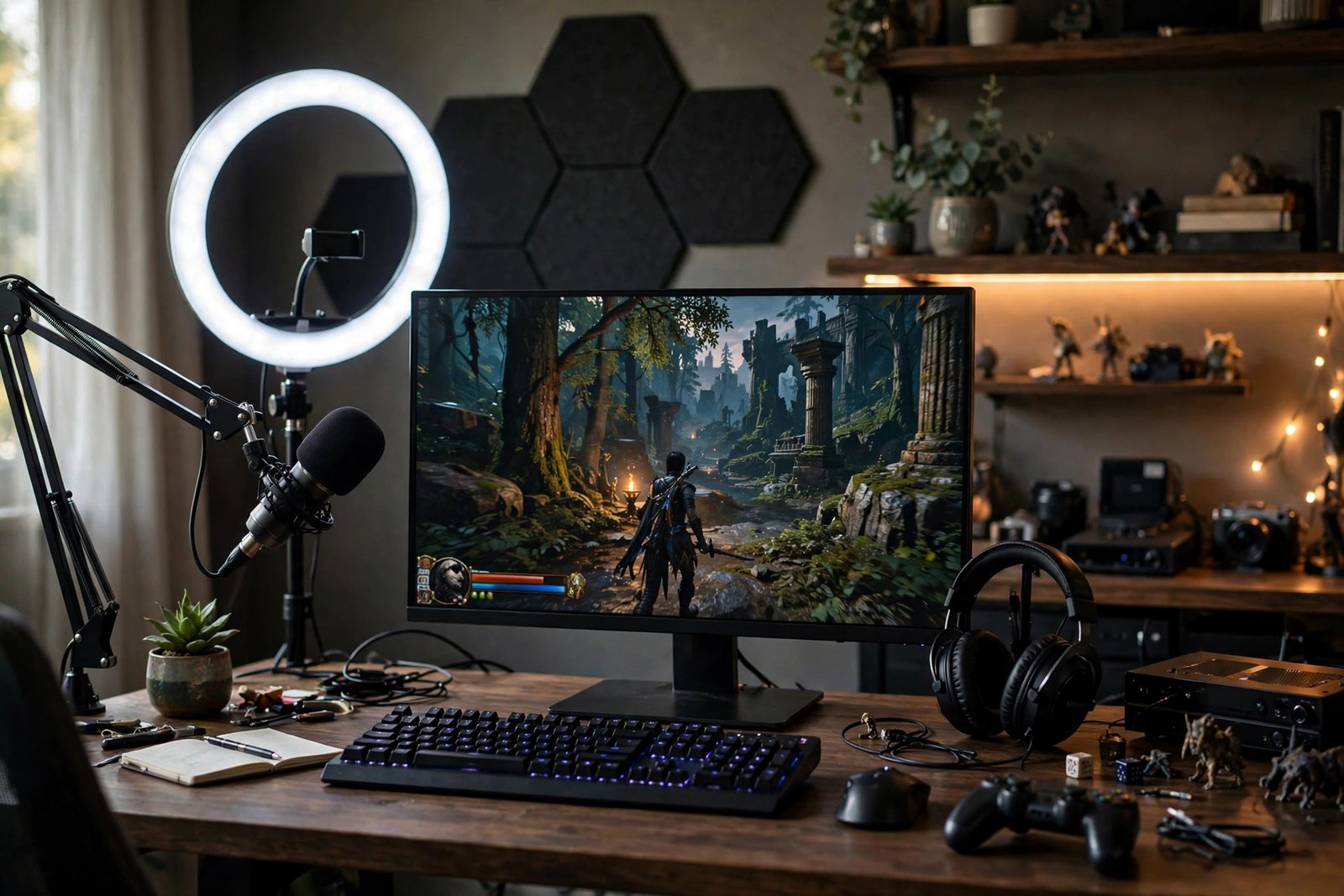
You do not need a $3,000 PC and a broadcast studio. The minimum viable setup in 2026: a computer that can run your game and recording software simultaneously (even a mid-range machine works for less demanding titles — prioritize a GPU with a good hardware encoder and at least 16GB of RAM, since smooth recording matters more than maxed-out settings), a decent USB microphone in the $70–$120 range (audio quality matters more than video quality — viewers forgive 1080p, they don’t forgive harsh audio), and free software — OBS for recording and streaming, DaVinci Resolve for editing. If your upload speeds are the bottleneck, improving a weak Wi-Fi signal can matter more than any hardware upgrade.
Content Strategy: What Actually Gets Discovered in 2026
Shorts are your discovery engine
YouTube Shorts remain the fastest way for a zero-subscriber channel to reach strangers. The winning formula: one surprising, funny, or impressive gaming moment, tightly edited, with a hook in the first second. Post 3–5 Shorts weekly repurposed from your longer content — they’re the top of your funnel.
Long-form is your subscription engine
Shorts get views; long videos get subscribers. One well-crafted 10–20 minute video per week — a guide, a challenge, an essay — builds the loyal audience that Shorts viewers convert into. The channels growing fastest in 2026 run both: Shorts for reach, long-form for depth.
Series beat one-offs
“Beating every boss with a dance pad” as an ongoing series outperforms ten unrelated videos. Series create appointment viewing, binge sessions, and the easiest content calendar in existence — you always know what the next episode is.
The First 90 Days: A Realistic Plan
Weeks 1–2: set up your channel properly — clear name, readable banner, a channel trailer under 60 seconds explaining what viewers get. Publish your first 4 videos without telling anyone; they’re practice, and that’s fine. Weeks 3–6: settle into a rhythm of one long video plus 3 Shorts weekly. Study your analytics weekly — not subscriber count, but click-through rate and average view duration, the two metrics that actually drive recommendations. Weeks 7–12: double down on whatever format performs best, engage genuinely in 2–3 communities (Discord servers, subreddits) in your niche, and collaborate with channels your size.
Expect modest numbers. Most channels that eventually succeed spent their first three months under 500 subscribers. The ones that quit at day 60 never learn whether day 120 would have been the inflection point. And take care of the creator behind the camera — long recording sessions are a marathon, so desk posture basics will save your back, and creators who fall in love with the commentary side often branch into audio — see how to start a simple podcast with no experience.
Monetization: The Honest Timeline
YouTube’s Partner Program requires 1,000 subscribers and 4,000 watch hours (or 10 million Shorts views) — a milestone that takes most consistent creators 6–18 months. Before that, affiliate links for your gear and games can generate small income from day one. After monetization, gaming channels typically earn $2–$8 per thousand views depending on audience geography and niche, which means ad revenue alone rarely pays rent until you’re well into five figures of monthly views.
The creators making real money diversify early: sponsorships (even micro-channels with engaged niches land deals), channel memberships, and digital products. Treat ad revenue as the bonus, not the business — and keep your expectations tethered to the reality that most gaming channels earn hobby money for their first year or two.
Understanding the Analytics That Actually Matter
YouTube Studio drowns new creators in metrics, but only three drive growth: click-through rate (are your titles and thumbnails earning clicks? — below 4 percent means rethink packaging), average view duration and retention graphs (where exactly do viewers leave? — fix those moments), and returning viewers (are people coming back? — the truest signal of a channel with a future). Subscriber count, paradoxically, matters least in the early days; a channel with 500 loyal returning viewers outperforms one with 5,000 dead subscribers.
Review analytics weekly with a notebook, not daily with anxiety. Look for patterns across videos, not verdicts on single uploads — one flop means nothing, five flops with the same retention cliff means everything. And as revenue begins, however small, handle the business side correctly from the start: disclose sponsorships and gifted products clearly in every video. The FTC’s endorsement disclosure rules apply to creators of all sizes, and YouTube’s official creator resources explain monetization policies that can demonetize channels violating them. Clean compliance from day one beats scrambling later.
Conclusion
Starting a gaming YouTube channel from zero in 2026 works if you treat it like a craft, not a lottery ticket: pick a specific lane, invest in audio before everything else, use Shorts for discovery and long-form for loyalty, and commit to 90 days of consistent publishing before judging anything. The party’s been going for fifteen years — but there’s always room for someone with something specific and genuine to say. Start this week. Your hundredth video will thank you.
Frequently Asked Questions
How many subscribers do I need to make money on YouTube gaming?
Monetization starts at 1,000 subscribers plus watch-time thresholds, but meaningful income typically needs 50,000+ monthly views. Most creators earn through a mix of ads, affiliates, and sponsorships rather than ads alone.
Should I show my face on a gaming channel?
It helps with connection but isn’t required — many successful channels are faceless (commentary over gameplay, essays, tutorials). Good audio matters far more than a visible face. Choose based on your comfort; consistency matters more than format.
What games should I play as a small channel?
Mid-size games with active communities but thin creator coverage — not the mega-titles dominated by huge channels, and not dead games nobody searches for. Check a game’s YouTube search results: strong viewer interest plus weak existing content is the sweet spot.
How often should I upload as a beginner?
One quality long-form video plus 3–5 Shorts per week is the sustainable sweet spot. Consistency over 90 days beats a frantic two-week burst followed by burnout. Protect the schedule — it’s your real competitive advantage.