
 By admin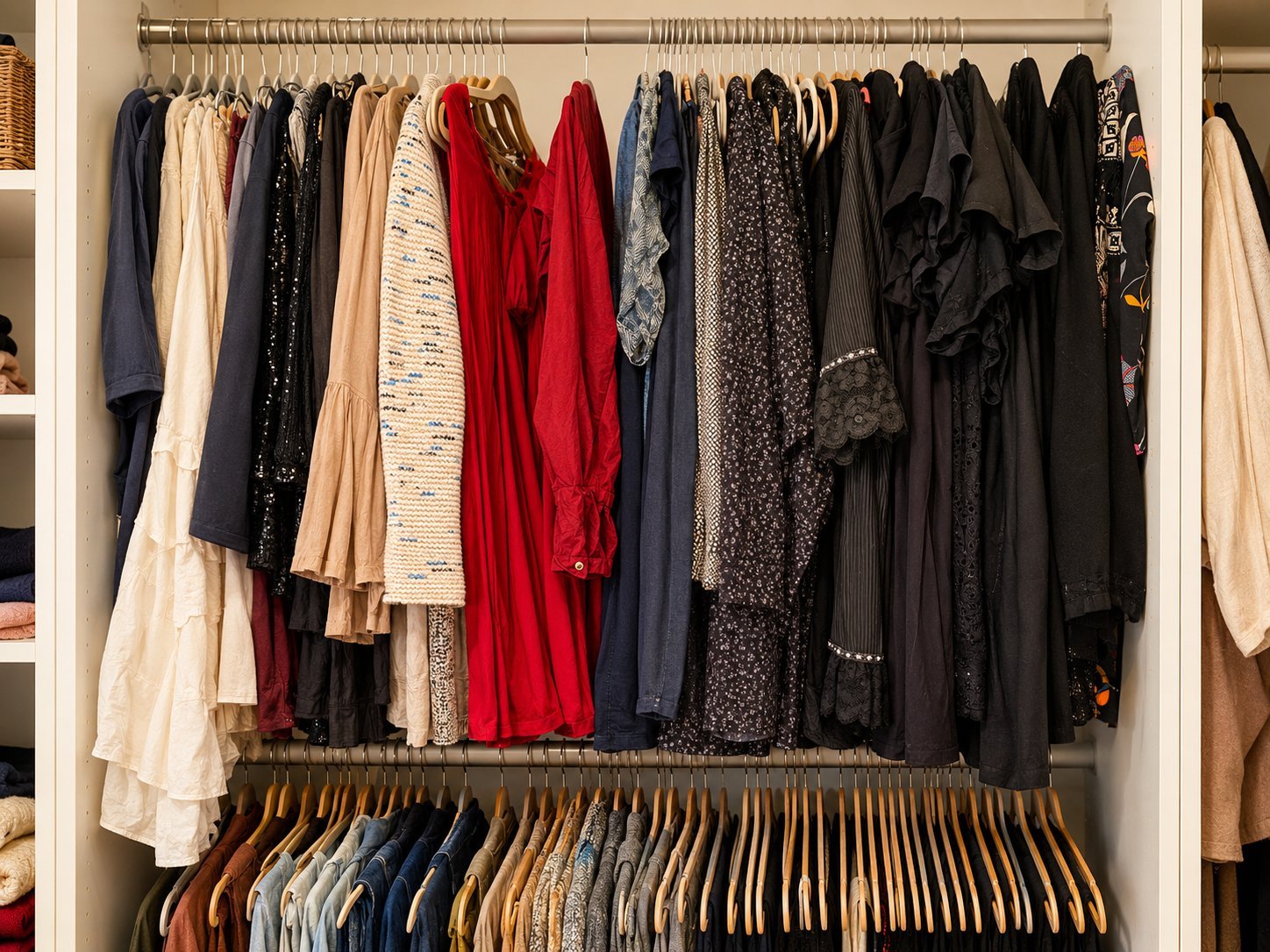
There’s a special frustration in digging through wool sweaters to find a t-shirt in July — or discovering your winter coat buried behind sundresses in January. A closet holding all four seasons at once is a closet working at quarter capacity. If you’re asking how do I organize my closet by season, the twice-yearly swap is the answer: store the off-season, showcase the current one, and enjoy a closet that feels twice as big and infinitely more wearable.
Why Seasonal Organizing Works
Three wins: space (removing half your clothes instantly declutters), clarity (getting dressed becomes choosing among weather-appropriate options, not excavating), and maintenance (each swap is a built-in decluttering and inspection moment). It also extends clothing life — properly stored off-season clothes avoid the light damage, dust, and crush of year-round hanging. Do the swap twice a year (spring and fall transitions) and your wardrobe basically manages itself.
How Do I Organize My Closet by Season? The Swap, Step by Step
Step 1: Empty and assess. Take everything out — yes, everything. It’s the only way to see what you actually own. As you remove each item, sort into three piles: current season, off-season, and “to go” (worn out, doesn’t fit, haven’t worn in a year). Be honest; the swap is your twice-yearly truth serum.
Step 2: Clean before storing. Never store dirty clothes — stains set, odors transfer, and moths love food residue. Launder everything going into storage; repair what needs it (missing buttons, small tears) now, not “someday.”
Step 3: Store the off-season right. Clean, dry, breathable containers — not plastic bags (moisture traps) or cardboard (attracts pests). Vacuum-seal bulky knits and coats to save space; use cedar blocks or lavender sachets for moth protection. Label every container clearly: “Winter — sweaters,” “Summer — dresses.” Store in a cool, dry spot: under-bed, top shelf, or a closet corner.
Step 4: Organize the current season. Hang by category, then color: jackets, dresses, shirts, pants. Fold knits (hanging stretches them) and store on shelves. Arrange so the most-worn items are at eye level, least-worn higher or lower. Leave breathing room — a packed closet wrinkles everything and hides options.
Step 5: Handle the transitionals. Some pieces work across seasons (jeans, cardigans, layering tees). Keep a small “year-round” section so you’re not digging into storage for a cool summer evening or a warm winter day.
What to Purge at Each Swap
The swap is your scheduled decluttering moment — use it. Purge triggers:
- Haven’t worn it in the full season it was available? It’s going.
- Doesn’t fit, flatter, or feel like you anymore? Going.
- Damaged beyond reasonable repair? Going.
- Duplicate of something better? Keep the best, donate the rest.
Donate promptly — bags sitting around become reabsorbed. Find a Goodwill donation center near you and make the drop part of swap day. For the deeper whole-home version, our decluttering guide applies the same principles room by room.
Small Closet? The System Still Works
Seasonal organizing helps small closets most — halving the contents doubles the functionality. Storage solutions for tight spaces: vacuum bags under the bed, a single labeled bin on the closet’s top shelf, or a storage ottoman doing double duty. If even that is too much, try the capsule approach: 30-40 versatile pieces per season, everything mixing and matching. Fewer, better clothes that all work together beat a stuffed closet of maybes.
Maintain Between Swaps
- One in, one out: every new purchase means one donation. This single rule prevents re-cluttering.
- Weekly 5-minute reset: rehang the chair-drobe, refold the shelf avalanche, return strays. Small maintenance beats big overhauls.
- Fold smarter: file-folding (upright in drawers) keeps everything visible and neat. Our fashion section’s t-shirt folding guide covers the technique that maximizes drawer space.
- Seasonal check-in: mid-season, pull anything unworn and ask why. Early detection of wardrobe dead weight.
When to Do the Swaps
The Capsule Shortcut: Fewer Clothes, Zero Decisions
If the full seasonal system sounds like too much, try the capsule version: 30-40 pieces per season that all mix and match. The rules are simple — pick a 2-3 color palette, choose versatile basics (every top works with every bottom), and limit shoes to 5-6 pairs. Getting dressed becomes trivial: grab anything, it matches. The capsule approach supercharges seasonal organizing because the swap is tiny — one bin out, one bin in, done in 30 minutes. It’s not about minimalism as identity; it’s about eliminating the daily “I have nothing to wear” paradox of a stuffed closet. Start by pulling your 35 most-worn pieces for the current season and boxing the rest for two weeks. If you don’t miss the box, donate it. Most people don’t.
Time them to your climate’s real transitions, not the calendar’s: when you’re consistently reaching past the current season’s clothes, it’s swap time. For most of the US, that’s April and October — but Texas and Minnesota have very different Aprils. Put recurring reminders on your calendar and treat swap day as a satisfying ritual: music on, coffee ready, two hours, done. Twice a year, two hours each — that’s the entire maintenance cost of a closet that always feels just right.
Your First Swap Weekend
Don’t wait for the perfect moment — the next seasonal transition is your deadline. Block two hours, put on music, and work the five steps: empty, assess, clean, store, organize. When you open your closet Monday morning and see only clothes you can actually wear right now, you’ll wonder why you didn’t do this years ago. Twice a year, two hours: that’s the whole system.
A seasonal closet isn’t about having more clothes — it’s about actually wearing what you own. Every swap is a fresh start: a curated collection, everything visible, everything wearable, nothing wasted. Two hours, twice a year, and getting dressed becomes the easiest part of your day. Your future self, standing calmly before an organized closet on a busy morning, says thanks.
Start small if the full system feels daunting: just pull the most out-of-season items into one bin this weekend. Even a partial swap makes getting dressed noticeably easier — and once you feel the difference, you’ll want the full system. Your closet is waiting.