
 By admin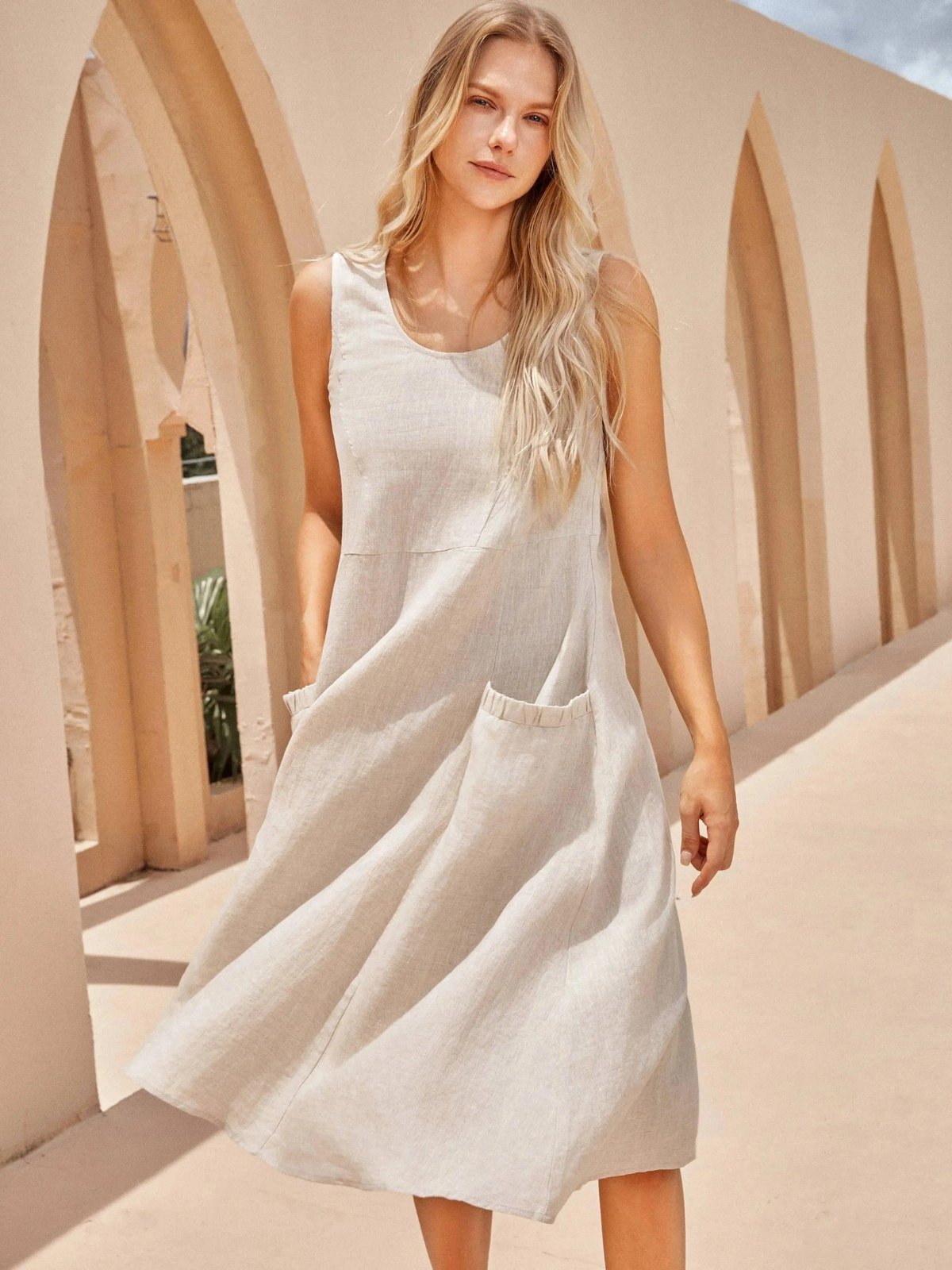
A summer dress in the wrong fabric is a wearable sauna — clingy, sweaty, and see-through by noon. The same silhouette in the right fabric feels like air conditioning you can wear. Fabric choice matters more than style for summer comfort, and the differences are dramatic. Here’s the ranking.
The Best Fabrics for Summer Heat
- Linen — the champion. Made from flax, linen is breathable, moisture-absorbing, and gets softer with every wash. It wrinkles — embrace it as part of the look (blends with cotton or Tencel wrinkle less). Nothing beats pure linen in real heat.
- Cotton (lightweight weaves). Voile, lawn, and seersucker cottons are summer perfection — breathable, soft, affordable. Avoid heavy cotton twill and denim in heat; weave weight matters as much as fiber.
- Tencel/lyocell. Made from wood pulp, silky-smooth, moisture-wicking, and resistant to wrinkles — the modern miracle fabric for drapey summer dresses. Blends beautifully with cotton and linen.
- Chambray. The lightweight plain-weave that looks like denim but breathes like a summer fabric should. A chambray shirt-dress is a heat-wave hero.
- Rayon/viscose (with caveats). Drapes beautifully and feels cool, but wrinkles badly, can shrink, and weaker when wet. Fine for occasion dresses; risky for everyday.
Fabrics to avoid in summer
100% polyester — traps heat and odor; the most common reason a cute dress is unwearable past May. Nylon blends — similar heat-trapping issues. Heavy satin — shows every drop of sweat. Wool crepe — lovely in spring, stifling in August. Check labels: “summer dress” in 100% polyester is a lie the fashion industry tells every year.
What Is the Best Fabric for Summer Dresses? Beyond the Fiber
- Weave and weight matter as much as fiber. A loose, open weave in any natural fiber outperforms a tight weave. Hold it up to light — if air passes, you’re good.
- Color affects heat. Light colors reflect heat; dark dresses in direct sun run noticeably hotter. The white linen dress isn’t just a look — it’s physics.
- Lining check. A polyester lining ruins a linen dress’s breathability. Look for unlined, cotton-lined, or self-lined.
- Care reality. Linen and cotton are easy (machine wash, embrace wrinkles or steam); silk needs dry cleaning; rayon needs gentle handling. Buy the fabric whose care you’ll actually do — the FTC’s care label guide decodes the symbols.
REI’s summer clothing guides cover the technical side of heat-managing fabrics if you want the science behind the comfort.
Shopping Smart for Summer Fabrics
Read labels before falling for the silhouette — fiber content is usually on the inside tag or product page. In thrift stores, the touch test works: natural fibers feel cool to the touch initially; synthetics feel room-temperature or plasticky. And invest where it counts: one great linen dress you’ll wear 40 times beats five polyester ones you’ll abandon by July.
Fabric Blends: Getting the Best of Both Worlds
Pure fibers are great, but smart blends often outperform them for summer dresses:
- Linen-cotton: linen’s breathability with cotton’s softness and less wrinkling — the everyday summer winner.
- Linen-Tencel: breathable, drapey, wrinkle-resistant — the premium summer blend; worth seeking out.
- Cotton-modal: soft, breathable, holds shape better than pure cotton — great for fitted summer dresses.
- Silk-linen: luxurious, breathable, beautiful drape — the special-occasion summer fabric.
- Avoid: cotton-polyester “summer” blends — the polyester cancels cotton’s breathability; you get the worst of both.
Reading labels like a fabric detective
The label tells the truth the marketing hides: fiber percentages — “linen-look” can be 100% polyester; check the actual content. “Woven” vs. “knit” — wovens breathe better; knits cling more (jersey dresses in heat are a commitment). Country of manufacture correlates loosely with linen quality (European flax regions produce the best). Care symbols — if a “summer dress” requires dry cleaning, it’s not a real summer dress. And the touch test: scrunch the fabric — natural fibers feel cool initially and bounce back slowly; synthetics feel room-temperature and either spring back instantly (polyester) or stay crushed (cheap rayon). Train your hands and you’ll never need to trust a product description again.
Summer Dress Styles for Different Occasions
- Everyday casual: cotton sundress or shirt-dress — washable, breathable, effortless. The uniform of summer.
- Office (summer): linen sheath or midi in a structured cut — professional without the sweat. Sleeves or a light blazer for AC.
- Weddings: the occasion for beautiful fabrics — silk-linen blends, quality cotton lawn in rich prints. Breathable and formal.
- Beach/vacation: the easy cover-up dress — quick-dry, packable, doubles as a dinner dress with accessories.
- Evening: Tencel or silk in darker tones — drape and sheen read evening; the fabrics still breathe.
The summer dress capsule (5 dresses)
Five dresses cover the whole season: 1. The white/cream linen dress — the summer icon; goes everywhere. 2. The printed midi — cotton lawn or viscose; the fun one. 3. The black dress — Tencel or quality cotton; evenings and dressier days. 4. The shirt-dress — chambray or linen; the versatile workhorse. 5. The maxi — breezy and dramatic; vacations and weekends. Stick to breathable fabrics for all five, keep the palette coordinated, and the entire summer is handled. Buy the white linen and the black first — they get the most wear. Care note: wash cold, hang dry in shade (sun fades colors even as it whitens whites), and embrace the linen wrinkles — the relaxed look is the point.
Packing summer dresses for travel
Summer dresses are the ultimate travel garment — one piece, endless outfits with accessory changes. Roll (do not fold) to minimize wrinkles, pack the wrinkle-resistant blends for the suitcase and save the linen for wearing on arrival day. A dress, sandals, and a scarf (as wrap, headscarf, or beach cover-up) is a complete vacation outfit in a packing cube. Three dresses, two pairs of shoes, one scarf — a week of vacation dressing. The breathable fabrics that keep you cool at home do double duty in hot destinations.
The Practical Takeaway
Linen first, lightweight cotton and Tencel close behind; avoid 100% polyester always. Check weave, lining, and color — then enjoy actually being comfortable. Keep exploring: What to Wear to a Summer Concert and What Handbag Size Is Best for Everyday Use?.