
 By admin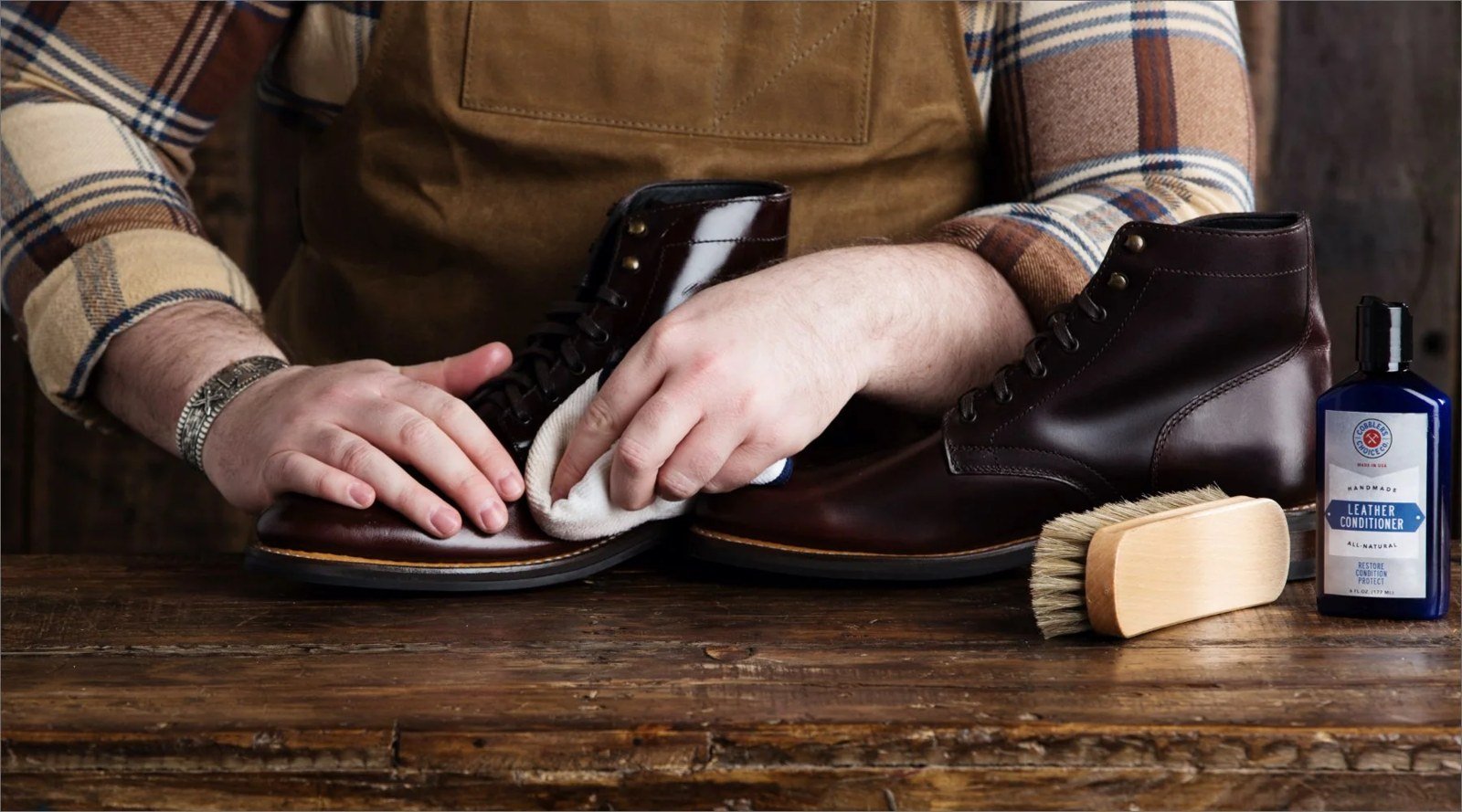
Good leather boots are a buy-it-for-decades purchase — or a buy-it-for-two-seasons disappointment, depending entirely on care. Leather is skin; it dries out, cracks, and stains without maintenance. The full care routine takes about 20 minutes a few times a year and can easily double or triple your boots’ life. Here’s exactly what to do.
The Core Routine: Clean, Condition, Protect
- Clean first, always. Brush off dirt with a horsehair brush after wearing (30 seconds that prevents grime from grinding into the leather). For deeper cleaning, wipe with a damp cloth and saddle soap — never soak leather, and never use household cleaners or heat to dry.
- Condition every 3–6 months. Leather conditioner (mink oil, neatsfoot oil, or cream conditioners like Bick 4) replaces the oils leather loses. Apply thinly, let absorb, buff off. Dry, thirsty leather drinks it up; over-conditioning makes leather mushy, so thin coats.
- Polish for dress boots. Cream polish nourishes + adds color; wax polish adds shine and water resistance. Match the color or use neutral. This is what makes old boots look new.
- Waterproof work/outdoor boots. Silicone sprays or wax-based waterproofing (Sno-Seal style) for boots that face real weather. Reapply seasonally.
How Do I Take Care of Leather Boots So They Last Longer? Daily Habits
- Rest them. Don’t wear the same boots two days running — leather needs 24 hours to dry from foot moisture. Rotating pairs is the single biggest longevity factor.
- Use cedar shoe trees. They absorb moisture, hold the shape, and prevent the creasing that cracks leather at the flex point. $20 that pays for itself endlessly.
- Dry wet boots slowly. Stuff with newspaper, air-dry at room temperature away from radiators and direct heat. Heat is leather’s enemy — it cooks out oils and causes cracking.
- Store properly. Clean and conditioned, with trees in, standing upright (not folded), in a breathable cotton bag — never sealed plastic, which traps moisture.
- Resole before it’s too late. When soles wear thin, a cobbler resoles for $50–100 — far cheaper than new quality boots. Goodyear-welted boots are designed for multiple resoles; that’s what you’re paying for.
Fixing common damage
Scuffs: usually just need conditioner + polish in matching color. Salt stains: wipe with diluted vinegar solution, then condition (salt dries leather badly). Scratches: rub with your finger — body heat and oils often minimize them; conditioner finishes the job. Deep cuts need a cobbler. Quality boots are worth professional repair; resale data consistently shows well-maintained leather boots hold remarkable value.
What Kills Boots Fastest
Daily wear without rest, drying by heat, never conditioning, wearing dress boots as rain boots without waterproofing, and “waterproof” fashion boots that were never meant for weather. Also: cheap bonded “leather” can’t be saved by any routine — care multiplies quality, it doesn’t create it. The FTC’s care guidance covers decoding leather labels so you know what you’re actually maintaining.
Boot Repair: What’s Fixable and What It Costs
Quality boots are repairable almost indefinitely. The cobbler’s menu:
- Resoling: $50–100. The big one — new soles on Goodyear-welted boots, repeatable many times. The reason quality boots are cheaper long-term.
- Heel replacement: $20–40. Worn heel caps/lifts — quick, cheap, transformative for gait and appearance.
- Stitching repairs: $10–30. Loose seams, detached soles at the toe — routine fixes.
- Leather patching: $30–60. For cuts and worn spots — invisible on dark leather, decent on light.
- Stretching: $10–15. Tight spots professionally stretched — more effective and safer than DIY.
- Full restoration: $100–200. Deep cleaning, conditioning, color restoration, resoling — the “make them new again” package for beloved boots.
Find a cobbler before you need one — ask at quality shoe stores or check reviews. A good cobbler relationship is like a good tailor: invaluable and increasingly rare.
The true cost of boots: cheap vs. quality math
$80 fast-fashion boots: last 1–2 seasons, unrepairable (glued soles), cost $40–80/year. $250 quality boots: last 10+ years with care and resoling, cost $25–35/year including maintenance. The quality pair is literally cheaper — plus more comfortable, better looking, and repairable. This is the cost-per-wear argument in its purest form, and it applies to all footwear. Buy the best boots you can afford (thrifted quality beats new cheap — resale sites are full of barely-worn quality boots), maintain them with the routine above, resole when needed, and you’ll spend less over a decade while wearing better boots every single day. It’s one of the clearest financial wins in all of fashion.
Leather Types: What Your Boots Are Made Of
- Full-grain: the top layer, strongest, ages beautifully — the best boot leather. Worth paying for.
- Top-grain: sanded and finished — more uniform, slightly less durable. Fine for dress boots.
- Genuine leather: the marketing trick — it’s the lowest grade of real leather (the name is a grade, not a compliment). Avoid at boot prices.
- Bonded leather: leather dust glued together — peels within a year or two. Never worth boot money.
- Suede/nubuck: napped leathers — beautiful, need the dry-care routine (see our suede guide).
- Exotics (alligator, ostrich): stunning, expensive, need specialist care — the deep end.
Breaking in boots without the pain
New quality boots need break-in — do it right: wear them indoors first (2–3 hours, several days — carpet only, so you can return if the fit is truly wrong), thick socks accelerate the molding process, flex them by hand (bend the sole, work the leather — you’re pre-creasing the flex points), condition before first wear (softens the leather for the break-in), short outings first (don’t debut boots on a 10-mile day), and expect 2–3 weeks for full break-in of quality leather. Pain vs. discomfort: general stiffness and mild rubbing = normal break-in. Sharp pain, numbness, or hot spots that don’t improve = wrong fit or wrong last for your foot — no amount of break-in fixes a fundamentally wrong fit. Know the difference; return the wrong ones within the window.
The Practical Takeaway
Brush after wear, condition seasonally, rest between wears, use shoe trees, dry slowly, resole when needed. Twenty minutes of care a few times a year turns boots into heirlooms. For more on this topic, see The Most Flattering Swimsuit Styles for Plus-Size Women and The Best Affordable Skincare Brands for Dry Skin.