
 By admin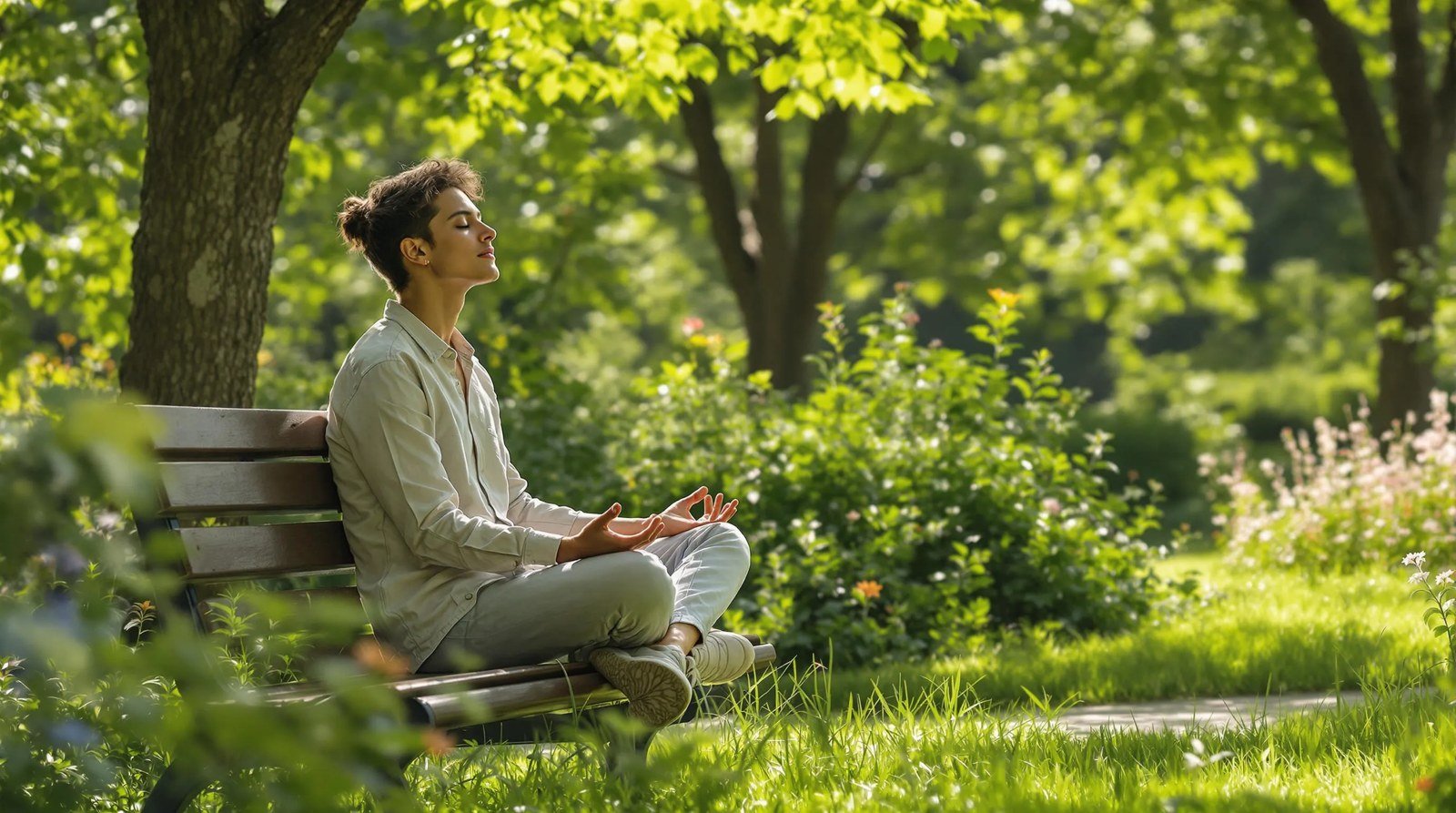
Most people who “can’t meditate” were set up to fail by the instructions: sit still, empty your mind, think about nothing. That’s like teaching someone to swim by dropping them in the ocean. No wonder they quit after two sessions convinced their brain is broken. Your brain isn’t broken — the instructions were.
Meditation isn’t about stopping thoughts. It’s about noticing you’ve drifted and coming back, repeated a hundred times. That returning is the exercise, like a bicep curl for attention. Once that clicks, starting is much easier.
The 5-Minute Beginner Method
Forget apps, cushions, and incense for now. Here’s the simplest working method:
- Sit comfortably. A chair is fine. Back straight but not rigid, feet on the floor, hands in your lap. Comfort beats posture — pain is a distraction you don’t need yet.
- Set a timer for 5 minutes. Short enough that you can’t talk yourself out of it. You’ll extend it later if you want.
- Follow your breath. Breathe naturally and notice the sensation — air at the nostrils, or the rise and fall of your belly. That’s your anchor.
- When you notice you’ve wandered, come back. You will wander. Within seconds, probably. Planning dinner, replaying an argument, wondering if you’re doing it right — all normal. Each time you notice and return to the breath, that’s one rep. That’s the whole practice.
- End gently. When the timer sounds, sit for a few seconds before jumping up. Done.
Do that daily for two weeks. That’s the entire beginner program.
How Do I Start Meditating as a Complete Beginner Who Hates Sitting Still?
Not everyone takes to seated breath meditation, and that’s fine — the field is wider than one technique:
- Walking meditation: walk slowly and notice each step — heel, sole, toe. Great for restless people.
- Body scan: lie down and move attention slowly from toes to head, noticing sensations. Excellent before sleep.
- Guided meditations: apps like Insight Timer (free) or UCLA’s free guided meditations walk you through it voice-led, which many beginners find far easier than silence.
- One-minute resets: three slow breaths before a meeting, noticing sounds on your commute — micro-practices count.
The National Center for Complementary and Integrative Health reviews the evidence base: mindfulness meditation shows moderate benefits for anxiety, depression, and pain, with small-to-moderate effects on stress. It’s not enlightenment in an app — it’s a practical attention-training tool with real, if modest, effects.
Beginner traps to avoid
Judging your sessions. There’s no such thing as a bad meditation — a session full of wandering that you kept returning from is the workout. Starting with 30 minutes. You’ll dread it and quit; 5 minutes you actually do beats 30 you avoid. Waiting for calm. Some sessions feel busy and restless. The benefits accrue from the practice, not from achieving some blissful state. Only meditating when stressed. It’s training, not rescue — the calm-on-demand part comes after weeks of boring consistency.
The American Psychological Association notes that mindfulness practice is increasingly integrated into clinical therapy precisely because the attention-training mechanism is well understood. You’re not joining a mystic tradition (unless you want to); you’re doing reps.
Meditation Styles Beyond Mindfulness
Mindfulness gets all the press, but it’s one tradition among many — and different brains click with different approaches:
- Loving-kindness (metta). Silently repeating phrases of goodwill (“may I be happy, may you be happy”). Surprisingly powerful for self-criticism and interpersonal stress; good evidence for emotional wellbeing.
- Transcendental Meditation (TM). Mantra-based, 20 minutes twice daily. Well-studied for stress; the catch is the expensive courses — the technique itself is simple mantra repetition.
- Zen/shikantaza. “Just sitting” — no anchor, open awareness. Advanced and spare; probably not your starting point.
- Yoga nidra. Guided lying-down practice, deeply relaxing — excellent for the meditation-curious who want rest more than discipline.
- Walking meditation. As described earlier — the answer for people who can’t sit still, and a legitimate traditional form, not a compromise.
- Breathwork (separate but adjacent). Physiological sighs, box breathing, 4-7-8 — faster-acting calm tools that pair well with a meditation habit.
What progress actually looks like
Forget enlightenment milestones. Realistic signs your practice is working: you notice you’re stressed sooner (awareness precedes control), the gap between trigger and reaction widens slightly, you return to the breath faster in sessions, and daily life has marginally more pause in it. These are small, unglamorous changes — and they’re the actual mechanism by which meditation improves wellbeing. Nobody’s mind goes quiet; practiced minds just get better at noticing the noise without being run by it. After a few months, many people find the practice becomes self-sustaining — not because it’s blissful, but because the 10 minutes of quiet becomes the most honest part of the day.
Common Meditation Problems, Solved
- “I can’t stop thinking.” You’re not supposed to. Thinking is what minds do; meditation is noticing it and returning. A busy mind gives you more reps, not failure.
- “I get sleepy.” Meditate earlier, sit upright (not in bed), splash water on your face first. Some drowsiness is normal — chronic sleepiness means you need sleep, not meditation.
- “My back/legs hurt.” Use a chair. Sit against a wall. Comfort isn’t cheating — pain is a distraction that serves no beginner purpose.
- “I feel more anxious.” Sitting with your thoughts can surface anxiety initially. Try guided meditations, shorter sessions, or walking meditation. If anxiety spikes persistently, talk to a therapist — meditation isn’t a substitute for treatment.
- “I don’t have time.” You have 5 minutes. Attach it to an existing habit (after coffee, before shower). The time excuse is really a priority signal — schedule it like the appointment it is.
- “It’s boring.” Yes. That’s partly the point — training yourself to be present with boredom is the skill. It gets less boring as awareness sharpens.
Apps, courses, and communities
Helpful scaffolding: Insight Timer (huge free library of guided meditations — the best free option), UCLA Mindful app (free, research-based basics), Waking Up (Sam Harris’s app — philosophical depth, 30-day intro course), Ten Percent Happier (skeptic-friendly, great for beginners), local sitting groups (meditating with others, even monthly, deepens practice enormously — search for insight meditation centers nearby), and books (Mindfulness in Plain English is free online and the classic starter). The app is training wheels, not the practice — useful for learning, but the goal is a self-sustaining habit that doesn’t require subscriptions. Start guided, graduate to silence when ready (or don’t — plenty of long-term meditators still use guidance sometimes).
The Practical Takeaway
Sit, breathe, notice wandering, return — 5 minutes daily for two weeks. Try walking or guided versions if sitting still drives you nuts. Judge nothing; just keep showing up. Related reading: How do I start working out after years of being inactive and Early Signs of Dehydration You Shouldn’t Ignore.