
 By admin
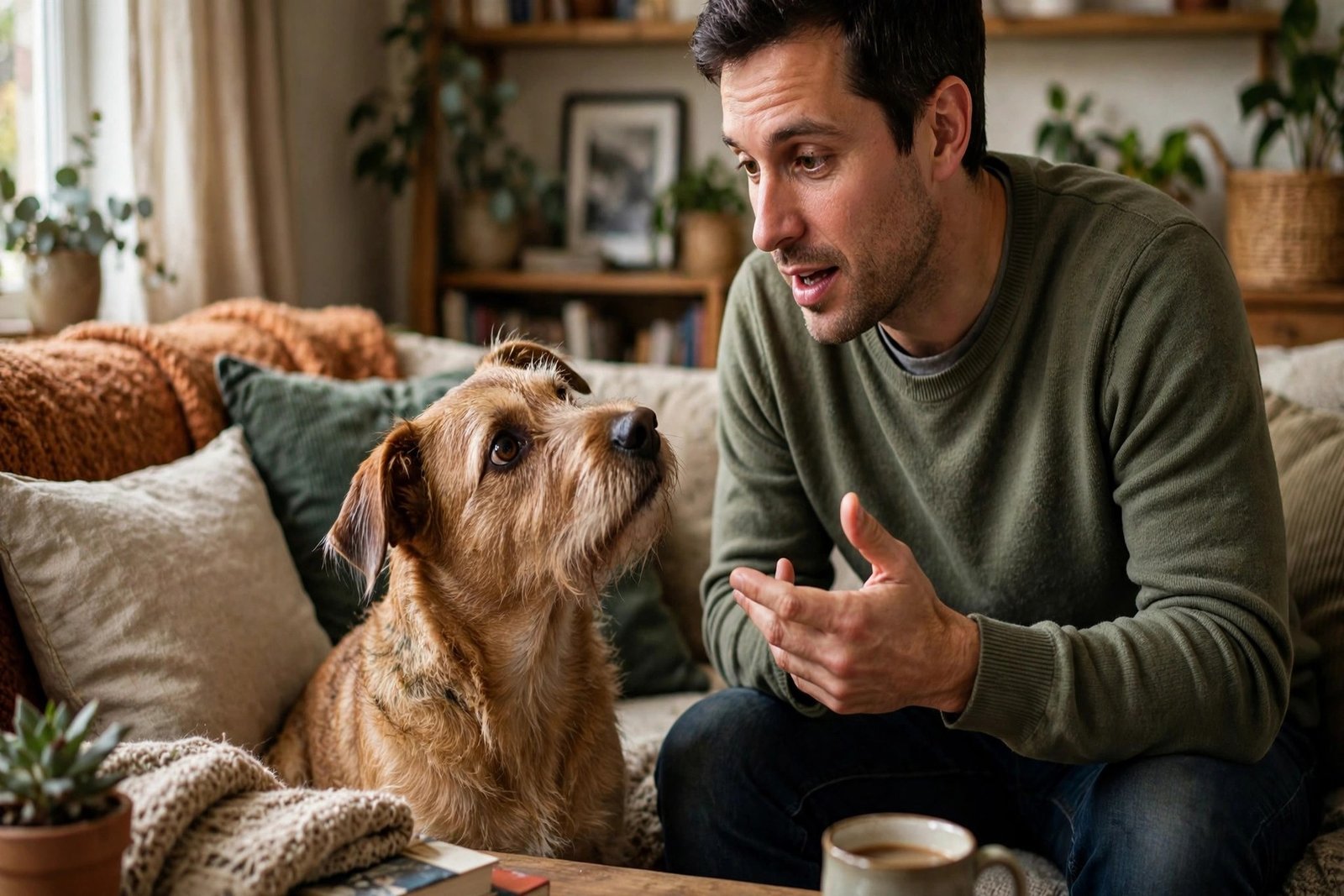
You’re talking to your dog — maybe asking the important question, “who’s a good boy?” — and it happens: the head cocks to one side, ears perked, eyes locked on yours with an expression of profound concentration. It’s irresistibly cute, and it launched a thousand memes. But the head tilt isn’t just adorable. Researchers have actually studied it, and what they found reveals something fascinating about how dogs process human communication.
This guide explains the science behind the head tilt: what researchers discovered about which dogs tilt and why, the hearing and attention theories, what your dog is likely experiencing when they tilt, and — importantly — when a head tilt stops being cute and starts being a medical emergency.
What the Research Found: It’s About Concentration
In 2021, researchers at Eötvös Loránd University in Budapest published the first systematic study of the head tilt — and the results were striking. They found that dogs tilt their heads when concentrating intensely, specifically when trying to recall and match words to objects. The study used “gifted word learner” dogs — rare dogs that can learn dozens of toy names (a feat with interesting parallels to how humans and AI systems learn language) — and found these dogs tilted their heads far more often (43% of trials) than typical dogs (2%) when hearing a familiar toy name.
The interpretation: the tilt accompanies focused auditory-visual processing — the dog is literally thinking hard, matching the word you’re saying to a memory. It’s the canine equivalent of a furrowed brow. Gifted learners tilted consistently to the same side (suggesting a lateralized brain process, like human handedness), while the direction varied in typical dogs. So when your dog tilts at “wanna go for a W-A-L-K?”, they’re not just hearing you — they’re processing you, and the tilt is the visible sign of mental effort. That meme-worthy moment is actually a window into canine cognition.
The Hearing Theory: Adjusting the Ears
The other leading explanation is acoustic. Dogs’ ears — especially floppy or semi-erect ones — shape how sound reaches the eardrum. Tilting may help dogs pinpoint sound location by adjusting the ear’s angle relative to the source, the way we cup a hand behind our ear to hear better. It may also help them hear around their own muzzle — dogs with long muzzles (Collies, Greyhounds) have a visual blind spot directly ahead, and some researchers suggest the tilt adjusts both hearing and the visual field simultaneously.
This explains the pattern owners notice: tilts happen most with novel or unclear sounds — a new word, an odd tone, a strange noise — and less with familiar commands the dog has heard ten thousand times. The unfamiliar requires processing; the familiar is automatic. Puppies tilt more than adults (everything is novel), and the behavior often decreases as a dog learns your vocabulary — not because they care less, but because they’ve automated the recognition. The AKC’s summary of head-tilt research covers both the cognitive and acoustic theories — they’re complementary, not competing.
What Your Dog Is Experiencing When They Tilt
Put it together and the head tilt is a portrait of attention: your dog hears something salient, orients the ears for better reception, and engages the word-memory matching system. It’s also been reinforced by us: humans reliably respond to head tilts with delight and treats, so tilting gets shaped into a more frequent behavior.
This doesn’t make it “fake” — the underlying concentration is real; we’ve just selectively rewarded its expression. It’s a lovely feedback loop: the dog concentrates, tilts, we melt, the dog gets attention, the dog tilts more readily next time. Some trainers even teach it as a trick (“tilt your head!”), which works precisely because the behavior is already in the repertoire. And the individual variation is real — some dogs are champion tilters, others rarely do it, and neither indicates anything about intelligence or affection. It’s temperament and ear anatomy as much as cognition. Dogs that listen intently to their humans — the ones hanging on every word — are simply the ones you’ll see tilt most.
When a Head Tilt Is a Medical Emergency
Here’s the critical distinction: the cute tilt is brief, voluntary, and situational — the dog tilts while listening, then straightens. A pathological head tilt is persistent — the head stays tilted for hours or days, the dog can’t straighten it, and it’s accompanied by other symptoms. This is not cute; it’s a neurological or vestibular emergency until proven otherwise.
Causes of persistent head tilt: vestibular disease (the balance system — common in seniors as “old dog vestibular disease,” which looks like a stroke but is often treatable), inner/middle ear infections (the infection spreads to the balance apparatus), head trauma, certain toxins, and less commonly brain tumors or strokes. Red flags demanding immediate vet care: head tilt that doesn’t resolve within minutes, especially with circling, falling to one side, rapid involuntary eye movements (nystagmus), vomiting, or inability to stand. Old dog vestibular disease deserves special mention: it strikes suddenly in seniors, looks terrifying (the dog can’t stand, eyes darting), but most dogs improve dramatically within 72 hours with supportive care. It mimics a stroke so closely that owners understandably panic — the vet visit distinguishes them. The Cornell veterinary neurology resources detail the diagnostic approach — but the owner rule is simple: brief tilt while listening = adorable; persistent tilt with balance symptoms = emergency vet, now.
Should You Encourage It? (And the Ethics of Cute)
There’s no harm in delighting in the tilt — the reinforcement loop is benign and the behavior itself indicates engagement. Talking to your dog in varied, interesting ways (new words, playful tones, questions) gives them more to process, which means more tilts and more mental stimulation. “Gifted word learner” research even suggests that teaching toy names and object words enriches dogs cognitively — the tilt is evidence the enrichment is working.
The only caution is anthropomorphism creep: the tilt doesn’t mean the dog understands your sentences the way you do — they’re processing salient words and emotional tone, not parsing grammar. Enjoy the moment for what it is: a genuinely intelligent animal making a visible effort to understand you. That’s remarkable enough without embellishment. And if your dog never tilts? They may process just as deeply with their head straight — some of the smartest dogs are poker-faced. The tilt is a style, not a report card.
Conclusion
Your dog tilts their head because they’re concentrating — matching your words to memories, adjusting their ears to hear you better, and thinking hard about what you mean. Science confirms it’s a marker of focused cognitive processing, especially in dogs actively learning human vocabulary. Delight in it, talk to them more (it’s enrichment), and remember the one rule that matters: a tilt that comes and goes with conversation is adorable; a tilt that stays is a vet emergency. Now go ask who’s a good boy. You know what happens next.
Frequently Asked Questions
Why does my dog tilt his head when I talk to him?
Research shows dogs tilt when concentrating intensely — particularly when processing familiar words and matching them to memories. It likely also adjusts the ears for better sound localization. In short: the tilt is the visible sign of your dog thinking hard about what you’re saying, especially with novel or interesting sounds.
Do smart dogs tilt their heads more?
The Budapest study found that “gifted word learner” dogs (dogs that learn many object names) tilted dramatically more often than typical dogs — 43% versus 2% of trials. So frequent tilting correlates with active word-learning, though plenty of intelligent dogs rarely tilt. It’s a marker of a certain kind of cognitive engagement, not a general intelligence test.
Why does my dog tilt her head at strange noises?
Novel sounds require processing — the dog orients the ears toward the source and engages attention systems to identify the sound. Familiar sounds get automated responses; unfamiliar ones get the full tilt-and-think treatment. Puppies tilt more than adults for the same reason: more of the world is novel.
When should I worry about my dog’s head tilt?
Worry when the tilt is persistent (hours/days, can’t be straightened) rather than brief and situational — especially with circling, falling over, rapid eye movements, vomiting, or inability to stand. Those indicate vestibular or neurological disease needing immediate veterinary care. A tilt that appears while listening and resolves in seconds is normal.
Can I teach my dog to tilt its head on command?
Yes — it’s a highly teachable trick precisely because the behavior occurs naturally. Capture it: when the dog tilts spontaneously, mark (clicker or “yes!”) and treat. Add the cue once the behavior is reliably offered. Dogs that already tilt frequently learn it in days. It’s harmless, adorable, and gives the dog a fun way to earn rewards.