
 By admin
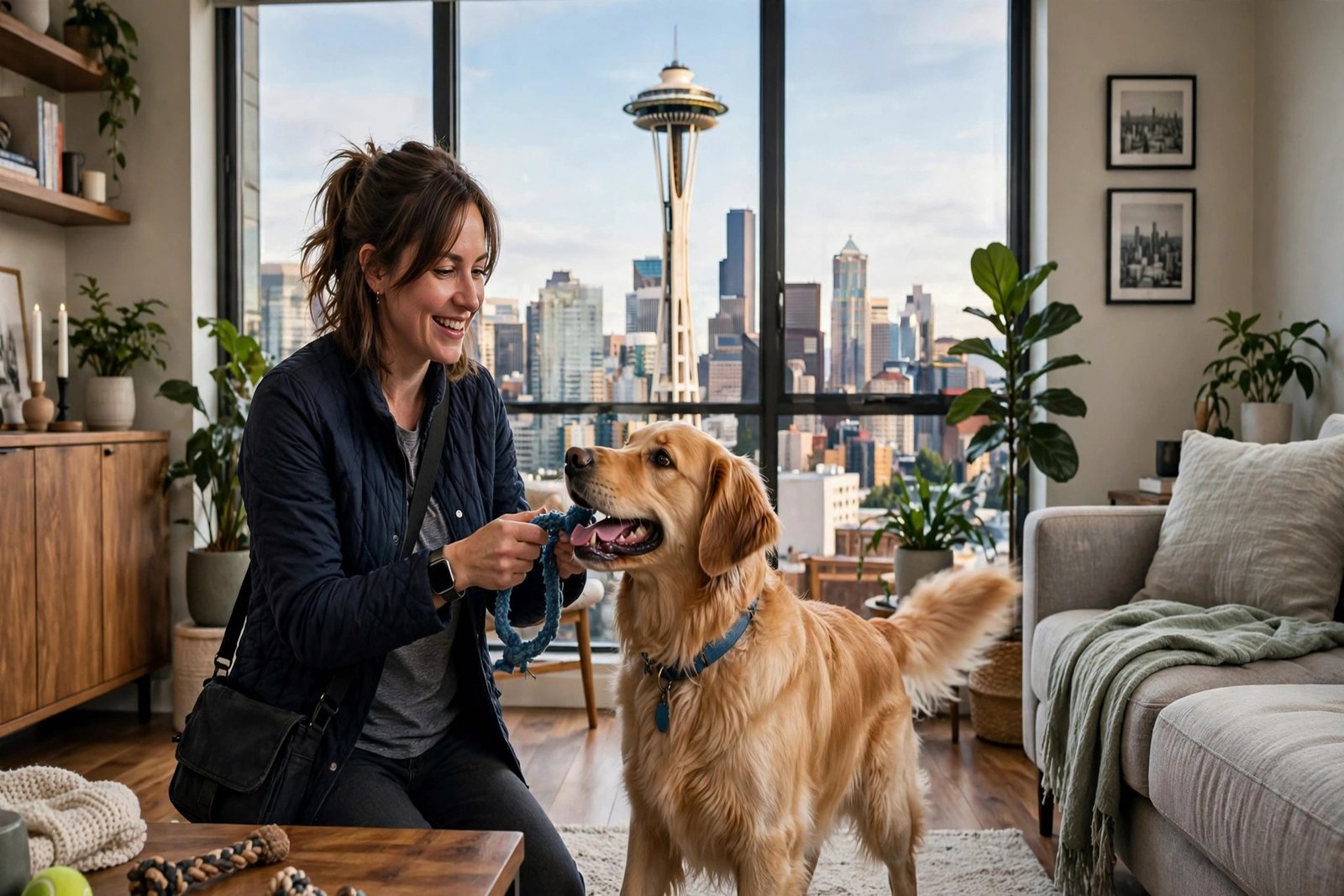
You’re heading out of town — maybe a weekend in the San Juans, maybe a work trip to Chicago — and the question hanging over the whole plan is who’s going to take care of the dog. Seattle has no shortage of options: apps full of sitters, boarding facilities from basic to boutique, and that neighbor who “loves dogs.” But trusting a stranger with your pet and your house keys requires more than a five-star average on an app. The wrong choice ranges from a stressed dog to genuine neglect.
This guide walks through finding a genuinely trustworthy pet sitter in Seattle: where to look, how to vet candidates like a professional, the interview questions that reveal everything, red flags that should send you running, and how to set up the sit so it goes smoothly — whether it’s your first time hiring or your tenth.
Your Options in Seattle: Sitters, Boarding, and Alternatives
In-home pet sitters (Rover, Wag, or independent professionals) come to your house — best for anxious dogs, multi-pet households, and maintaining routine. Seattle’s Rover market is huge and wildly variable in quality; independent sitters found through vet referrals tend to be more experienced but cost more. Boarding facilities: Seattle has excellent options (from established kennels to cage-free “dog hotels” in SoDo and Ballard), plus many vet clinics offer medical boarding — ideal for seniors or dogs with health needs. Tour any facility in person: it should smell clean, have outdoor access, and staff should know the dogs by name.
Drop-in visits vs. overnight stays: for cats and independent dogs, 2–3 daily drop-ins often suffice; for puppies, seniors, or anxious dogs, overnight stays (at your home or the sitter’s) are far better. Trusted circle: don’t overlook the friend/neighbor option — a dog-savvy friend who knows your pet beats a stranger with 500 reviews. The key variable isn’t the platform; it’s the individual human. And if you’re traveling with your pet instead, Seattle’s pet-friendly hotel scene means that’s often the simplest option of all.
Where to Find Candidates (and Where the Good Ones Hide)
Vet clinic referrals: the single best source. Vet techs and receptionists know who the reliable local sitters are — many techs pet-sit on the side, and they’re medically trained. Ask at your next visit. Rover/Wag: useful for breadth, but you must filter aggressively (see vetting below). Look for sitters with 50+ completed stays, repeat-client rates, and detailed profiles — not just star ratings. Local networks: Seattle-area dog owner Facebook groups, Nextdoor, and breed-specific groups produce sitters with community accountability — someone whose reputation is visible locally behaves better than an anonymous app profile.
Professional associations: members of Pet Sitters International (PSI) or the National Association of Professional Pet Sitters have at least committed to industry standards — it’s a meaningful filter. Dog trainers and groomers: ask yours; the good ones know everyone in the local pet-care ecosystem. Whoever you find, the vetting process is identical — the source gets you candidates, not trust. Trust is earned in the interview.
The Vetting Process: Interview Like It Matters (It Does)
The meet-and-greet is non-negotiable. Any sitter who’ll take your keys without meeting your dog first is disqualified. Watch the interaction: does the sitter get down to the dog’s level, let the dog approach, ask about routine and quirks? Or do they loom, grab, and rush? Your dog’s body language is data — a dog that won’t approach the sitter after 15 minutes is telling you something.
Questions that reveal everything: “What’s your emergency protocol if my dog gets sick or injured?” (should be specific: vet call, your emergency contact, transport plan — not “I’d figure it out”). “How many other animals will be there?” (for sitter’s-home stays — more than 3–4 is a crowd). “Can I see where my dog will sleep/stay?” “What’s your cancellation policy?” “Are you insured and bonded?” (professionals are — the National Association of Professional Pet Sitters lists certified members; hobbyists often aren’t — and proper business insurance is what separates a business from a favor). “Will you send photo updates, and how often?” “What happens if you get sick mid-sit?” (backup plan = professionalism). References: ask for two, and actually call them. Ask: “Would you trust them with your keys again?” — the answers are revealing.
Red Flags: Walk Away Immediately
No meet-and-greet offered or wanted. Instant disqualification. Vague emergency answers — “oh, I’d take him to the vet” without knowing which vet, how they’d transport, or who they’d call. Too many animals, too little supervision — sitter’s-home operations with 8+ dogs and one human are accidents waiting to happen. No contract or written agreement — professionals use service agreements covering liability, vet authorization, and payment terms; handshake deals leave you exposed. Reluctance to provide references or proof of insurance. Your dog’s reaction — sustained fear, cowering, or aggression toward the sitter that doesn’t resolve isn’t “just nerves”; believe the dog.
Price red flags cut both ways: suspiciously cheap (Seattle overnight sitting runs $50–$100+/night for quality — $25/night means corners are being cut somewhere) and price-gouging without justification. Poor communication during vetting — slow replies, vague answers — predicts poor communication during the sit, when it matters most. And no questions about YOUR pet: a sitter who doesn’t ask about medical needs, behavior quirks, and routine isn’t planning to provide individualized care.
Setting Up the Sit for Success
The info packet: leave a written sheet (not just verbal): vet name/number and nearest emergency vet, your contact and a local backup contact, feeding schedule with measured portions (pre-portion meals in labeled bags — removes all guesswork), walk routine and leash quirks, medications with exact dosing, house rules (furniture? bedrooms?), and your dog’s fears and triggers. The trial run: for first-time sitters, book a single overnight or a day sit before the two-week trip — a low-stakes test reveals everything.
Home prep: secure hazards (medications, xylitol products, trash), leave the sitter’s payment arranged upfront (no awkwardness), show them the circuit breaker and water shutoff, and leave the house sitter-ready — clean, with supplies stocked and easy to find. During the sit: agree on update frequency upfront (daily photos is standard), respond promptly if the sitter contacts you, and don’t micromanage — you vetted this person; let them work. Payment and tipping: Seattle standard is 15–20% tip for excellent service, more for holiday sits. Good sitters are worth retaining — the sitter who already knows your dog is priceless on the next trip.
Conclusion
Finding a trustworthy Seattle pet sitter comes down to: source candidates from vet referrals and community networks (not just apps), require a meet-and-greet, interview with specific emergency and logistics questions, check references and insurance, watch your dog’s reaction, and set up the sit with a written info packet and a trial run. Do the work once, find your person, and the pre-trip anxiety about the dog disappears — which, honestly, is half the value of the vacation.
Frequently Asked Questions
How much does a pet sitter cost in Seattle?
Expect $25–$40 per drop-in visit, $50–$80/night for overnight stays at your home, and $60–$100+/night for quality boarding facilities. Holiday periods command 25–50% premiums. Suspiciously cheap rates (under $30/night overnight) usually signal inexperience or overbooking — in pet care, you generally get what you pay for.
Is Rover safe for finding a pet sitter?
It can be — Rover is a marketplace, not a vetting service, so safety depends entirely on your filtering. Look for 50+ completed stays, high repeat-client rates, detailed profiles, and verified background checks; always do an in-person meet-and-greet and check references independently. The platform provides the candidates; you provide the judgment.
What should I ask a potential pet sitter?
The essentials: emergency protocol (specifics, not vague reassurances), insurance and bonding, how many other animals they’ll handle simultaneously, backup plan if they get sick, photo update frequency, cancellation policy, and two references you’ll actually call. Plus: watch how they interact with your dog during the meet-and-greet — that tells you more than any answer.
Should I board my dog or hire an in-home sitter?
Anxious dogs, seniors, and multi-pet households usually do better with in-home sitting (familiar environment, maintained routine). Social, adaptable dogs often thrive at quality boarding facilities with play groups. Medical needs favor vet-clinic boarding. There’s no universal answer — match the option to your individual dog’s temperament, not to convenience or price alone.
How do I prepare my home for a pet sitter?
Leave a written info packet (vet numbers, feeding schedule with pre-portioned meals, medications, routine, house rules, emergency contacts), secure hazards, stock supplies, arrange payment upfront, and do a trial run before any long trip. Show the sitter the practical stuff — breaker box, water shutoff, where everything lives. Preparation prevents 90% of sit problems.