
 By admin
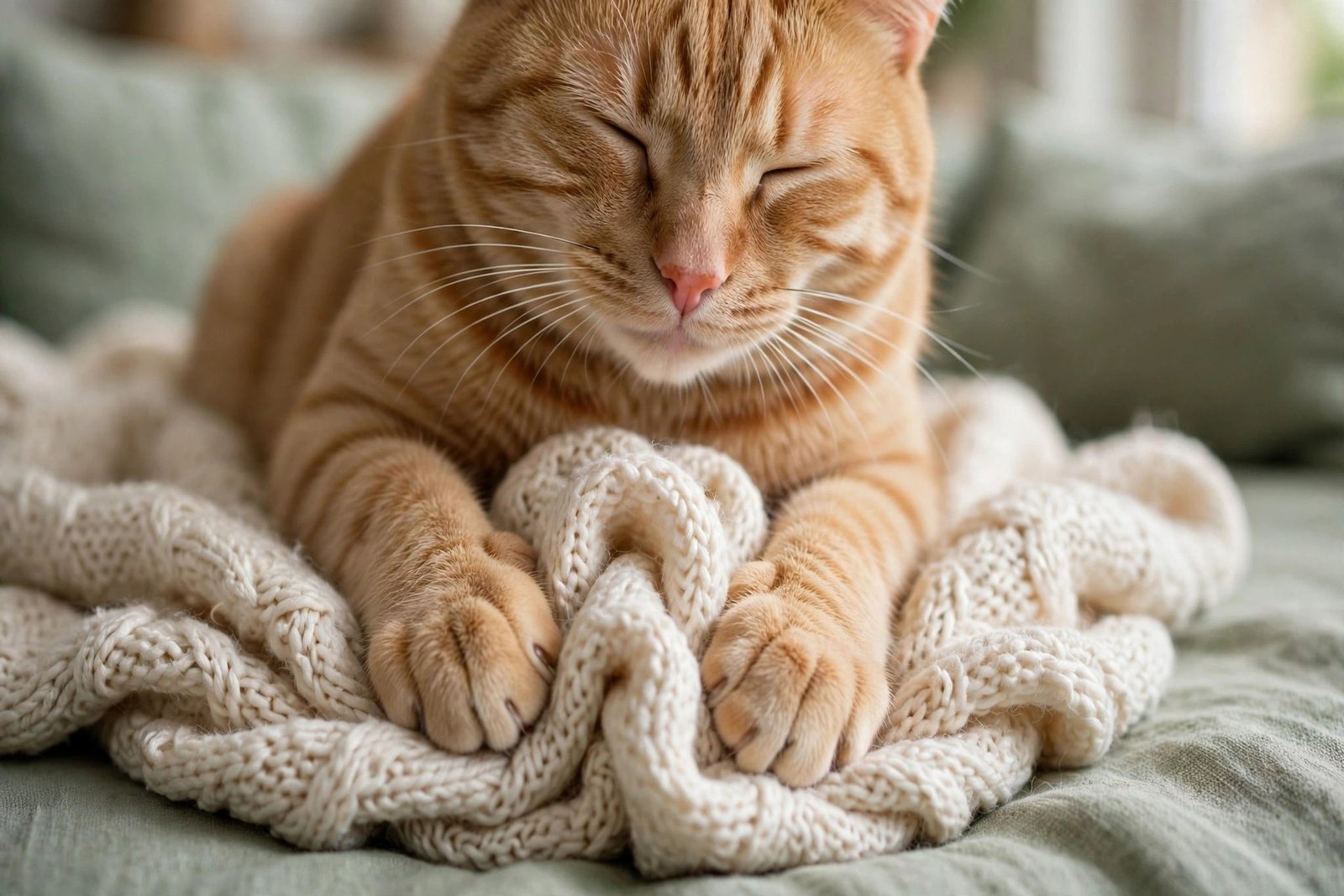
Your cat is making biscuits. Paws pressing rhythmically into the blanket — left, right, left, right — claws gently pricking through, eyes half-closed, purring like a tiny engine. It’s one of the most endearing behaviors in the animal kingdom, and it looks so deliberate that owners naturally wonder: why does she do that? What is she thinking? Does it mean she’s happy?
Kneading is one of the most studied and most charming feline behaviors, with roots in kittenhood and layers of meaning in adulthood. This guide explains the science behind why cats knead, what the variations mean (drooling, suckling, kneading you versus the blanket), when kneading signals something worth attention, and how to manage the claws-without crushing the joy.
The Kittenhood Origin: Where Kneading Begins
Kneading starts at birth. Newborn kittens knead their mother’s mammary glands — the rhythmic pressing stimulates milk letdown, so kneading is literally a kitten’s first survival skill, hardwired before their eyes even open. The behavior is reinforced thousands of times in the first weeks of life: knead → milk flows → comfort and fullness. That powerful early association — kneading equals nourishment, warmth, and safety — never fully leaves.
Neurologically, the behavior gets encoded alongside the reward circuitry of nursing: comfort, satiety, maternal warmth. Adult kneading reactivates that same circuitry — which is why the behavior looks so blissful. The cat isn’t confused about being a kitten; she’s accessing a deeply wired comfort behavior. This is also why early-weaned or orphaned kittens often knead more intensely and persistently as adults, sometimes combined with wool-sucking — the nursing sequence was interrupted, and the behavior carries extra emotional weight. It’s self-soothing rooted in the earliest days of life.
What Adult Kneading Means: The Theories
Contentment and affection: the dominant interpretation, and usually the right one. A cat kneading on your lap while purring is expressing deep comfort and trust — you’re the safe warm thing, the stand-in for everything good. Many behaviorists describe it as the highest compliment a cat pays: I feel as safe with you as I did nursing.
Territory marking: cats have scent glands in their paw pads, and kneading deposits scent — “this blanket, this lap, this human is mine.” It’s why cats often knead a spot before settling: they’re claiming it. Nesting: wild feline ancestors patted down grass and leaves to make a sleeping spot; the instinct to “prepare” a soft surface before rest persists in the fluffing some cats do before curling up. Stretching: the alternating paw motion stretches the muscles and tendons of the forelimbs — watch a cat wake from a nap and knead: that’s a yoga flow. Stress relief: like a human squeezing a stress ball, rhythmic kneading is self-calming — cats may knead more during changes or after a scare, regulating their own arousal.
Most kneading is a blend — contentment plus marking plus comfort, all at once. The ASPCA’s cat behavior library treats kneading as fundamentally normal and healthy, which is the baseline: a kneading cat is, in the vast majority of cases, a happy cat.
The Variations: Drooling, Suckling, and Air-Kneading
Kneading with drooling: common and usually harmless — the nursing association runs so deep that some cats drool while kneading, essentially “remembering” milk. It’s most frequent in cats weaned early. Only worth a vet mention if the drooling is new, excessive, or occurs outside kneading (which can signal dental issues or nausea).
Kneading plus suckling (wool-sucking): some cats knead while sucking on blankets, clothing, or their own fur. The VCA Hospitals’ cat behavior resources explain when suckling crosses from comfort behavior into compulsive territory., clothing, or their own fur. Occasional fabric-suckling is a benign comfort behavior; compulsive wool-sucking — ingesting fabric, targeting specific materials obsessively — can indicate pica or anxiety and risks intestinal blockage from swallowed fibers. Oriental breeds (Siamese, Burmese) are genetically predisposed. If your cat is eating fabric, that’s a vet conversation, not a quirk.
Air-kneading: kneading at nothing, paws paddling the air — usually happens in deeply relaxed cats (half-asleep on your lap) or, interestingly, in some cats anticipating something good. It’s the feline equivalent of a happy reflex. Kneading you vs. objects: kneading the owner specifically is social — it’s directed affection and marking you as theirs. Cats that only knead blankets aren’t less bonded; they just have a preferred substrate. This scent-depositing is one more way cats curate their environment — kneading, cheek-rubbing, and scratching are all chapters of the same territorial story. A cat that kneads your favorite blanket daily is simply keeping her claim fresh, and a good cleaning routine for pet households keeps those well-loved blankets fresh for everyone.
When Kneading Signals Something Else
Kneading is normal — but changes in kneading deserve attention. Sudden onset of intense kneading in a cat that never did it: can accompany pain (cats self-soothe when hurting — check for other signs like appetite change, hiding, or litter box shifts), or hormonal changes (unspayed females may knead when in heat, alongside restlessness and vocalizing — spaying resolves it).
Kneading one specific body area obsessively rather than blankets or laps: may indicate localized pain or skin irritation underneath — the cat is trying to soothe a spot. Kneading that escalates to agitation (kneading frantically, biting at the blanket, can’t settle): can signal anxiety or, rarely, feline hyperesthesia syndrome (rippling skin, sudden agitation, self-directed aggression — needs veterinary assessment). The rule that governs all cat behavior interpretation: the behavior itself is normal; a sharp change in the behavior is data. Know your cat’s kneading baseline, and investigate deviations.
Managing the Claws: Keeping the Love Painless
The eternal kneading dilemma: it’s adorable, and it hurts. Claws prick thighs through jeans with surprising efficiency. Solutions that preserve the behavior: keep claws trimmed — blunt tips transform kneading from acupuncture to massage; trim every 2–3 weeks, just the sharp tip. The blanket barrier: keep a thick folded blanket or pillow on your lap as the designated kneading zone — many cats happily redirect to the approved substrate.
Don’t punish or push the cat off mid-knead. You’re rejecting affection in its purest feline form, and the cat doesn’t understand why love hurts you. Instead, gently place the barrier under the paws or shift position — redirect, don’t reject. Soft nail caps (Soft Paws) are an option for dedicated lap-kneaders — vinyl caps glued over the claws, lasting 4–6 weeks. And never declaw for kneading comfort — declawing is amputation of the toe’s last bone, banned or condemned by veterinary organizations in many regions, and it causes chronic pain and behavior problems. Trimming and barriers solve the problem completely without surgery.
Conclusion
Your cat kneads because she’s happy — it’s a kittenhood survival behavior preserved into adulthood as an expression of contentment, affection, territory-marking, and self-soothing, all tangled together in one rhythmic, purring package. The variations (drooling, suckling, air-kneading) are footnotes to the same story, and only sharp changes in the pattern warrant investigation. So keep the claws trimmed, keep a blanket on your lap, give her warm cozy spots around your home to knead and nap in, and accept the biscuits for what they are: the highest compliment in the feline language. She’s telling you she feels safe. That’s everything.
Frequently Asked Questions
Why does my cat knead me but not other people?
Kneading directed at a person is social bonding — cats reserve it for those they trust most. The cat is marking you with paw-pad scent and expressing the nursing-associated comfort response. Exclusivity as affection.
Does kneading mean my cat is happy?
In the vast majority of cases, yes — kneading with purring, half-closed eyes, and a relaxed body is one of the most reliable indicators of feline contentment. Context matters, but the classic lap-knead-purr is happiness.
Why does my cat drool when kneading?
The nursing association — some cats drool as part of that deeply encoded kittenhood memory. Most common in early-weaned cats. Harmless; mention it to your vet only if new, heavy, or happening outside kneading.
How do I stop my cat’s kneading from hurting?
Trim claws regularly (blunt tips make kneading painless), keep a thick blanket as the designated kneading zone, and redirect rather than punish. Never declaw — trimming solves the problem completely.
Why do cats knead before lying down?
The nesting instinct — wild ancestors patted down grass for sleeping spots, and domestic cats retain the behavior as ‘preparing’ a surface, combined with scent-marking. Let her finish the ritual.