
 By admin
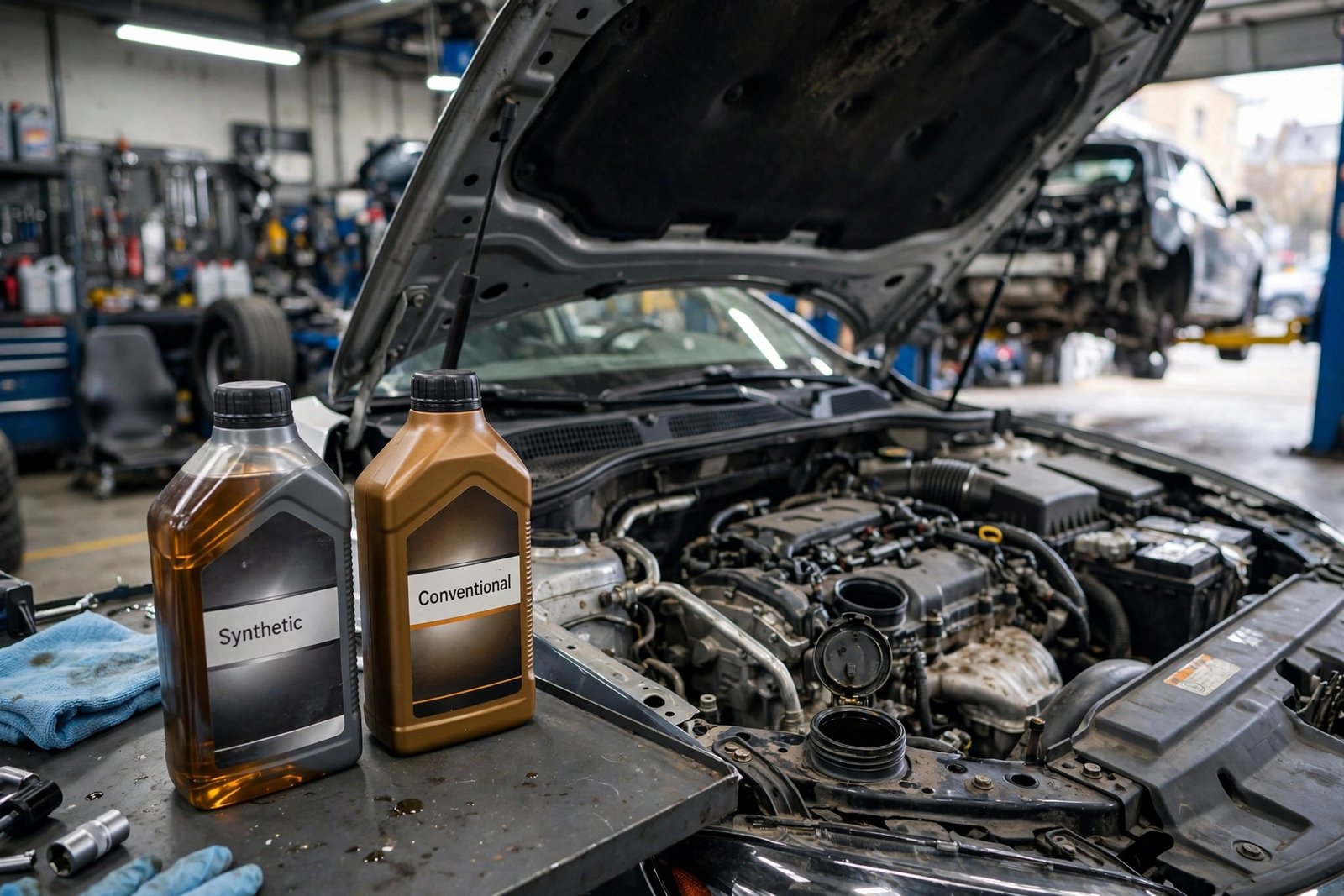
You’re standing in the auto parts aisle staring at two bottles: conventional oil for $24.99, full synthetic for $44.99. The synthetic promises 10,000 miles of protection, better cold starts, and engine longevity. The conventional promises… to be oil. Is synthetic actually worth nearly double the price, or is it marketing dressed up as chemistry?
The synthetic vs. conventional oil debate is one of the most mythologized topics in car maintenance, clouded by outdated advice from the era when synthetic cost four times as much and engines were looser and simpler. The modern reality is more nuanced — and for most drivers in 2026, the answer has quietly become obvious. Here’s the chemistry, the real-world differences, and how to choose for your specific car and driving.
What Each Oil Actually Is
Conventional oil: refined crude
Conventional oil is refined directly from crude petroleum, with naturally occurring molecules of varying sizes and shapes plus additive packages (detergents, anti-wear agents, viscosity modifiers). It’s been lubricating engines for a century and still meets the needs of many older, simpler engines. Its weaknesses: the inconsistent molecular structure breaks down faster under heat, flows poorly in extreme cold, and accumulates sludge more readily over extended intervals.
Synthetic oil: engineered molecules
Full synthetic starts with chemically modified petroleum components (or other base stocks) synthesized into uniform molecules designed for specific performance characteristics. The uniformity is the entire point: consistent molecules mean stable viscosity across temperature extremes, superior resistance to thermal breakdown, better flow at -30°F startups, and dramatically reduced sludge formation. It’s not “fake oil” — it’s oil refined to a molecular standard crude refining can’t achieve.
The middle children
Synthetic blends mix conventional and synthetic base stocks — a compromise offering some synthetic benefits at a lower price. High-mileage oils (conventional or synthetic base) add seal conditioners and extra detergents for engines over 75,000 miles. These are legitimate categories, not marketing fluff, though their benefits are narrower than full synthetic’s.
Head-to-Head: The Real Differences
Engine protection and longevity
Synthetic’s uniform molecules maintain their protective film under conditions where conventional thins out — high-heat turbocharged engines, towing, stop-and-go summer traffic. Independent testing (including the widely cited AAA research) found synthetic outperformed conventional by nearly 50% in protecting against engine wear across standardized tests. For turbocharged engines — now the majority of new vehicles — synthetic isn’t optional luxury; turbos spin at 100,000+ RPM at extreme temperatures, and conventional oil cokes (forms deposits) in turbo bearings.
Change intervals: where the math flips
Conventional: 3,000–5,000 miles. Synthetic: 7,500–15,000 miles (follow your manufacturer’s spec — many now specify 10,000-mile intervals with synthetic). This transforms the cost comparison: two conventional changes ($50–$70 each with filter, DIY) versus one synthetic change ($45–$70 DIY) over 10,000 miles. At professional shop prices the gap narrows further. For most drivers, synthetic costs the same or less per mile driven — before counting the reduced engine wear.
Cold weather performance
At 0°F, conventional oil thickens dramatically — the engine cranks slowly, wear spikes during the first minutes before oil circulates. Synthetic flows at temperatures where conventional barely pours. If you live where winters bite, synthetic’s cold-start protection alone justifies the price — especially before a long drive, when our budget road-trip planning guide reminds you to check every fluid before you leave.
Sludge and deposits
Conventional oil oxidizes and forms sludge over time, especially with extended intervals or short-trip driving (where the engine never fully warms up). Synthetic resists oxidation dramatically better. Engines run exclusively on synthetic routinely show clean internals at 150,000+ miles that conventional engines can’t match.
The American Petroleum Institute’s motor oil guide explains the certification standards (look for the API “donut” and ILSAC starburst on any bottle you buy) that guarantee minimum performance regardless of brand.
When Conventional Still Makes Sense
Conventional isn’t obsolete. It’s rational when: your owner’s manual specifies conventional (some older engines were designed for it — though most manuals from the last 15 years allow or require synthetic); you change oil religiously every 3,000 miles (frequent changes negate much of synthetic’s longevity advantage); the vehicle is a low-value beater where engine longevity beyond a year or two isn’t the goal; or you’re topping off between changes and want the cheapest option. Small engines (lawnmowers, generators) also do fine on conventional with regular changes.
The myth to kill: “you can’t switch back” or “synthetic causes leaks in old engines.” Modern synthetics are fully compatible with conventional (you can mix them — you just dilute the benefits), and while synthetic’s detergents can clean deposits that were masking worn seals, it doesn’t create leaks — it reveals existing wear. High-mileage synthetics with seal conditioners address exactly this.
How to Choose for Your Car
Step 1: Read the manual. The manufacturer specifies viscosity (e.g., 0W-20) and often the oil type. Many 2020+ vehicles require full synthetic — using conventional voids powertrain warranty coverage. The manual’s word is final.
Step 2: Match your driving. Turbocharged engine, towing, extreme temperatures, mostly short trips, or extended intervals? Full synthetic, no debate. Gentle highway cruising in a naturally aspirated older car with 3,000-mile change discipline? Conventional is defensible; synthetic blend is the sweet spot.
Step 3: Do the per-mile math. Price your actual options installed (DIY or shop), divide by the realistic interval for each, and compare per-mile costs. Most drivers find synthetic wins or ties — the “expensive” reputation comes from comparing per-bottle prices instead of per-mile costs.
Whichever you choose, change it on schedule — the best oil changed late protects worse than decent oil changed on time. And while you’re under the hood, regular checks catch consumption issues before they become engine damage — the same diligence that pays off whether you own your car or rent one for a vacation. For the fuel-economy angle, FuelEconomy’s maintenance tips quantify how neglected maintenance costs you at the pump.
Conclusion
Full synthetic oil offers measurably better protection — superior thermal stability, cold-flow, sludge resistance, and extended intervals — at a per-mile cost that’s usually equal to or lower than conventional once you account for longer change intervals. For turbocharged engines, extreme climates, and extended drains, it’s not a luxury but a requirement. Conventional remains rational for older specified engines, strict 3,000-mile changers, and beaters. The outdated advice to “save money with conventional” made sense when synthetic cost 4x as much and lasted 2x as long; today’s math — roughly 1.5–2x the price for 2–3x the interval plus better protection — has settled the debate for most drivers.
Frequently Asked Questions
Can I switch from conventional to synthetic oil?
Yes — they’re fully compatible, and switching is safe at any mileage. You can even mix them (topping synthetic with conventional just dilutes the benefits). The “can’t switch back” myth is decades outdated.
How often should I change full synthetic oil?
Follow your manufacturer’s specification — typically 7,500–10,000 miles for most modern vehicles, up to 15,000 for some European models. Severe service (towing, extreme temps, constant short trips) shortens intervals; check your manual’s severe-service schedule.
Is synthetic blend worth it?
It’s a reasonable middle ground — some synthetic benefits at lower cost. But the price gap between blend and full synthetic is often small ($5–$10), making full synthetic the better value for most drivers.
Does synthetic oil cause leaks in older engines?
No — it doesn’t create leaks. Its detergents can clean sludge deposits that were plugging worn seals, revealing existing wear. High-mileage synthetic formulations include seal conditioners that swell aging seals to prevent this.
What do the numbers like 5W-30 mean?
Viscosity grades: the number before the W rates cold-weather flow (lower = thinner when cold), the second rates viscosity at operating temperature. Always use the grade your manufacturer specifies — it’s engineered for your engine’s tolerances.