
 By admin
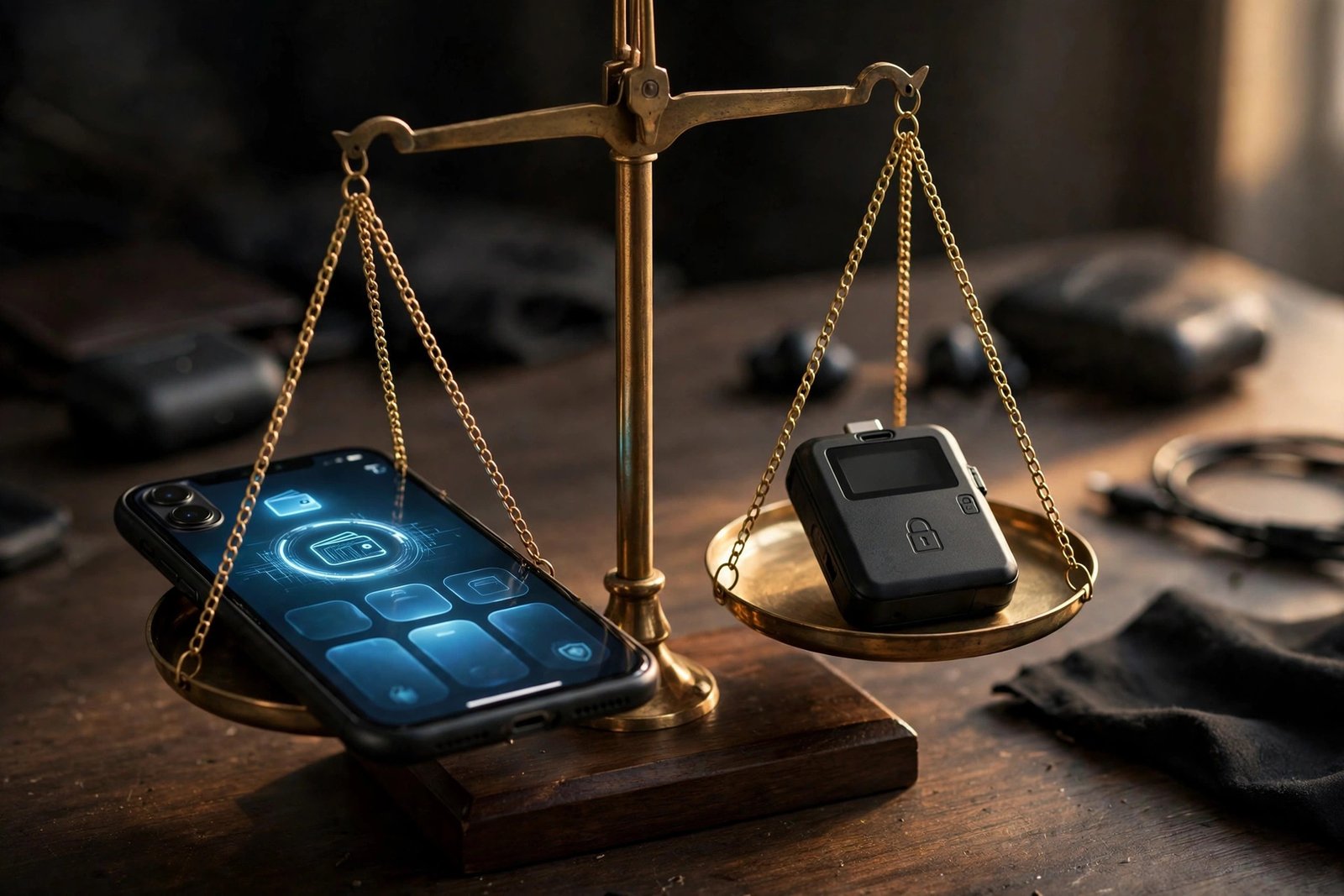
Hot wallet vs. cold wallet is the first real security decision every crypto owner faces, and most people get it backwards — keeping everything on an exchange-connected app for convenience, then learning about cold storage only after a hack. The distinction is simple: a hot wallet is connected to the internet; a cold wallet is not. That single difference determines your vulnerability to the attacks that actually steal crypto.
This guide explains how each type works, the honest security-convenience trade-off, which assets belong where, and the setup most experienced holders actually use. By the end, you will know exactly where each dollar of your crypto should live.
Hot Wallets: Convenience With Exposure
Hot wallets are software — mobile apps (Trust Wallet, MetaMask), desktop programs (Electrum), browser extensions, and exchange accounts. Your private keys live on an internet-connected device, which makes transacting instant: scan, tap, done. They are free, take minutes to set up, and are ideal for learning, small amounts, and active use like DeFi or NFT trading.
The cost of that convenience is attack surface. Malware, phishing sites, clipboard hijackers, and fake apps all target hot wallets specifically, because the keys are reachable. Exchange accounts add a further risk: you do not even hold the keys — the exchange does, meaning hacks, freezes, and collapses (FTX, Celsius, Mt. Gox) become your problem. A hot wallet is like the cash in your physical wallet: perfect for daily spending, insane as a life-savings vault. Keep its contents to what you actively use, and lock down the device itself — starting with two-factor authentication on every related account.
Cold Wallets: Security With Friction
Cold wallets keep private keys permanently offline. The classic form is a hardware wallet (Ledger, Trezor — $60-200): a small device that signs transactions internally and never exposes your keys to your computer, even when plugged in. Paper wallets (keys printed and stored physically) are the low-tech version, though they have fallen out of favor due to usability risks.
Offline keys are immune to the entire category of remote attacks — no hacker on earth can reach keys that never touch the internet. The trade-offs are cost, friction (every transaction requires the physical device and button presses), and a new responsibility: the device is replaceable, but losing both it and your seed-phrase backup means permanent loss. Cold storage is the savings account to the hot wallet’s checking account. For the broader principle, our comparison of cloud vs. offline storage maps neatly onto this decision.
The Honest Comparison
Security: Cold wins decisively against remote attacks; hot wins against physical loss (a forgotten password on an exchange is recoverable; a lost seed phrase is not). Cost: Hot is free; cold costs $60-200 plus the discipline of backups. Convenience: Hot is instant; cold adds minutes per transaction. Recovery: Exchange-based hot wallets offer customer support; true self-custody (hot or cold) offers none — the seed phrase is everything in both cases.
Neither is “better” in absolute terms; they solve different problems. The mistake is using one for the other’s job: life savings in a hot wallet invites theft, while $50 of play money on a hardware wallet invites you to never actually learn DeFi. Match the tool to the amount and the activity. A good password manager complements both by securing the exchange credentials and encrypted backups around them.
The Setup Most Experienced Holders Use
The standard serious-holder architecture has three tiers. Tier 1 — spending money (hot wallet): 5-10% of holdings on a mobile wallet or exchange for active trading, DeFi experiments, and quick moves. Assume this tier could be compromised; size it accordingly. Tier 2 — savings (hardware wallet): the bulk of long-term holdings on a hardware wallet, seed phrase on metal, stored in a safe. Touched a few times a year. Tier 3 — deep storage (optional): for large amounts, a second hardware wallet or multisig setup in a separate physical location, protecting against fire, theft, and single-device failure.
New assets flow in through Tier 1 and graduate upward as positions grow. Rebalance tiers annually. And whatever you choose, the SEC’s crypto guidance underscores the principle behind the whole structure: understand your custody arrangement explicitly, because in crypto, custody is security.
Choosing Your First Wallet Today
If you are just starting: begin with a reputable hot wallet (free, instant) for your first small purchases while you learn. Once your holdings exceed what you would be upset to lose — for most people, a few hundred dollars — buy a hardware wallet from the manufacturer (never secondhand; tampered devices exist) and migrate the bulk. That two-step path gives you learning first, security exactly when the stakes justify it.
Conclusion
Hot wallet vs. cold wallet is not a loyalty choice — it is an allocation decision. Hot for what you use, cold for what you keep. Start hot and free while you learn, graduate to hardware when the amounts matter, and never keep your entire stack in one place or one form. The investors who sleep well are not the ones who picked the “right” wallet; they are the ones who matched each wallet to its job.
For choosing specific software, Bitcoin.org’s wallet selector compares options by security, privacy, and usability.
Multisig: The Advanced Option Worth Knowing
Beyond hot and cold lies multisig (multi-signature): a wallet requiring 2-of-3 (or 3-of-5) keys to authorize any transaction. Lose one key? The other two still move funds — eliminating the single-point-of-failure that haunts both hot wallets (one hack) and hardware wallets (one lost seed phrase). The trade-offs are complexity and cost: setup requires multiple devices stored separately, and every transaction needs coordination between key-holders. Multisig shines for large holdings ($50,000+), shared family funds, and business treasuries — and services like Casa and Unchained now package it for non-technical users with guided setup and inheritance support. You do not need multisig on day one, but knowing it exists reframes the hot-vs-cold debate: the real question was never which single wallet, but how many independent failures your setup can survive.
Frequently Asked Questions
Can I use both a hot and cold wallet?
Yes — and you should. Most experienced holders keep small active amounts in a hot wallet and the bulk in cold storage, moving funds between tiers as needed.
Is a hardware wallet worth it for small amounts?
Below a few hundred dollars, probably not yet — the $60-200 device costs more than the risk justifies. Learn on a hot wallet first, then upgrade when your holdings grow.
What happens if my hardware wallet breaks?
Nothing, as long as you have the seed phrase. Buy a new device (any compatible brand), restore from the phrase, and your funds reappear. The crypto lives on the blockchain, not the device.
Are paper wallets still a good cold storage option?
Mostly obsolete. They are fragile, easy to create insecurely, and encourage address reuse. A hardware wallet is safer and far more usable for nearly everyone.
Can a hardware wallet protect me from phishing?
Partially. A hardware wallet keeps your keys offline, so remote malware cannot steal them — but it cannot stop you from approving a malicious transaction on the device screen. Phishing sites trick users into signing away tokens via deceptive prompts, and the hardware wallet will faithfully sign whatever you approve. Always verify the receiving address and transaction details on the device screen itself, and never approve transactions you did not initiate. The device protects your keys; only your attention protects your judgment.