
 By admin
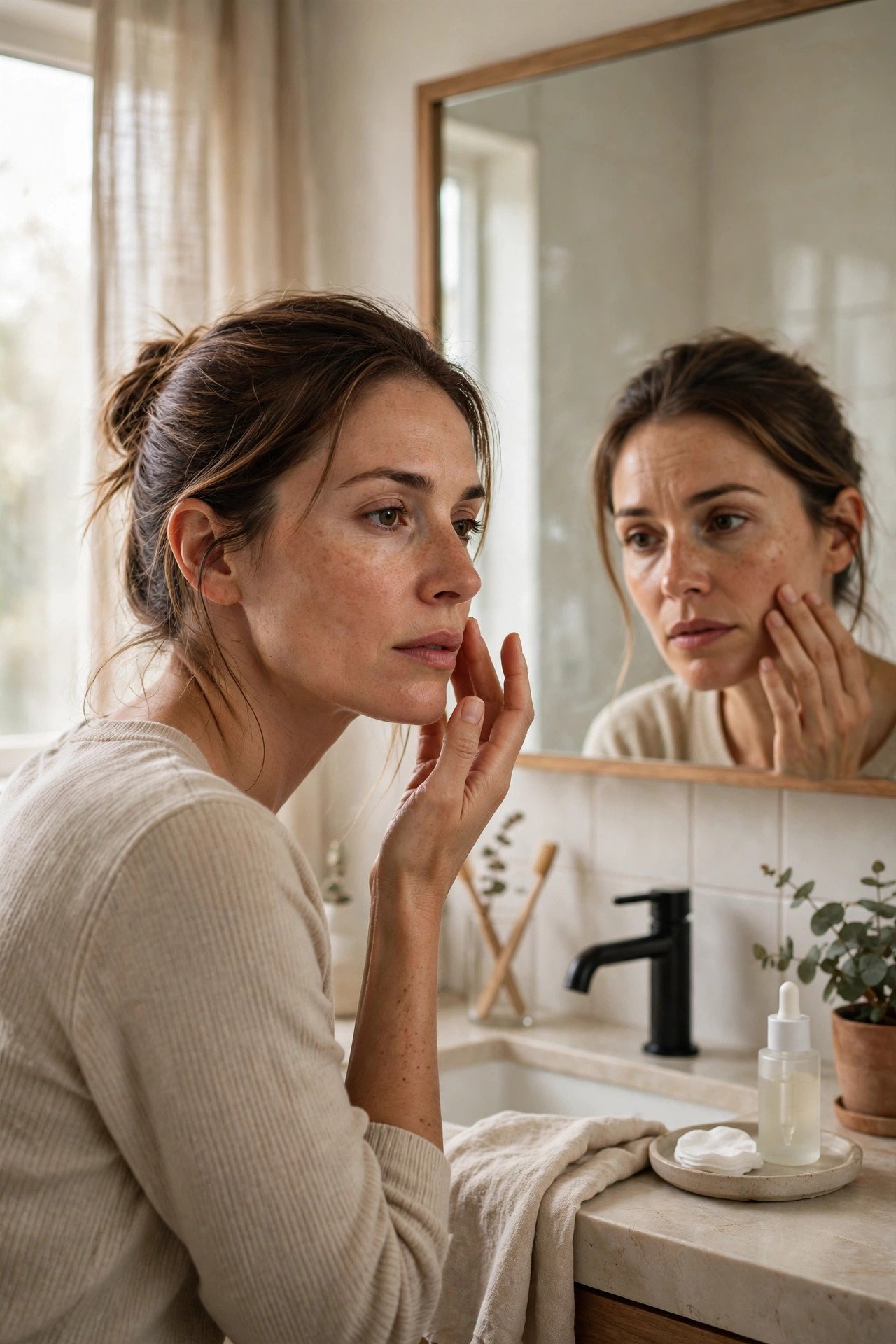
You survived your teens with decent skin, and now at 30 your face is breaking out like you’re 16 again. It’s confusing, frustrating, and weirdly embarrassing — but adult-onset acne in your late 20s and 30s is remarkably common, especially in women. Up to 1 in 5 adults deals with it, and it has different triggers than teenage acne, which means teenage solutions often don’t work.
This guide explains why breakouts suddenly appear at 30, the hormonal and lifestyle triggers behind them, how adult acne differs from teen acne, and a treatment approach built for adult skin.
Why Now? The Hormonal Story
The #1 driver of sudden adult breakouts is hormonal fluctuation. In your late 20s and 30s, many women experience shifts in androgen sensitivity — even with “normal” hormone levels on blood tests, skin can become more reactive to androgens, increasing oil production and clogging pores along the jawline, chin, and lower cheeks (the classic adult-acne pattern). Triggers include stopping or switching birth control, postpartum hormonal shifts, perimenopause’s early stages (which can begin in the late 30s), and conditions like PCOS.
Stress is the other major hormonal lever: chronic stress elevates cortisol, which increases oil production and inflammation. Your 30s often concentrate career pressure, financial stress, and family demands into a perfect cortisol storm. The cruel twist: stress about the breakouts themselves raises cortisol further. The American Academy of Dermatology recognizes adult female acne as a distinct clinical pattern with hormonal underpinnings — it’s not “late puberty,” it’s a different condition.
Adult Acne vs. Teen Acne: Different Beast
Teen acne is typically diffuse — forehead, nose, cheeks — driven by the oil surge of puberty. Adult acne clusters on the lower face (jawline, chin, around the mouth), tends to be deeper and more inflammatory (painful cystic bumps rather than surface whiteheads), and heals more slowly, leaving marks that linger for months. Adult skin is also less resilient: it’s drier, slower to heal, and more easily irritated by the harsh treatments teens tolerate.
This is why your old high-school routine (harsh scrubs, 10% benzoyl peroxide, picking) backfires now. Adult skin needs the opposite approach: gentle but consistent treatment that respects the skin barrier. Over-treating adult acne — layering multiple actives in desperation — is the most common reason it gets worse before it gets better. Barrier damage from aggressive treatment mimics and amplifies breakouts, creating a cycle that’s hard to escape. Cleveland Clinic dermatologists detail these distinctions in their dermatology resources.
The Lifestyle Triggers Hiding in Your 30s
Diet: high-glycemic foods and dairy (particularly skim milk) correlate with acne in multiple studies — not proof of causation for everyone, but worth a 4-week experiment if breakouts are new. Whey protein supplements are a notorious trigger for adult breakouts. Skincare overload: the 10-step routines popular in your late 20s can clog and irritate — heavy oils, silicones, and fragrance layer into a breakout cocktail. Simplify ruthlessly when breakouts start.
Hair products: pomades and oils migrating to the jawline and forehead cause “pomade acne” — switch to non-comedogenic formulas. Phone and pillowcase hygiene: pressing a bacteria-coated phone to your cheek for an hour daily matters more than people think; wipe it down and change pillowcases twice weekly. Medications: some antidepressants, corticosteroids, and hormonal treatments list acne as a side effect — check with your doctor before assuming it’s “just stress.” For foundational skin health habits, see healthier skin without expensive products.
A Treatment Plan Built for Adult Skin
Step 1: Simplify to a gentle base. Fragrance-free gentle cleanser, lightweight non-comedogenic moisturizer, daily SPF 30+. Do this alone for two weeks before adding treatments — many “breakouts” are actually irritation from over-treatment, and they resolve with simplification. Step 2: Add one proven active. Adapalene (Differin, now OTC) is the best first-line adult acne treatment — a retinoid that normalizes cell turnover with less irritation than tretinoin. Start 2–3 nights per week, pea-sized amount, moisturizer first (the “sandwich method”) to buffer.
Step 3: Be patient — 8 to 12 weeks. Retinoids often cause an initial purge (weeks 2–6) as clogged pores surface faster. This is normal and temporary; quitting during the purge is the #1 reason treatments “don’t work.” Step 4: Escalate intelligently. If OTC adapalene plus benzoyl peroxide (2.5%, short-contact) hasn’t helped in 3 months, see a dermatologist — prescription tretinoin, hormonal options (spironolactone, certain birth control pills), or winlevi cream target the hormonal driver directly. Affordable treatment options are covered in affordable skincare brands, several of which make excellent acne-friendly lines.
When to See a Dermatologist (Don’t Wait Too Long)
See a dermatologist if: breakouts are cystic, painful, or leaving scars; OTC treatment hasn’t helped in 3 months; acne appeared suddenly with other symptoms (irregular periods, excess hair growth, deepening voice — possible PCOS or hormonal disorder); or it’s significantly affecting your mental health. Adult acne’s psychological toll is real and underappreciated — there’s no prize for suffering through it alone.
A dermatologist can also rule out lookalikes: rosacea, perioral dermatitis, and fungal acne (malassezia folliculitis) all masquerade as adult acne but need completely different treatments. Treating fungal acne with standard acne products, for instance, often makes it worse. Professional diagnosis saves months of wrong treatments — and prevents the scarring that becomes the next decade’s problem.
Conclusion
Sudden breakouts at 30 are usually hormonal, stress-related, or lifestyle-driven — not a return of teenage acne, and not a personal failing. Treat them like the adult condition they are: simplify your routine, use one proven treatment consistently for 8–12 weeks, address the lifestyle triggers, and see a dermatologist if OTC approaches stall. Your skin at 30 heals slower than at 16, but it also responds beautifully to the right, patient approach. And remember: millions of adults are dealing with exactly this right now — you’re not alone, you’re not doing anything wrong, and with the right strategy, this chapter closes.
Your first step this week: simplify to cleanser, moisturizer, and sunscreen for fourteen days before adding any treatment. If breakouts calm significantly, you were over-treating — and you’ve just saved yourself months of wrong turns.
Frequently Asked Questions
Is adult acne at 30 normal?
Yes — remarkably so. Studies suggest up to 15–20% of adult women experience acne in their 30s, and adult-onset cases (starting after 25) are increasingly common. It’s driven by hormonal sensitivity, stress, and lifestyle factors rather than puberty, which is why it needs a different treatment approach.
Why is my acne only on my jawline and chin?
The lower-face pattern is the hallmark of hormonal adult acne — these areas have more androgen-sensitive oil glands. Jawline/chin breakouts that flare cyclically (often before periods) or appeared after birth control changes strongly suggest a hormonal driver worth discussing with a dermatologist.
Should I stop wearing makeup if I’m breaking out?
No — but switch to non-comedogenic, oil-free formulas and be meticulous about removal. Heavy, occlusive foundations can worsen breakouts, while modern non-comedogenic options are generally fine. Never sleep in makeup, and clean brushes weekly — dirty brushes are a top overlooked breakout source.
Does diet really affect adult acne?
For some people, significantly. High-glycemic diets and dairy show the strongest associations in research; whey protein is a common individual trigger. Try a 4-week elimination of suspected triggers (one at a time) and track results — but don’t pursue extreme restrictive diets without evidence they’re helping your specific case.