
 By admin
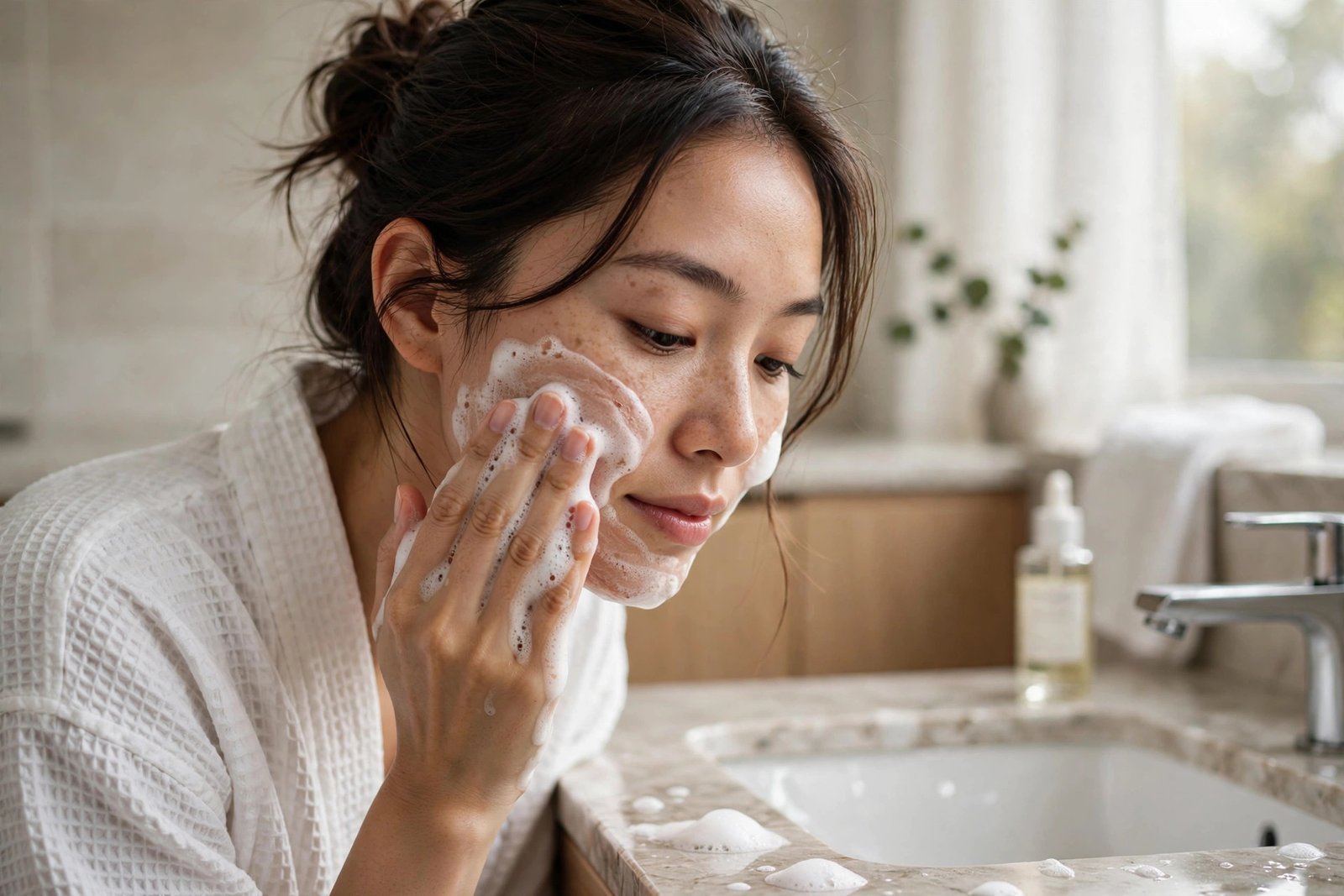
The 60-second rule is skincare’s simplest viral tip: massage your cleanser into your skin for a full 60 seconds instead of the usual rushed 10-second splash-and-go. Proponents claim it transforms your skin — deeper clean, better product absorption, fewer breakouts. Skeptics call it another internet gimmick. As with most skincare trends, the truth is more nuanced: the rule works, but not for the reasons people think, and not for everyone.
This guide explains the actual science, how to do it properly, who benefits most, the mistakes that make it backfire, and how it fits into a complete routine.
What the 60-Second Rule Claims (and What’s Actually True)
The claim: massaging cleanser for 60 seconds lets surfactants fully dissolve oil, sunscreen, and debris; boosts circulation; softens sebaceous filaments; and preps skin for better absorption. The reality: the cleansing benefit is real but modest — most cleansers need only 20–30 seconds of contact to do their job. Where the full 60 seconds genuinely helps is with heavy makeup, waterproof sunscreen, and oil cleansing, where extended massage meaningfully improves dissolution.
The less-discussed real benefit is behavioral: the rule forces you to slow down and actually cleanse properly instead of the perfunctory splash most people do. Studies on cleansing efficacy consistently show that technique and thoroughness matter more than product choice — and a timed 60 seconds guarantees thoroughness. It’s less a biochemical breakthrough than a mindfulness hack with cosmetic benefits. The American Academy of Dermatology’s cleansing guidance emphasizes gentle thoroughness over any specific timing rule, which is the right framing.
How to Do It Properly
The technique: Apply cleanser to damp (not dripping) skin. Using fingertips — never nails — massage in small circular motions for a full 60 seconds: 20 seconds on the forehead and temples, 20 on cheeks and nose (spend extra on the nose, where sebaceous filaments concentrate), 20 on chin and jawline. Use light pressure; you’re massaging, not scrubbing. Rinse with lukewarm water — hot water strips, cold water doesn’t rinse effectively.
Timing tip: count, hum a verse of a song, or set a phone timer until the rhythm becomes habit. Product matters: this technique works best with gentle, pH-balanced cleansers (gel or cream). Don’t do 60 seconds with harsh, stripping cleansers or strong exfoliating acids — extended contact increases irritation risk. If you wear heavy makeup or waterproof SPF, consider the double-cleanse method: 60 seconds with an oil cleanser first, then 30–60 seconds with a water-based cleanser. For product recommendations that won’t break the bank, see affordable skincare brands for dry skin.
Who Benefits Most (and Who Should Skip It)
Best candidates: people who wear daily sunscreen and makeup (the extended massage genuinely improves removal), oily skin types with congested pores, and anyone whose current “cleanse” is a 5-second splash — the rule’s biggest win is converting non-cleansers into cleansers. Proceed cautiously: dry or sensitive skin types should start with 30 seconds and a cream cleanser, watching for tightness or redness. Skip or modify: if you have rosacea, active eczema flares, or a compromised barrier, extended massage and manipulation can worsen inflammation — keep cleansing brief and ultra-gentle until skin calms.
Also consider your overall routine load: if you’re already double-cleansing, using exfoliating acids, and doing clay masks, adding 60-second massages with active cleansers may be over-cleansing. More isn’t always better in skincare — the goal is clean, comfortable skin, not a ritual scorecard. Pair sensible cleansing with overall skin health habits from healthier skin without expensive products.
Common Mistakes That Make It Backfire
Scrubbing instead of massaging: pressure and friction cause micro-irritation; fingertips should glide, not drag. If your skin is pink afterward, you’re pressing too hard. Wrong cleanser: 60 seconds with a high-pH bar soap or harsh foaming cleanser strips the acid mantle — the technique amplifies whatever your cleanser does, good or bad. Water temperature: hot water plus extended massage is a recipe for redness and dryness; lukewarm always.
Doing it twice daily with actives: a 60-second massage with a salicylic acid or benzoyl peroxide cleanser twice a day is over-exfoliation for most people — use active cleansers briefly or once daily, and keep the 60-second rule for your gentle cleanser. Ignoring the rinse: extended massage means more product to remove — rinse thoroughly for at least 15–20 seconds. Residue from a long cleanse irritates more than residue from a short one. The Mayo Clinic’s skin care basics reinforce the core principle: gentle, thorough, and consistent beats aggressive and elaborate.
Where It Fits in Your Routine
Think of the 60-second rule as a foundation upgrade, not a routine overhaul. Your evening cleanse is where it matters most (removing the day’s sunscreen, makeup, and pollution); mornings can be shorter — a 20–30 second gentle cleanse or even just water for dry skin types. After cleansing, apply products to slightly damp skin within 60 seconds (a different, more evidence-backed “60-second rule”) to lock in hydration.
Don’t let the technique distract from the fundamentals that matter more: daily sunscreen, a moisturizer suited to your skin type, and not over-exfoliating. The 60-second rule is a fine optimization — roughly a 5% improvement to a routine — but it can’t compensate for skipping SPF or using products wrong for your skin. Nail the basics first, then optimize the cleanse.
Conclusion
The 60-second rule works — modestly and behaviorally rather than miraculously. Extended gentle massage improves removal of sunscreen and makeup, guarantees thoroughness, and adds a moment of self-care to your day. Do it with a gentle cleanser, light pressure, and lukewarm water, skip it during barrier damage or flares, and keep expectations realistic. It’s a good habit, not a transformation — and good habits compound. Set a timer for your next three evening cleanses; by the fourth, the rhythm will feel as natural as brushing your teeth.
A final practical tip: if 60 seconds feels interminable at first, start with 30 and add ten seconds each week. The habit sticks better when it grows gradually, and your skin gets the benefit of improving technique along the way.
Frequently Asked Questions
Is 60 seconds really necessary, or is 30 enough?
For most people with a gentle cleanser and no heavy makeup, 30 seconds of thorough massage cleanses effectively. The full 60 seconds adds meaningful benefit mainly for heavy makeup, waterproof sunscreen, and oil cleansing. Think of 30 seconds as the requirement and 60 as the bonus round.
Can the 60-second rule cause breakouts?
It can, if done wrong — over-massaging with comedogenic products, using too much pressure (which irritates and triggers inflammation), or inadequate rinsing can all cause breakouts. Done correctly with a suitable gentle cleanser, it more often reduces congestion-related breakouts by improving cleansing thoroughness.
Should I do the 60-second rule morning and night?
Night is where it counts — that’s when you’re removing sunscreen, makeup, and daily buildup. Mornings, a shorter cleanse (or just lukewarm water for dry/sensitive types) is plenty. Over-cleansing in the morning strips the oils your skin produced overnight for protection.
Does it matter what kind of cleanser I use for 60 seconds?
Yes, enormously. Use a gentle, pH-balanced, fragrance-free cleanser — gel for oily skin, cream or lotion for dry skin. Avoid 60-second massages with harsh sulfates, strong acids, or physical scrubs; extended contact amplifies irritation from aggressive formulas.