
 By admin
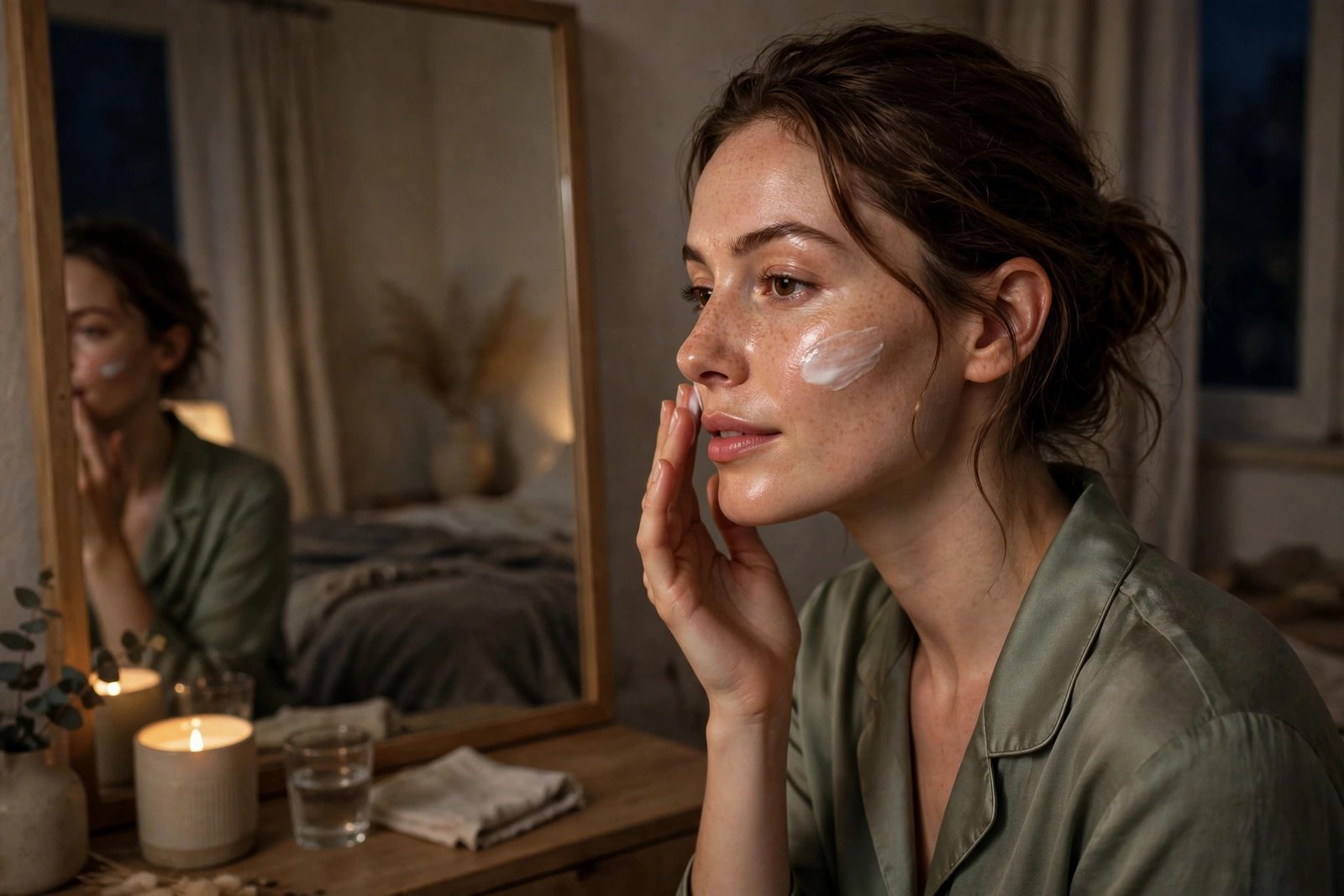
Slugging — coating your face in a thick layer of petroleum jelly as the final step of your nighttime routine — sounds like a recipe for clogged pores. Yet dermatologists keep recommending it, K-beauty devotees swear by it, and people with chronically dry skin call it transformative. So what is slugging really, does it actually work, and does California’s climate change the answer? Let’s separate the science from the hype.
This guide explains the mechanism, who benefits most, the right way to do it (order matters enormously), California-specific considerations, and who should skip it entirely.
What Slugging Actually Is (and Isn’t)
Slugging means applying an occlusive — typically petroleum jelly (Vaseline) or a similar petrolatum-based product — over your entire nighttime skincare routine as the last step. The term comes from the shiny, slug-like trail it leaves. The mechanism is straightforward physics, not magic: occlusives form a barrier that prevents transepidermal water loss (TEWL) — the evaporation of moisture from your skin overnight. Studies show petrolatum reduces TEWL by up to 98%, more than any other moisturizer ingredient.
Crucially, slugging doesn’t add moisture — it seals in what’s already there. That’s why the layers underneath matter: slugging over dry, unmoisturized skin just seals in dryness. And despite the “it’ll clog your pores” fear, petrolatum is non-comedogenic (it doesn’t clog pores) — its molecules are too large to penetrate pores. The American Academy of Dermatology has long recommended petrolatum for dry skin and wound healing; slugging is just a trendy name for an old dermatological workhorse.
Does It Work? What the Evidence Says
For dry, compromised skin barriers: yes, convincingly. By nearly eliminating overnight water loss, slugging lets the skin’s barrier repair itself — many users report transformed texture within a week. It’s particularly effective for tretinoin/retinoid users (it buffers irritation), for eczema-prone skin (dermatologists have recommended “soak and seal” with petrolatum for decades), and for anyone whose skin feels tight by morning.
For oily or acne-prone skin: the evidence is murkier and the risk-benefit shifts. While petrolatum itself doesn’t clog pores, sealing in a full routine over active breakouts can trap irritants and worsen some people’s acne — the occlusive barrier works both ways. If you’re acne-prone, patch-test on one cheek for a week before committing. The honest summary: slugging is a proven moisture-retention technique, not a miracle — it excels at its specific job (preventing water loss) and does nothing for concerns outside that job (hyperpigmentation, wrinkles beyond hydration plumping). Cleveland Clinic dermatologists discuss the technique’s appropriate uses in their health library.
The California Factor: Climate Changes Everything
California isn’t one climate, and slugging’s value varies dramatically across the state. Coastal areas (SF, LA, San Diego): marine layer humidity means moderate TEWL — slugging 2–3 nights per week is plenty for most, and daily slugging may feel unnecessarily heavy. Inland valleys (Sacramento, Central Valley): hot, dry summers with single-digit humidity create serious overnight water loss — this is prime slugging territory, especially in summer and during Santa Ana wind events.
Desert regions (Palm Springs, Inland Empire east): extreme aridity makes slugging close to essential for dry skin types; consider it nightly in summer. Winter statewide: indoor heating drops humidity everywhere, making winter the universal slugging season even on the coast. Adjust frequency to your microclimate and season rather than following a one-size rule — your skin in Fresno August needs something very different from your skin in San Francisco August. For broader moisture strategies, see healthier skin without expensive products.
How to Slug Correctly (Order Is Everything)
Step 1: Cleanse gently — slugging seals in whatever’s on your skin, so start clean. Step 2: Apply hydrating layers to damp skin: a hydrating toner or essence, then a moisturizer with humectants (hyaluronic acid, glycerin) and ceramides. Damp skin + humectants gives the occlusive something to seal in. Step 3: Wait 2–3 minutes for absorption. Step 4: Apply a pea-sized amount of petroleum jelly (or a slugging-specific balm) over everything — thin layer, not a mask. More isn’t better; a thick glob just migrates to your pillow.
What NOT to slug over: strong acids (glycolic, salicylic), benzoyl peroxide, or exfoliating treatments — occlusion dramatically increases their penetration and can cause serious irritation or chemical burns. Keep actives to non-slugging nights. Pillow protection: sleep on a satin pillowcase or lay a soft towel over your pillow — petrolatum transfers. Many people slug 3–4 nights weekly rather than daily, which captures most of the benefit with less fuss. Affordable product layering is covered in affordable skincare brands for dry skin.
Who Should Skip Slugging
Skip it (or proceed very cautiously) if you have: active cystic acne or frequent breakouts that worsen with occlusion — try slugging only the dry zones (cheeks) instead of the T-zone; very oily skin in humid climates, where the benefit is minimal and the heaviness is real; fungal acne (malassezia), which can worsen under occlusion; or milia-prone skin around the eyes — petrolatum near eyes can contribute to milia in susceptible people.
Also skip slugging over any prescription topical unless your dermatologist approves — occlusion increases absorption of everything, including medications where the dose matters. And if you try it for two weeks with no improvement, it’s simply not your technique — skincare is personal, and “everyone swears by it” is never a reason to continue something that doesn’t work for you.
Conclusion
Slugging works — not as a miracle, but as physics: petrolatum is the most effective known barrier against overnight moisture loss, and for dry skin (especially in California’s arid inland and desert regions), it’s transformative. Do it correctly — hydrating layers first, thin occlusive last, never over strong actives — 3–4 nights a week, and adjust for your microclimate. For dry, compromised skin, it’s the highest-ROI step in all of skincare, and it costs about $5. Few beauty trends survive contact with dermatological science; this one did because it was science all along.
Frequently Asked Questions
Will slugging clog my pores and cause breakouts?
Petrolatum itself is non-comedogenic — its molecules are too large to enter pores. However, the occlusive barrier can trap other products, sweat, and bacteria against skin, which worsens breakouts in some acne-prone people. If you’re acne-prone, patch-test one area for a week, avoid slugging over actives, and consider slugging only dry zones rather than the full face.
Can I slug during the day?
Not recommended — petrolatum has no SPF, looks shiny, pills under makeup, and daytime occlusion over sunscreen can interfere with the sunscreen’s film. Slugging is a nighttime technique. For daytime dryness, use a good moisturizer and reapply as needed.
What’s the difference between slugging and just using a heavy moisturizer?
A heavy moisturizer both adds water/humectants and provides some occlusion, while slugging’s petrolatum layer is pure occlusion — it reduces water loss by up to 98% versus roughly 20–30% for typical moisturizers. They complement each other: moisturizer supplies the hydration, slugging locks it in. That’s why order matters.
Is Vaseline safe to use on the face long-term?
Yes — white petrolatum is one of the most studied, safest skincare ingredients in existence, used in wound care for over a century. Use refined, USP-grade petroleum jelly (standard Vaseline qualifies), not industrial grades. Allergies to petrolatum are exceedingly rare.